Porsche Will Be First to Offer Wireless EV Charging
Porsche is taking a major step forward in the electric vehicle space by introducing its new inductive charging system, which will debut in Europe in 2026 before expanding to other markets. Instead of plugging in, drivers of the upcoming Cayenne Electric will simply park over a floor-mounted charging plate, where power is transferred wirelessly at up to 11 kW. That figure is on par with most wired Level 2 charging stations, yet the wireless system promises seamless convenience and efficiency approaching 90 percent. Porsche announced the momentous news on September 9, 2025.
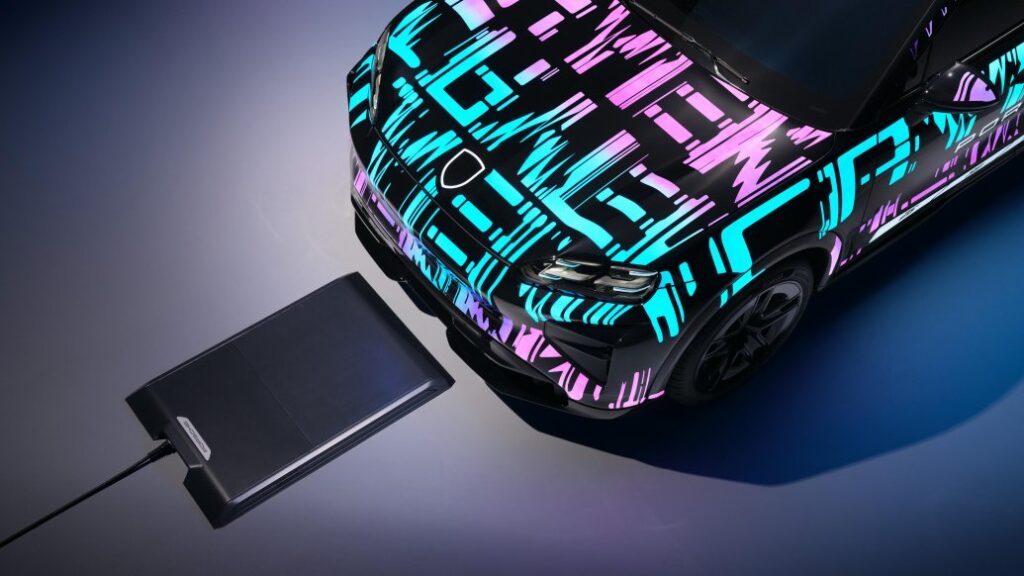
The charging setup consists of a heavy, weatherproof base plate measuring roughly 117 by 78 by 6 centimeters and weighing about 50 kilograms, installed by Porsche-certified electricians either in garages, under carports, or even outdoors. The Cayenne Electric carries a receiver unit between its front wheels, and when positioned correctly, the car automatically lowers itself to optimize energy transfer. A special Surround View display helps drivers align the vehicle precisely over the plate. Once parked and the brake is engaged, charging begins instantly without cables or connectors.
Porsche has also built in safety measures, including motion detection and foreign-object recognition to prevent the system from operating if something interrupts the energy field. Connectivity is part of the package too: the charging plate supports LTE and WLAN for software updates, while integration with the My Porsche app allows owners to monitor sessions and use familiar features such as charging timers and preconditioning.
Although inductive charging has been tested before by companies like BMW and Volvo, those earlier systems delivered far lower power. Porsche is the first major automaker to push wireless charging into full series production at usable speeds. The Cayenne Electric will also support ultra-fast 400 kW DC charging for longer trips, underscoring Porsche’s approach of combining daily-use convenience with high-performance capability.
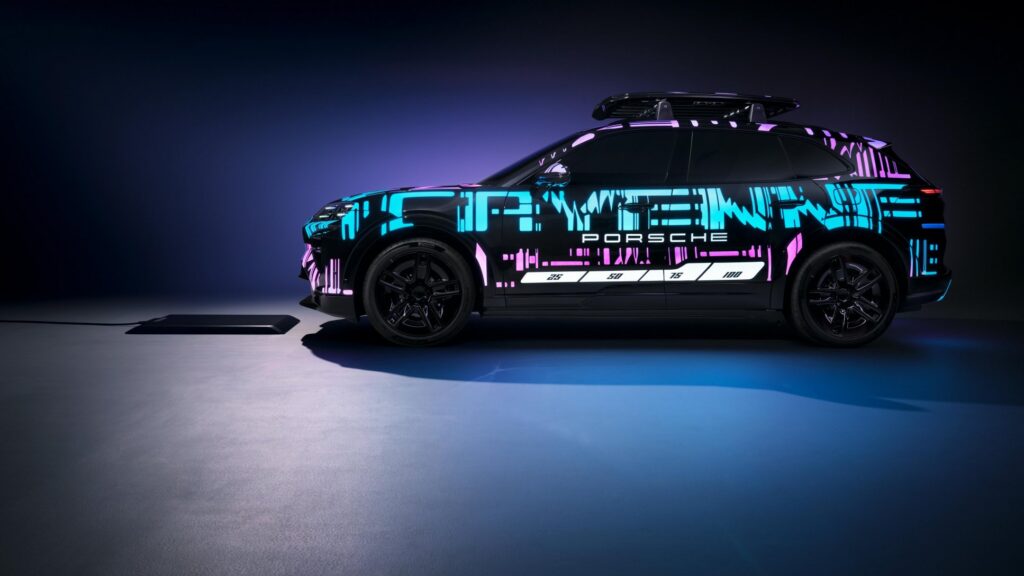
The technology made its public debut at the IAA Mobility show in Munich in September 2025, where Porsche showcased a camouflaged Cayenne Electric using the new system. Since about three-quarters of EV charging occurs at home, Porsche is positioning inductive charging as a premium solution for everyday ease. While it may start with a niche audience, the move represents a significant leap in merging luxury with practicality, potentially setting the tone for future adoption of wireless charging across the industry.
Wireless EV Charging Important to the AV Revolution
Wireless EV charging aligns almost perfectly with the future of autonomous vehicles. At its core, autonomy eliminates the need for human drivers to handle tasks like steering, braking, or parking, but it leaves one critical gap: plugging the vehicle in. A self-driving car that still requires someone to walk over, grab a cable, and connect it to a charging station isn’t truly independent. Inductive charging closes that loop.
The key advantage is seamless operation. An autonomous car can navigate to a designated charging spot, position itself over a wireless charging pad with centimeter-level precision, and begin recharging automatically. No human intervention is needed, which makes the system scalable for robo-taxis, delivery fleets, or personal AVs parked overnight. This automation not only saves time but also reduces friction for users, making electric autonomous mobility feel effortless.
Another benefit is durability and reliability. Traditional connectors are subject to wear and tear, exposure to rain, snow, or dust, and possible vandalism in public settings. By removing cables altogether, wireless charging creates a safer, weatherproof, and lower-maintenance system, particularly valuable for high-utilization autonomous fleets operating around the clock.
There’s also a strong case for efficiency in operations. Autonomous fleets rely on maximizing vehicle uptime. If charging is automated and happens whenever vehicles are idle, say, waiting for the next ride request, they can stay on the road longer without relying on human staff to plug them in. Combined with smart energy management, inductive systems can be integrated into fleet depots or urban curbsides where vehicles top up opportunistically rather than waiting for a full charge.
Finally, wireless charging is inherently forward-looking. As cities prepare for connected, autonomous transport, embedding inductive pads into roadways, taxi stands, or parking bays could allow vehicles to charge while waiting or even slowly recharge while moving. This creates the foundation for continuous, invisible energy supply, something wired infrastructure could never provide at scale.
Will Others Follow Porsche Into Wireless EV Charging?
Porsche’s move is significant because it’s the first time a major automaker is rolling out wireless charging at usable speeds (11 kW, comparable to home Level 2 charging) and committing to production in a mainstream model, the Cayenne Electric. Other carmakers have experimented with inductive charging for years, BMW tested a 3.2 kW system on the 530e plug-in hybrid, Volvo ran pilot programs in Gothenburg, and Hyundai/Kia has shown concepts, but none scaled it beyond limited trials. The big difference now is that Porsche is proving the technology can be robust, efficient, and consumer-ready.
For premium brands, wireless charging fits perfectly with their customers’ expectations of convenience and cutting-edge tech. It’s easy to imagine Mercedes, BMW, or Audi following Porsche fairly quickly once the cost curve comes down.
Mass-market brands may be slower to adopt, not because the technology doesn’t work, but because cost and infrastructure are bigger hurdles. A wireless system requires both vehicle integration and a professionally installed base plate, which adds expense. Until the value of convenience, or the necessity of autonomy, outweighs that cost, mainstream automakers may stick to cables, which are cheaper and widely standardized.
Fleet use cases could accelerate adoption. Autonomous shuttles, robo-taxis such as Waymo, and logistics fleets benefit disproportionately from hands-free charging, since they operate without drivers and can’t rely on humans plugging them in. Once those business models take off, wireless charging could spread far faster, and OEMs with strong fleet strategies (like GM’s Cruise, Toyota’s partnerships, or Hyundai’s Motional) may move aggressively.
In short, Porsche’s leap into production wireless charging will likely act as a catalyst. Luxury automakers are the most natural early adopters, they could make a big splash if they align wireless charging with autonomy, and fleets may be the bridge that pushes wireless into mass deployment. The question is less “if” and more “how soon” the rest of the industry follows.

Electric Vehicle Marketing Consultant, Writer and Editor. Publisher EVinfo.net.
Services