ComEd Awards bp pulse $500,000 for 40 Ultrafast EV Charging Ports Near O’Hare Airport
On December 19, 2025, ComEd announced it has awarded a $500,000 electric vehicle charging rebate to bp pulse to support the development of one of the largest public fast charging hubs in northern Illinois. The rebate, provided through ComEd’s Beneficial Electrification Plan, will help fund site and infrastructure upgrades for 40 new ultrafast charging ports located near Chicago O’Hare International Airport.
The charging hub is designed to serve local drivers and rideshare operators with fast, convenient access to high-power charging while advancing state and utility goals to expand public EV infrastructure. The site will include a mix of 400 kW and 150 kW DC fast chargers, with ComEd also delivering the electric infrastructure upgrades required to support the new load.
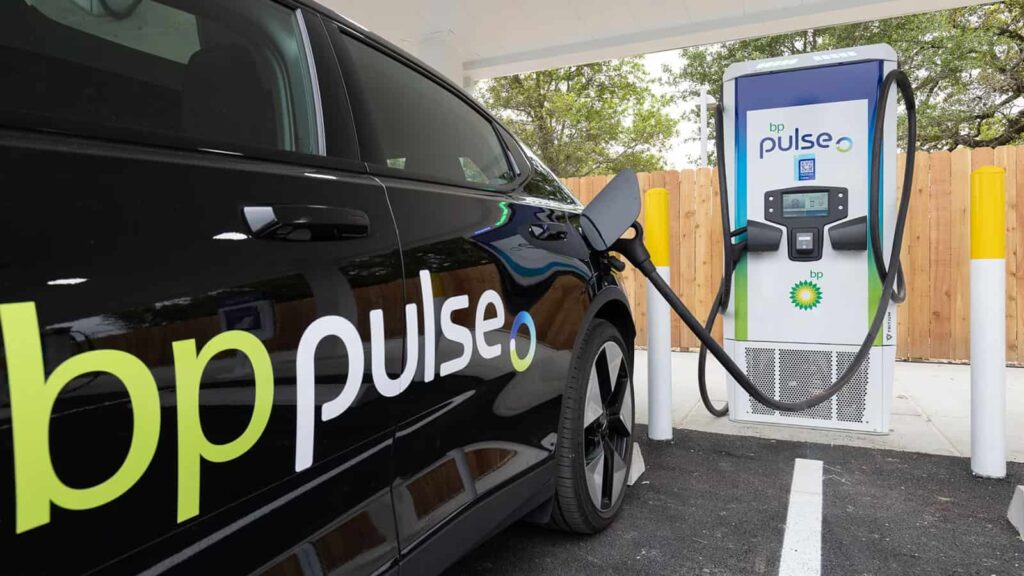
The O’Hare-area project builds on ComEd’s broader EV rebate program, which has supported the energization of more than 9,500 public and private charging ports since launching in 2024. The new hub is one of six charging projects ComEd is developing in partnership with bp pulse, with additional sites planned to come online across northern Illinois in 2026. The project also received supplemental funding from the Illinois EPA Driving a Cleaner Illinois Program.
“The City of Des Plaines is committed to driving EV adoption forward for our residents, businesses and visitors,” said Andrew Goczkowski, Mayor of the City of Des Plaines. “As an EV Ready community, we welcome the investment from bp pulse and ComEd to give our residents and commuters in and around the area access to affordable, convenient charging options.”
ComEd’s EV rebate initiatives are mandated under Illinois’ Climate and Equitable Jobs Act and are aimed at reducing barriers to EV adoption by lowering the cost of charging infrastructure. Illinois now has more than 160,000 registered EVs, nearly 90% of which operate within ComEd’s service territory, up from approximately 19,000 in northern Illinois in 2019.
“Reaching Illinois’ goals for a cleaner transportation future depends on advancing consumer and commercial EV adoption, and charging accessibility plays a large role in EV adoption,” said Megha Lakhchaura, EV Officer for the state of Illinois. “The work of charging deployments like bp pulse’s latest hub, ComEd’s EV Rebate programs and grants from Illinois EPA are making transportation electrification more accessible for all northern Illinois businesses and communities.”
Since the launch of the EV Rebate programs in February 2024, ComEd has awarded nearly $150 million across 356 northern Illinois ZIP codes, supporting more than 9,500 charging ports and over 3,000 fleet electric vehicles. Approximately 80% of rebates have gone to low-income customers or organizations located in, or primarily serving, low-income and Equity Investment Eligible Communities.
“Opening our sixth major airport hub is a significant milestone in our commitment to expanding our EV charging network across the United States,” said Sujay Sharma, CEO of bp pulse Americas. “Working alongside utilities like ComEd, we are ensuring that new fast charging stations can deliver access to quick and reliable charging that drivers increasingly demand.”
ComEd also provides a range of EV resources, including the ComEd EV Toolkit, EV Ambassador Program, EV Readiness Program, EV Load Capacity Map, Fleet Electrification Assessments, and its EV Service Provider and Dealership Networks.
ComEd is a unit of Exelon Corporation (NASDAQ: EXC), a Fortune 200 energy company serving more than 10.7 million electric and natural gas customers nationwide. ComEd delivers power to more than 4 million customers across northern Illinois, representing about 70% of the state’s population.
EVinfo.net’s Take: Utility-Led EV Infrastructure Investment Can Help Close the Federal Funding Gap
As uncertainty grows around the pace and scale of federal support for electric vehicle infrastructure, utility-led investment is emerging as one of the most credible paths to sustaining EV adoption in the United States. Programs like ComEd’s Beneficial Electrification Plan demonstrate how regulated utilities can play a decisive role in building charging infrastructure, even as federal funding becomes more constrained or unpredictable.
ComEd’s approach shows what is possible when EV infrastructure is treated as a core grid modernization and customer service priority rather than a discretionary add-on. This model is especially important as federal programs face delays, policy shifts, or funding rollbacks. Utility investment can act as a stabilizing force, maintaining deployment momentum when national programs slow down.
Because utilities plan infrastructure on multi-year horizons and operate under state regulatory oversight, they are well positioned to deliver consistent, long-term investment that aligns grid upgrades with transportation electrification. Beyond filling funding gaps, utility-led programs also deliver equity and reliability benefits.
Utilities across the country have an opportunity to follow this lead. By designing ratepayer-backed programs that focus on make-ready infrastructure, fast-charging corridors, fleet electrification, and underserved communities, utilities can catalyze private investment while supporting state climate and air quality goals. Clear regulatory frameworks, performance-based incentives, and transparent reporting are essential to ensure these programs deliver measurable public value.
Utilities nationwide should take note and act accordingly.
Kudos smart and capable IL Governor JB Pritzker and team, Chicago Department of Aviation (CDA) – O’Hare & Midway International Airports for your support of EV adoption.

Electric Vehicle Marketing Consultant, Writer and Editor. Publisher EVinfo.net.
Services