New Study Says Optimized Bidirectional Charging Would Reduce Lifetime EV Charging Costs Approximately 40-90%
New research from the University of Michigan, conducted in collaboration with Ford Motor Co., delivers one of the most detailed geographically resolved assessments to date of vehicle-to-home (V2H) energy systems in the United States. Published in Nature Energy, the study evaluates how using electric vehicle (EV) batteries to supply household electricity can reduce energy costs and lifecycle emissions under real-world grid, climate, and pricing conditions.
Moving beyond conceptual discussions, the research quantifies V2H performance across diverse regions by accounting for differences in grid emissions intensity, electricity prices, housing characteristics, and climate. Rather than treating V2H as a theoretical capability, the team modeled practical operation using a representative mid-sized electric SUV. The analysis incorporated region-specific grid attributes, temperature-driven efficiency effects, and residential demand patterns that determine when stored vehicle energy can be dispatched to a home.
To capture geographic variation at scale, the contiguous US was divided into 432 regions with shared grid and climate profiles. This approach enabled the researchers to identify where V2H delivers net system benefits and where grid or technical constraints limit its value. According to lead author Jiahui Chen, the results reveal strong location-specific insights. While outcomes varied by region, V2H-enabled operation produced net greenhouse gas reductions that fully offset charging-related emissions in areas representing about 60% of the US population.
The study also examined interactions among bidirectional charging, grid emissions, and time-varying electricity prices. In regions with high peak emissions or large price spreads, optimized charge and discharge timing allowed EV batteries to displace higher-emissions generation during peak demand periods. As Chen noted, charging can shift from being a cost burden to a grid and household asset.
Using region-specific models, the researchers found that optimized bidirectional operation reduced lifetime EV charging costs by roughly 40% to 90%, depending on local conditions. Lifecycle greenhouse gas emissions tied to household electricity use fell by about 70% to more than 100% in many regions, with some exceeding 200% when strategic discharge during high-emissions periods outweighed charging emissions. In absolute terms, this translated into tens of metric tons of avoided carbon dioxide over a vehicle’s lifetime.
While the findings highlight strong economic and environmental potential, the authors emphasize that V2H is not yet turnkey in most US markets. Effective deployment requires bidirectional power electronics, advanced controls, and coordination with utility rates, interconnection rules, and local grid constraints. Battery degradation management also remains critical, with intelligent control strategies needed to limit unnecessary cycling and protect battery health.
For EV engineers, power electronics designers, and grid planners, the study underscores that EVs already represent a large distributed storage resource, that bidirectional charging can support grid decarbonization without additional stationary storage, and that regional grid characteristics strongly shape V2H value. The long-term vision is a system where drivers simply plug in, while background software automatically optimizes charging and discharging based on grid conditions, household needs, and vehicle availability.
V2G and V2H Are Growing Fast Globally, Will Transform the Grid and Transportation
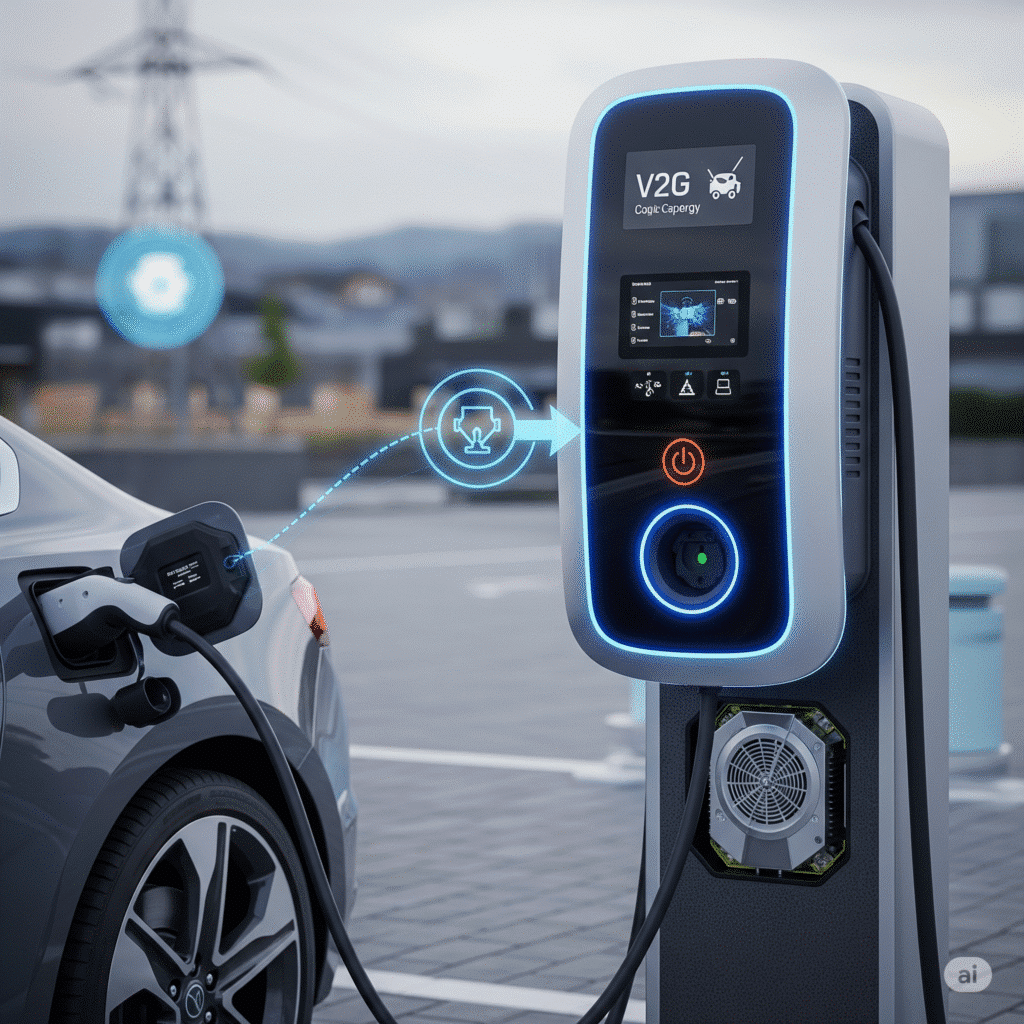
Vehicle-to-grid (V2G) and vehicle-to-home (V2H) technologies are moving rapidly from pilot projects into early commercial deployment, positioning electric vehicles as active participants in energy systems rather than passive loads. Bidirectional charging is emerging as a critical link between transportation electrification and grid modernization.
Globally, governments and utilities are beginning to recognize that EVs represent a vast, distributed energy storage resource already deployed at scale. In markets such as Japan, the UK, parts of Europe, China, and California, V2G and V2H programs are expanding beyond demonstrations into structured utility partnerships, fleet applications, and residential offerings. Falling battery costs, maturing power electronics, and growing renewable penetration are converging to make bidirectional charging economically and operationally viable.
For power systems, the implications are significant. V2G enables EVs to supply electricity back to the grid during peak demand, provide frequency regulation, and absorb excess renewable generation during periods of oversupply. This flexibility reduces grid congestion, lowers system costs, and supports higher shares of variable wind and solar without relying solely on stationary storage. V2H extends these benefits to households, allowing EVs to offset peak electricity prices, provide backup power during outages, and reduce lifecycle emissions through optimized charging and discharging.
From a transportation perspective, bidirectional charging changes the value proposition of EV ownership. Vehicles are no longer just modes of transport but mobile energy assets that can generate revenue, lower total cost of ownership, and improve resilience. For fleets, in particular, V2G unlocks new business models by monetizing parked vehicles through grid services while maintaining operational readiness.
The pace of progress is accelerating as standards mature and automakers, charger manufacturers, and utilities align. ISO 15118, CCS bidirectional capability, and advances in inverter and battery management systems are reducing technical barriers. At the same time, policy frameworks are evolving to support dynamic pricing, interoperability, and fair compensation for grid services.
Challenges remain, including grid interconnection processes, rate design, and battery warranty alignment. However, growing evidence from real-world deployments shows that intelligent control software can manage battery degradation while maximizing system value. As EV volumes rise, the aggregate impact of millions of connected vehicles will rival or exceed that of traditional grid-scale storage.
V2G and V2H represent a fundamental shift in how energy and transportation systems interact. By turning EVs into flexible, dispatchable resources, bidirectional charging has the potential to reshape grid economics, accelerate decarbonization, and redefine the role of vehicles in modern energy systems. The transition is underway, and its effects will be transformative for both the grid and global mobility.

Electric Vehicle Marketing Consultant, Writer and Editor. Publisher EVinfo.net.
Services