US EV Sales Rebounded, New EVs up 14.4%, Used up 9.7% in December from November, Continued Growth Projected
America’s electric vehicle (EV) market closed the year on a stronger note in December 2025, with sales increasing across both new and used segments. New-vehicle supply remained elevated, while used EV days’ supply increased but continued to track below internal combustion engine (ICE) levels. Pricing was largely stable, supported by aggressive new-vehicle incentives aimed at offsetting softer retail demand and continued price discipline in the used market. Cox Automotive’s EV Market Monitor – December 2025, released January 15, 2026, reported the news.
December new-EV sales totaled an estimated 84,294 units, down 38% year over year but up 14.4% from November. EV share of total new-vehicle sales held steady at 5.7%. Tesla led the market with 48,300 units, followed by Ford (5,052), Cadillac (3,919), Rivian (3,606), and Hyundai (3,135). Tesla sales increased 6.1% month over month, though its market share eased to 57.3% from November’s elevated 61.8% as competitors rebounded more sharply following the post-tax-credit slowdown. Most brands recorded month-over-month gains, with Genesis, Chevrolet, and Audi as the primary exceptions. Lucid was the only major brand to post its highest monthly volume of the year, delivering 2,415 units—a 146% increase from November.
Used EV sales reached 28,579 units in December, up 10.2% year over year and 9.7% month over month, with market share holding at 1.9%. For full-year 2025, used EV sales totaled 378,140 units, representing 35.1% growth and a 2.1% share of the used-vehicle market. Tesla led December used-EV sales with 10,837 units, followed by Ford (1,915), Chevrolet (1,904), BMW (1,749), and Nissan (1,429). Most brands posted month-over-month gains, while Ford (-2.7%) and Audi (-19.3%) declined. Tesla accounted for four of the top five used-EV models, with the Mustang Mach-E ranking third behind the Model 3 and Model Y. Among leading brands, BMW recorded the strongest growth, rising 18.6% month over month.

GM to Take $6 Billion EV Writedown as Automakers Pull Back on EVs
Reuters reported on January 9, 2026, that General Motors said it will record a $6 billion charge to unwind portions of its electric vehicle investments, marking the latest pullback by a major automaker as shifting federal policy pressures the EV market. The announcement comes weeks after rival Ford Motor disclosed a significantly larger writedown tied to canceled EV programs.
The charge reflects reduced planned EV production and the resulting impact on GM’s supply chain, according to a regulatory filing. The bulk of the writedown, $4.2 billion in cash, relates to contract cancellations and settlements with suppliers that had scaled up in anticipation of far higher EV volumes.
GM said the charge will not affect its U.S. portfolio of roughly a dozen EV models, the broadest lineup of battery-electric vehicles among U.S. automakers. “We plan to continue to make these models available to consumers,” the company said. The charge will be recorded as a special item in fourth-quarter earnings. GM expects additional, though smaller, EV-related charges in 2026 as negotiations with suppliers continue.
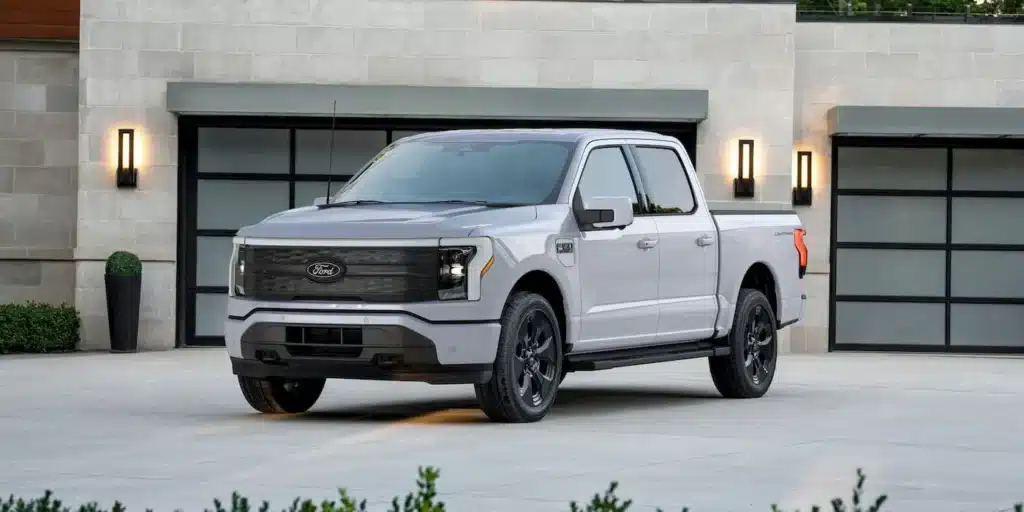
The writedown underscores a broader industry retrenchment that began last summer after the administration’s tax and spending package dimmed the outlook for EV demand. Sales fell sharply following the September 30 expiration of the $7,500 federal EV tax credit. Ford said in December it would take $19.5 billion in charges over several quarters after canceling multiple EV programs, including the all-electric F-150 Lightning and planned electric trucks and vans.
GM, the largest U.S. automaker by sales, had previously made one of the industry’s most aggressive bets on electrification, pledging to largely phase out internal-combustion vehicles by 2035. While the company has not formally retreated from that goal, analysts have sharply reduced U.S. EV sales forecasts. CEO Mary Barra has said GM will align production with customer demand.
After years of manufacturing setbacks, GM’s EV sales gained momentum in late 2024 as the company introduced lower-priced models, helping it reach No. 2 in EV sales behind Tesla. That progress has since slowed. GM said EV sales fell 43% in the fourth quarter following the loss of the consumer tax credit, after hitting record levels in the prior quarter as buyers rushed to purchase before incentives expired.
GM also disclosed a separate $1.1 billion fourth-quarter charge related to the restructuring of its China joint venture. The company has already begun scaling back EV operations, including halting battery production for six months at two joint-venture plants, reducing output to one shift at an EV-only Detroit factory, and abandoning plans for a new Michigan EV plant in favor of producing the Cadillac Escalade and full-size pickups.
Industrywide, EV sales growth has slowed markedly. U.S. EV sales rose just 1.2% in 2025, according to Omdia, and Edmunds expects EVs to account for about 6% of U.S. vehicle sales in 2026, down from 7.4% in 2025.
Ford’s retrenchment resulted in a much larger writedown, which CEO Jim Farley described as difficult but necessary. The automaker is now betting on a new EV architecture aimed at affordability, with plans to launch a $30,000 electric pickup in 2027.
Global EV Sales Reached 20.7 Million Units in 2025, Growing by 20%
Global electric vehicle (EV) sales climbed to a record 20.7 million units in 2025, marking a 20% increase from the prior year, according to new data from Benchmark Mineral Intelligence. In a January 14, 2026 update, the firm reported that 2.1 million EVs were sold globally in December alone, capping a strong year for the passenger car and light-duty vehicle market.

2025 EV Sales Snapshot (vs. 2024):
- Global: 20.7 million (+20%)
- China: 12.9 million (+17%)
- Europe: 4.3 million (+33%)
- North America: 1.8 million (–4%)
- Rest of World: 1.7 million (+48%)
Growth was driven primarily by continued expansion in China and Europe, while North America was the lone major region to record a year-over-year decline.
EVinfo.net’s Take: U.S. EV Sales Can Be Slowed but Not Stopped
Electric vehicle adoption in the United States may face periods of disruption, but its long-term trajectory remains firmly intact. Big Oil backed government policy can influence the pace of adoption, sometimes significantly, but it cannot reverse the fundamental market forces driving the transition to electric transportation. At most, policy shifts can slow EV growth temporarily. Over time, momentum both domestic and global will continue to push the U.S. market toward higher EV penetration.
Recent policy changes have demonstrated how sensitive near-term EV demand can be to incentives, regulatory signals, and infrastructure support. The expiration or modification of tax credits, changes in emissions standards, or uncertainty around long-term federal commitments can create short-term volatility in sales. These effects, however, are cyclical rather than structural. They impact timing, not direction.
The core drivers of EV adoption remain unchanged. Battery costs continue to decline, vehicle performance improves with each generation, and automakers are steadily expanding model availability across price points and segments. Consumers are increasingly familiar with EV technology, charging networks are expanding, and total cost of ownership advantages are becoming clearer, particularly for fleets and high-mileage drivers. These trends do not reset when policy shifts. They compound over time.
Global EV growth further reinforces this inevitability. Outside the United States, EV adoption is accelerating rapidly, led by China and Europe, with emerging markets now posting the fastest growth rates. Automakers operate on a global scale, and capital allocation follows demand. As EV volumes rise worldwide, manufacturers benefit from scale efficiencies, lower component costs, and faster innovation cycles. Those gains ultimately flow back into the U.S. market in the form of more affordable vehicles, improved technology, and broader consumer choice.
In practice, global EV momentum limits how far bad government policy by the United States can cause diverging from the rest of the global market. Automakers cannot economically justify maintaining separate product strategies, supporting antiquated, polluting, more expensive to own gas vehicles indefinitely. As EVs become the dominant growth engine globally, the U.S. market will continue to realign regardless of short-term political headwinds.
The result is not a straight line, but a clear one. U.S. EV sales may pause, flatten, or dip in response to policy changes, but those moments represent friction, not failure. Over the long run, market economics, global scale, and consumer demand will continue to push EV adoption forward in America. The transition may be uneven, but it is not reversible.
Many jobs have been lost already by the loss of the EV tax credit and other bad government policies, such as the tariffs. 2025 was the worst year for hiring since 2020, a December jobs report shows.
EV opponents, stop trying to kill EVs. You have zero chance of winning. EVs are the most eco friendly and cost effective vehicles, and will keep growing in the USA and worldwide. Period.

Electric Vehicle Marketing Consultant, Writer and Editor. Publisher EVinfo.net.
Services