China’s BYD Overtakes USA’s Ford in Global Sales for the First Time, a Sign of USA’s Decline
On February 12, 2026, Yahoo Finance reported that for the first time, BYD has surpassed Ford Motor Company in global vehicle sales, delivering 4.6 million units in 2025, roughly 200,000 more than Ford’s 4.4 million. The milestone lifts BYD to sixth place among the world’s largest automakers, while Ford slips to seventh after a nearly 2 percent decline in global sales, according to Bloomberg.
The global rankings remain led by Toyota Motor Corporation with a record 11.3 million vehicles sold, followed by Volkswagen Group at just under 9 million, Hyundai Motor Group with 7.2 million, General Motors at approximately 6.2 million, and Stellantis at about 5.5 million.
BYD’s growth is anchored in China, where it was the top selling automaker with more than 3.1 million vehicles delivered in 2025. Domestic brands collectively captured about 65 percent of China’s market. Still, exports played a meaningful role, accounting for roughly 25 percent of BYD’s total sales, or 1.05 million vehicles. The company aims to raise overseas deliveries to 1.3 million this year, supported by new production facilities in Brazil, Thailand, and Hungary serving regional markets.
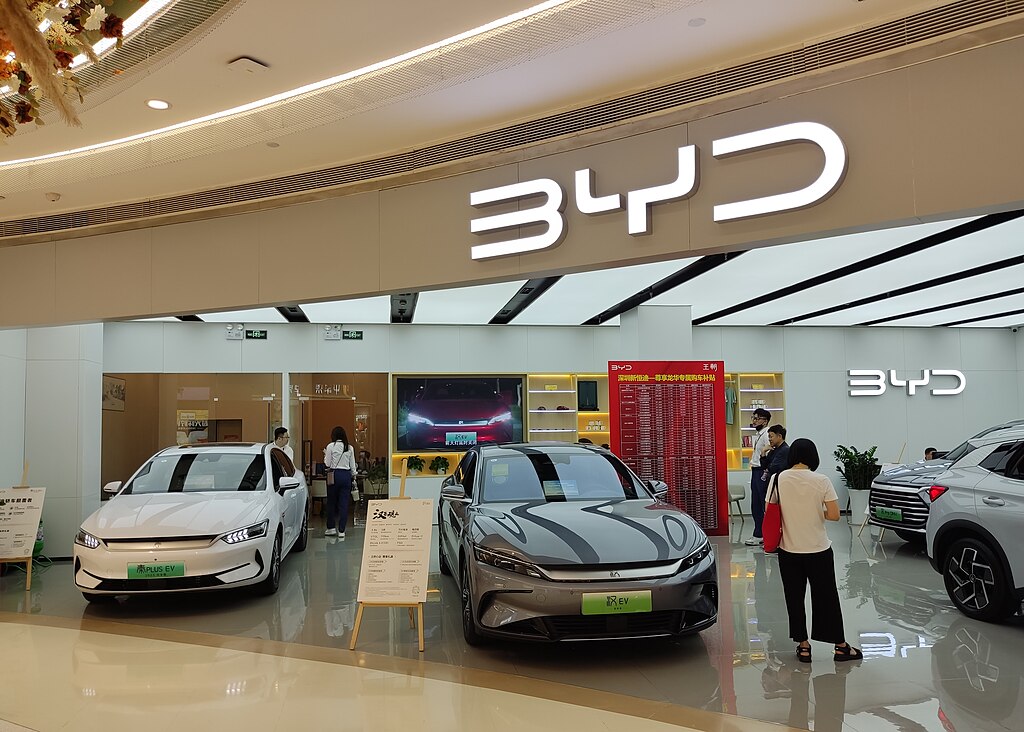
Notably, BYD sells only plug in hybrid and fully electric vehicles, categorized in China as New Energy Vehicles. It halted production of pure internal combustion models in March 2022. In 2025, BYD also overtook Tesla in global EV sales, delivering 2.25 million units, about 600,000 more than its U.S. rival.
During Ford’s fourth quarter earnings call, CEO Jim Farley described Chinese automakers as a “wild card,” citing subsidized production and intensifying export pressure as forces reshaping global competition. Meanwhile, Cui Dongshu of the China Passenger Car Association said BYD’s ascent reflects the rising competitiveness of Chinese EV brands in technology, cost structure, and market appeal.
Alarm Bells for America’s Automotive Industry, Reverse the Bad Federal US Policies
BYD’s surpassing Ford Motor Company in global vehicle sales is more than a change in rankings. It signals a structural transformation underway in the global auto industry.
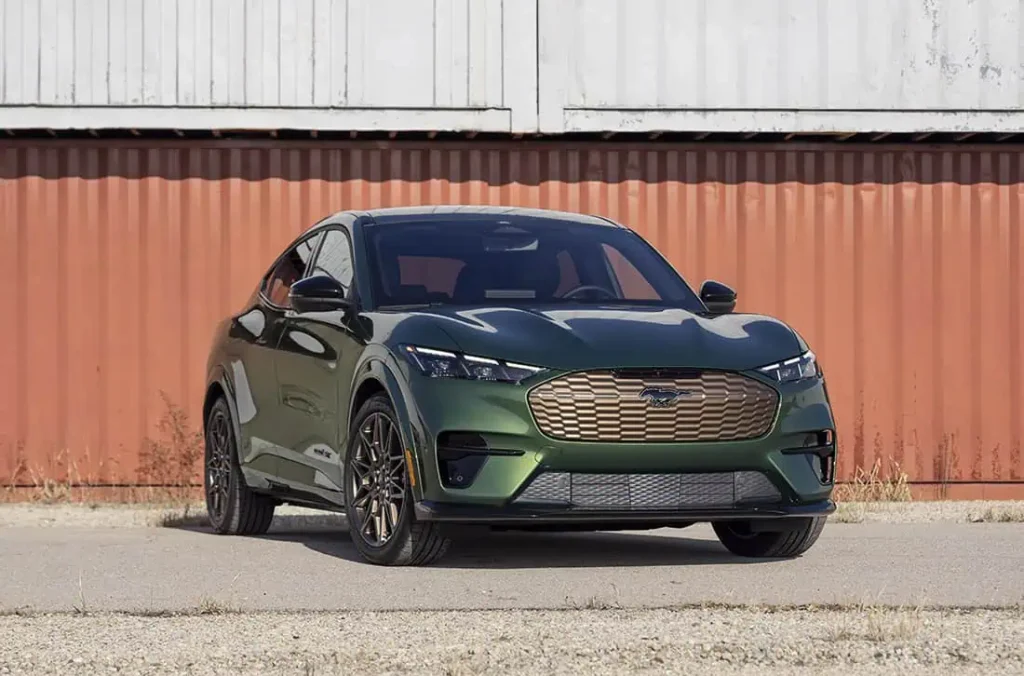
First, electrified vehicles are scaling faster than many analysts projected. BYD sells only plug in hybrids and battery electric vehicles. It exited pure internal combustion engine production in 2022. Its growth demonstrates that hybrids and fully electric models are no longer niche products. They are increasingly the volume drivers of the global market. BYD also recently surpassed Tesla in global EV sales, reinforcing the reality that electrification is now the competitive center of gravity.
Second, the result highlights the consequences of U.S. federal policy shifts that began in 2025. The rollback of EV incentives, combined with regulatory uncertainty, has cooled domestic momentum at a time when global competitors are accelerating. While Chinese automakers benefit from coordinated industrial policy, supply chain control, and aggressive export strategies, U.S. manufacturers are navigating a less predictable and more challenging environment due to bad federal policy.
The outcome is visible in the rankings. Toyota Motor Corporation remains the global leader, but Chinese firms are climbing rapidly. BYD’s rise illustrates how quickly market leadership can change when technology, cost structure, and policy alignment converge.
This moment should be viewed as a competitive wake up call. Electrification is not slowing. Global demand for BEVs and hybrids continues to expand. The question is not whether the transition will occur, but which countries will capture the economic value tied to it.
If current federal policies supporting gas vehicles and holding back EVs persist, the U.S. automotive sector risks ceding further ground in one of the most capital intensive and strategically important industries in the world.
E&E News by Politico reported Vickie Patton, who started her career at EPA under former President George H.W. Bush, said in remarks to an audience of environmental attorneys that administration’s decision to erase the endangerment finding, a scientific underpinning for federal climate rules is a stunning turn from the agency’s long-standing approach to “follow the science, follow the economics, follow the law,” no matter who was in the White House.
25% tariffs on imported cars and auto parts raised costs for automakers. The tariff costs likely doomed the least expensive models, which had thin profit margins to begin with. New car buyers paid $50,326 on average in December 2025, a record high, according to estimates from Kelley Blue Book, a Cox Automotive brand.
Consumers have had to cough up more cash to keep up with businesses’ rising costs due to the adminstration’s tariffs. An analysis from the Federal Reserve Bank of New York published on February 12, 2026, found that almost 90% of the economic burden of tariffs fell on American consumers and businesses.
America must stop the administration’s tariffs, re-instate the federal EV tax credit, stop the relaxed emissions standards, and stop the EPA from removing the endangerment finding. EVs and hybrids must be prioritized over gas vehicles, or we have no chance of competing on the global stage.

Electric Vehicle Marketing Consultant, Writer and Editor. Publisher EVinfo.net.
Services