Kiwi Charge Launches Autonomous EV Charging in Canada with $1.7 Million in Government Funding
On February 9, 2026, Robotics and AI startup Kiwi Charge announced the launch of its autonomous electric vehicle charging project, supported by the Government of Ontario through the Ontario Vehicle Innovation Network (OVIN), with additional backing from General Motors Canada and Pfaff Automotive. The initiative represents a total investment of $1.7 million aimed at developing mobile EV charging solutions that integrate artificial intelligence, robotics, and electrification to address gaps in existing charging infrastructure. Funding includes a $500,000 grant from the OVIN R&D Partnership Fund and $1.2 million from industry partners.
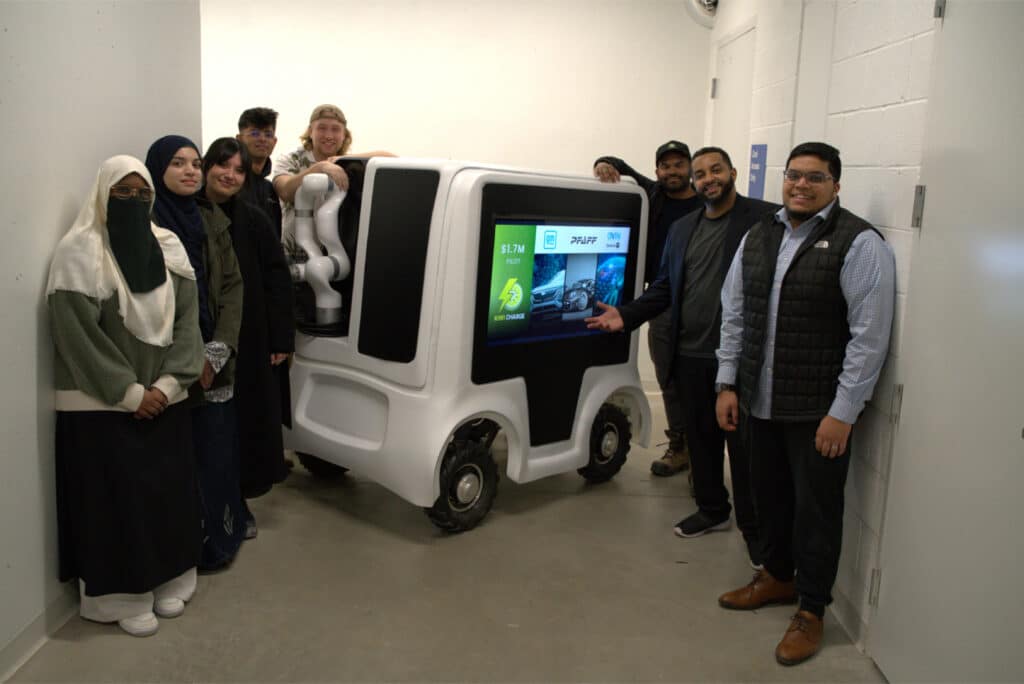
To mark the milestone, Kiwi Charge will debut the latest version of its autonomous charging robot at the Canadian International AutoShow from February 13 to 22. The system will be displayed alongside Project Arrow, Canada’s first zero-emissions concept vehicle developed by the Automotive Parts Manufacturers’ Association.
The project is focused on creating scalable, real-world solutions for EV charging in both public and private environments, particularly older condominiums and rental buildings where installing fixed chargers often requires expensive electrical upgrades. The new funding will allow Kiwi Charge to rapidly prototype and test its flagship autonomous charging units, accelerate pilots with real estate owners and automotive dealerships, expand its team, and tap into Ontario’s growing AI ecosystem to speed development and deployment.
“This project is about more than just EV charging; it’s about reshaping urban infrastructure by leveraging our strength and expertise in robotics and artificial intelligence. The support we have from OVIN and our industry partners gives us the credibility and platform we need to accelerate the development of our high-impact technology that will enable buildings to leapfrog outdated models and adopt clean, flexible EV charging at scale. It’s an Ontario-made solution for a global problem,” said Abdel Ali, CEO, Kiwi Charge.
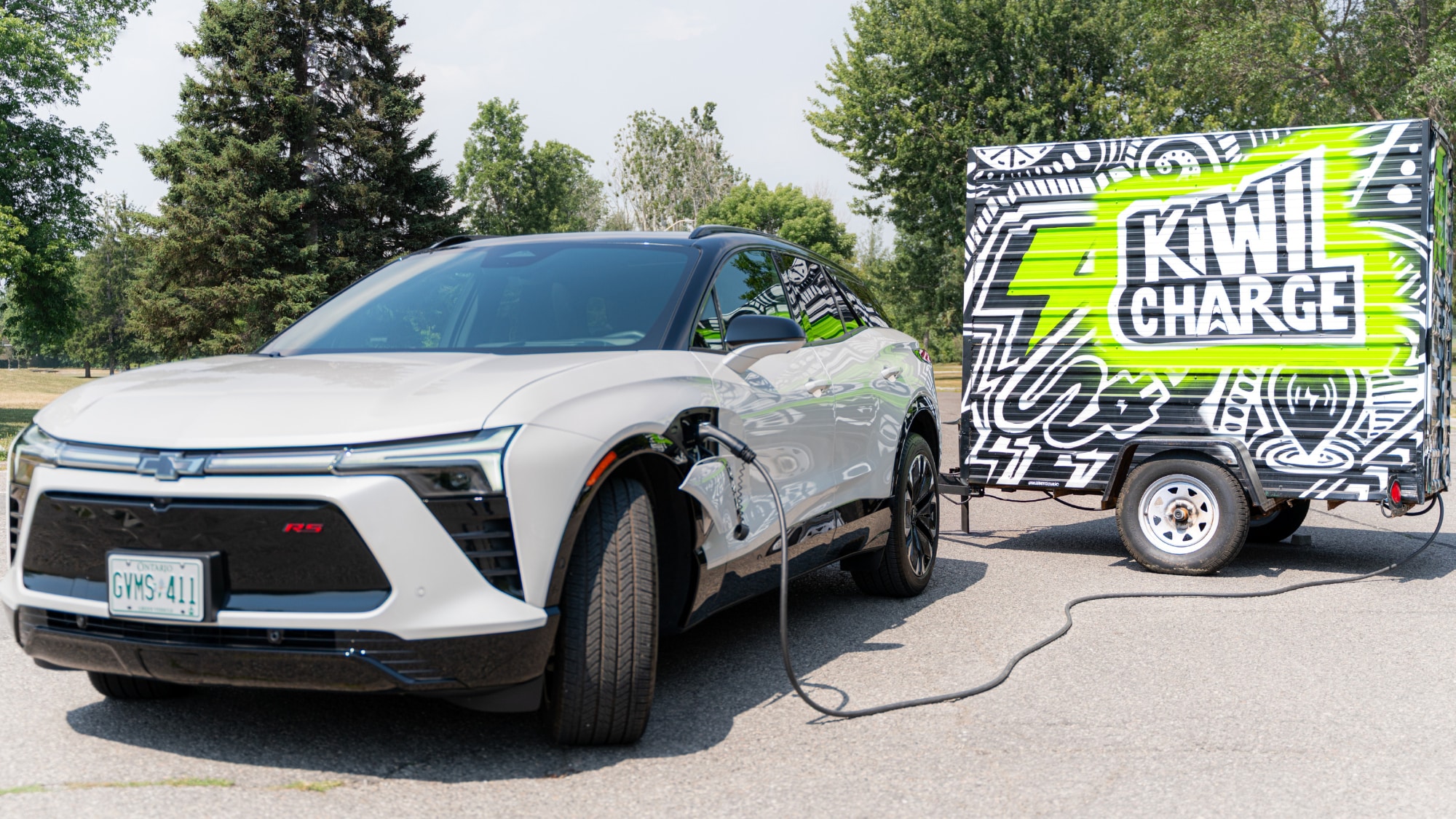
Reimagining EV Charging for Buildings
In major urban areas, roughly 30 percent of EV owners live in multi-tenant buildings where permanent charging infrastructure is frequently cost prohibitive. Kiwi Charge addresses this challenge with compact, mobile charging robots that combine autonomous mobility, AI-driven fleet management, and on-demand charging. These units can operate in parking garages without rewiring and dynamically serve multiple vehicles, improving utilization while reducing strain on the electrical grid. The approach is designed to enable faster, more affordable electrification of older buildings in line with Ontario’s climate, housing, and innovation goals.
For automotive dealerships, Kiwi Charge is also developing a manual mobile charging unit designed to keep EVs charged on busy sales lots without disrupting daily operations. The solution aims to improve vehicle turnover efficiency and simplify fleet management.
About Kiwi Charge
Kiwi Charge Inc. is a Canadian robotics and artificial intelligence company focused on rethinking EV charging for buildings. Its autonomous charging robots provide flexible, on-demand service without costly infrastructure upgrades, enabling faster and more affordable electrification in dense urban environments at an estimated 40 percent of the cost of traditional solutions. More information is available at kiwicharge.ca.
About General Motors Canada
General Motors of Canada is headquartered in Oshawa, Ontario, and is part of a global company committed to delivering safer, better, and more sustainable transportation. In Canada, GM markets Chevrolet, Buick, GMC, and Cadillac vehicles through its nationwide dealer network, along with OnStar services. Additional information is available at gm.ca.
About OVIN
The Ontario Vehicle Innovation Network is a Government of Ontario initiative led by the Ontario Centre of Innovation, designed to strengthen Ontario’s position as a North American leader in advanced automotive and smart mobility technologies. OVIN supports companies through research and development funding, talent and skills development, technology acceleration, business support, and access to demonstration grounds. More information can be found at ovinhub.ca.
EVinfo.net’s Take: EV Leaders Based in Canada Include Clockwork Energy and BluWave-ai
We congratulate the Kiwi Charge team for its important and innovative work for EV adoption. The lack of charging for EV owners living in multi-tenant buildings is a worldwide problem that we are encouraged to see more effort go into. Other EV leaders in Canada we recommend are Clockwork Energy and Bluwave.ai.
Clockwork Energy and BluWave-ai illustrate how software and artificial intelligence are becoming foundational to the future of electrification, addressing two of the most pressing challenges in clean transportation and energy systems: reliability and optimization.
Clockwork Energy is focused squarely on one of the biggest pain points in the EV transition, charger reliability. Rather than competing with existing charging hardware or backend platforms, Clockwork operates as a software reliability layer that sits on top of current systems. It integrates with chargers, networks, communications equipment, and monitoring tools to give operators a clear, real-time view of how their infrastructure is performing. By continuously monitoring charger behavior, detecting anomalies early, and automating diagnostics, Clockwork helps prevent outages before drivers ever experience them. The goal is simple but critical: make EV charging work the first time, every time.
This approach is particularly valuable as charging networks scale and become more complex. Operators are often managing mixed hardware, multiple vendors, and aging equipment, all while customer expectations continue to rise. Clockwork’s software reduces that complexity by centralizing visibility and enabling faster response to issues, improving uptime and building trust with drivers who depend on public charging to get where they are going.
BluWave-ai addresses a different, but equally important, layer of the electrification challenge. Based in Canada, the company applies artificial intelligence and real-time analytics to optimize how electricity is generated, stored, and consumed. As renewable energy and electric vehicles add variability to the grid, BluWave-ai’s technology helps utilities, grid operators, and fleet managers balance supply and demand more efficiently. Its AI models process vast amounts of data, including energy prices, weather patterns, and load behavior, to make smarter decisions in real time.
BluWave-ai’s work spans EV charging, fleet management, energy storage, and grid optimization. By intelligently scheduling charging and dispatching stored energy when it is most valuable, the company helps reduce costs, improve reliability, and lower emissions. The result is a more flexible and resilient energy system that can support large-scale electrification without overwhelming existing infrastructure.
Together, Clockwork Energy and BluWave-ai highlight how the clean energy transition is increasingly being driven by intelligence as much as hardware. Reliable chargers and optimized grids are not just engineering problems, but software challenges that require constant monitoring, prediction, and adaptation. As EV adoption accelerates and renewable energy penetration deepens, companies like these will play a central role in ensuring that electrification is not only cleaner, but dependable, efficient, and ready to scale.

Electric Vehicle Marketing Consultant, Writer and Editor. Publisher EVinfo.net.
Services