Uber Investing $100M in AV Charging, Incentives for EV Charging Installs in US, Europe
On February 18, 2026, the New York Times reported that Uber announced it will provide incentives to other companies to install electric vehicle chargers in the United States and Europe. The initiative could help a segment of the car market that has been affected by recent U.S. policy changes.
The company said it would guarantee a minimum level of usage for chargers installed in neighborhoods where its drivers live or frequently pick up and drop off passengers. This commitment should help charging operators recover their investment in new stations more quickly. The amount of usage is crucial to profitability but can be difficult to predict.
Electric vehicle sales in the United States have declined after the administration removed several policies designed to promote zero-emission vehicles. Despite this, the construction of charging stations grew at a record pace last year, partly because of drivers like Charles Iwuoha, one of 13,000 ride-share drivers in New York City who use electric vehicles.
Mr. Iwuoha purchased a Kia EV9 electric SUV last year with financial assistance from Uber. He said the battery lasts for a full 10-hour shift and costs $20 to $40 less to charge than refueling his previous gasoline vehicle.
That is a significant saving, said Mr. Iwuoha, who lives in Queens. He explained that high New York rent makes driving for Uber necessary to cover expenses, but income is tight.
Ride-share drivers are among the heaviest users of public chargers, especially fast-charging stations that can replenish a battery in 30 minutes or less, according to analysts and charging companies. The revenue generated by drivers using public chargers is a major reason for the growth in the number of stations.
However, chargers are not always located where Uber drivers need them. Mr. Iwuoha lives in an apartment building without home charging and relies on fast public chargers that are often crowded, particularly in Manhattan.
Pradeep Parameswaran, Uber’s global head of mobility, said the company hopes to address some of these challenges by installing 1,000 chargers. He added that electrification reduces operational costs for drivers and lowers emissions, benefiting cities overall.
Jeroen van Tilburg, chief executive of Ionity, a European charging company partnering with Uber, said Uber’s data will help identify optimal locations for new chargers.
The stations built with Uber’s support will be accessible to anyone and will particularly benefit renters and urban residents without home charging. Uber aims to encourage new stations in New York, Los Angeles, Boston, San Francisco, London, Paris, and Madrid.
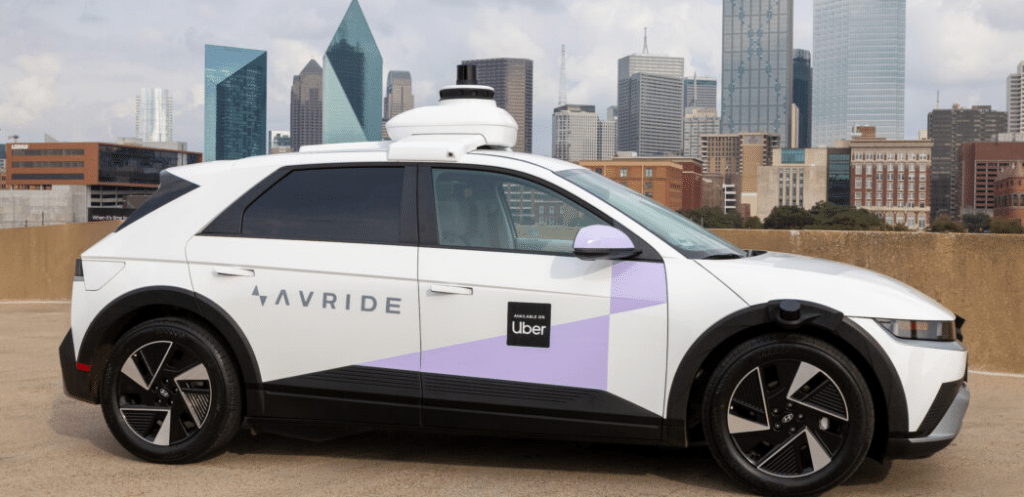
Uber also announced a $100 million investment to build charging hubs for autonomous vehicles, which are almost always electric. The company has been working with firms like Waymo to provide charging, cleaning, and maintenance for autonomous taxis in cities such as Austin, Texas.
Despite challenges from Washington, the number of chargers in the United States increased 30 percent last year to 70,000 ports. The last three months of the year saw a 44 percent increase, even as electric vehicle sales fell after a federal tax credit for EV purchases expired.
Early 2026 data suggests that growth continues, said Florent Breton, chief executive of Paren, a research firm specializing in EV charging. He noted that obstacles imposed by the administration have had limited effect.
Ride-share drivers are a major factor driving demand for charging. Their vehicles now account for roughly 25 percent of the energy dispensed by EVgo, the third-largest U.S. charging network and an Uber partner, compared with 10 percent in 2021.
Badar Khan, chief executive of EVgo, said that Uber’s partnership accelerates infrastructure rollout and electric vehicle adoption.
Charging remains a significant obstacle for potential EV buyers. Used electric vehicles are less expensive than comparable gasoline vehicles and cheaper to fuel and maintain, according to A new peer-reviewed study from researchers at the University of Michigan. New electric vehicles cost more but the price gap is shrinking.
Uber also offers drivers a $4,000 grant to purchase electric vehicles, requiring at least 100 trips to qualify.
Mr. Iwuoha said he chose an electric vehicle partly for environmental reasons and in anticipation of New York regulations that will require all ride-share vehicles to be zero-emission or handicapped accessible by 2030. He purchased his Kia before the $7,500 federal tax credit expired.
He said he would like chargers to be available in public park lots and at more gas stations. Time is money, he emphasized.
Uber’s autonomous rideshare EVs will compete with Waymo and Tesla. Waymo, using Lidar has been proven as much safer than Tesla’s cost-cutting, camera-only robotaxis.
Automotive World reported in October 2025 that updated filings from the National Highway Traffic Safety Administration (NHTSA) show that Tesla’s robotaxis have reported four crashes across roughly 250,000 miles since June 2025, or one crash roughly every 62,500 miles; this is far more than Waymo’s 1,267 crashes over some 125 million driverless miles, equating to one every 98,600 miles.

Electric Vehicle Marketing Consultant, Writer and Editor. Publisher EVinfo.net.
Services