Long-awaited 2027 Ferrari Luce EV Unveiled
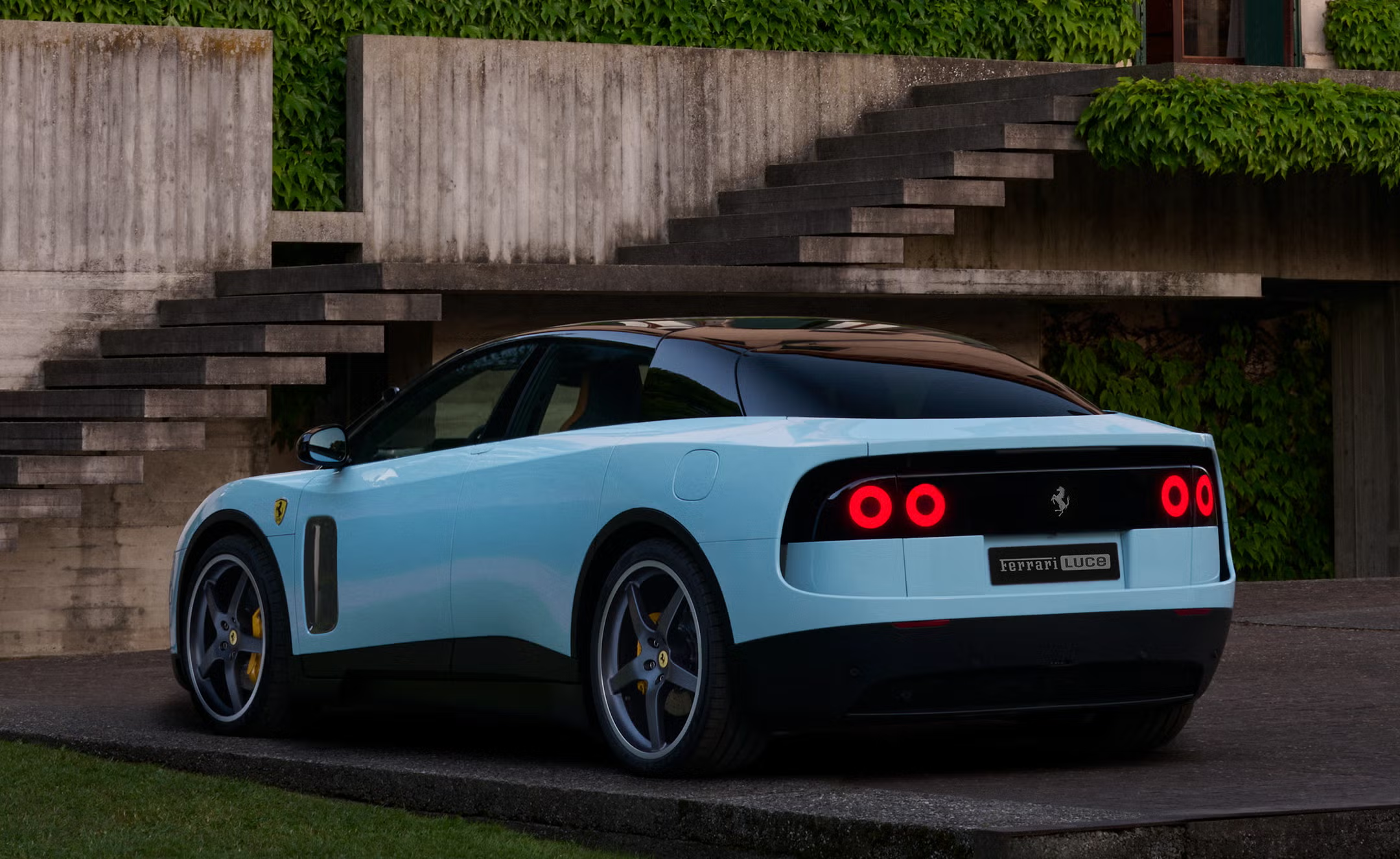
Ferrari has officially revealed its first fully electric vehicle, the 2027 Ferrari Luce, and it may be the boldest design shift in the company’s history. Producing 1,035 horsepower from four electric motors, the Luce is not only Ferrari’s first EV, but also its first true five-seat production model. U.S. deliveries are expected to begin in spring 2027.
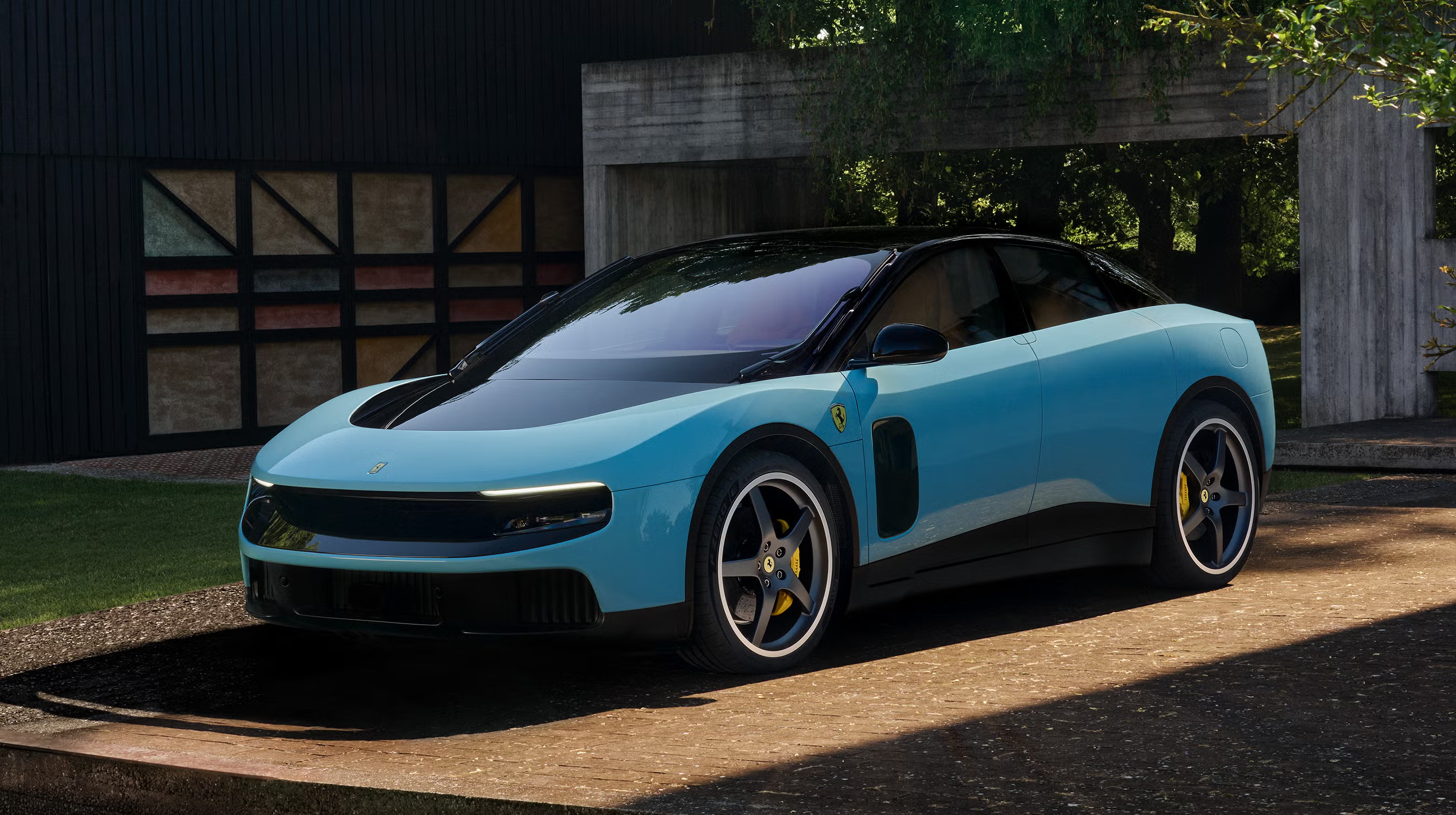
The Luce immediately stands apart from every Ferrari that came before it. Rather than relying solely on Ferrari’s in-house styling team, the automaker partnered with LoveFrom, the design firm led by former Apple design chief Jony Ive and renowned industrial designer Marc Newson. Their influence is evident throughout the car’s minimalist yet futuristic exterior and interior.
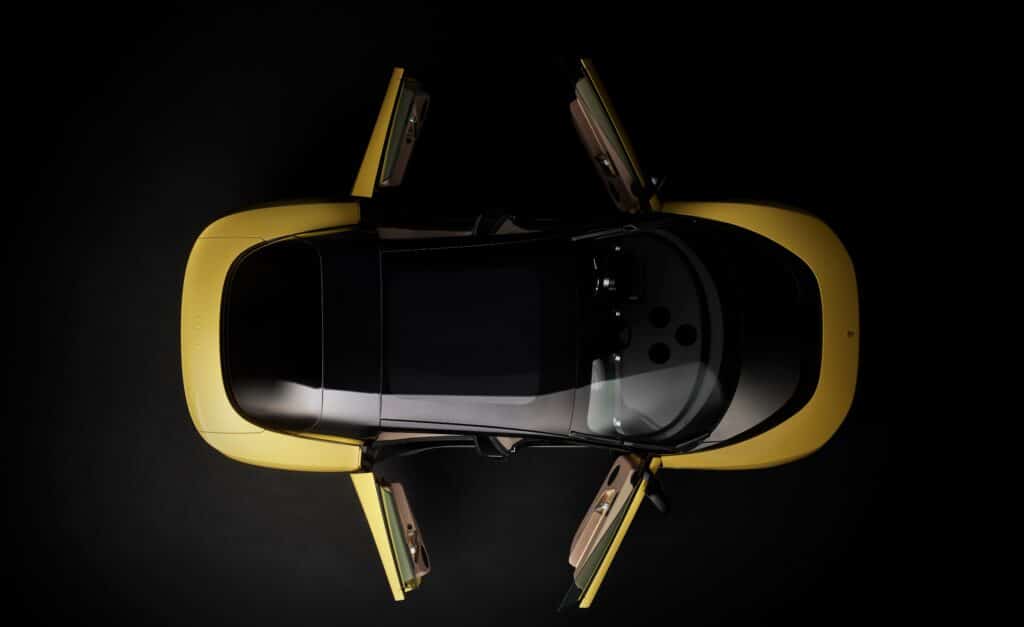
Built on a dedicated EV platform, the Luce takes advantage of packaging freedoms unavailable in combustion-engine Ferraris. The all-aluminum body measures 197.9 inches long, making it slightly longer than the Purosangue, while sitting lower to the ground. The cabin is pushed forward, the rear features a liftgate, and the center-opening doors give the car an unconventional grand touring profile. Ferrari also introduced hidden lighting elements, upright windshield wipers parked against the A-pillars, and heavily sculpted aerodynamic surfaces.
Aerodynamics played a major role in the Luce’s development. Ferrari claims the EV has the lowest drag coefficient of any road-going Ferrari ever produced. Tunnel-inspired front and rear spoilers, along with active grille shutters managing airflow to three heat exchangers, were engineered to maximize efficiency and high-speed stability.
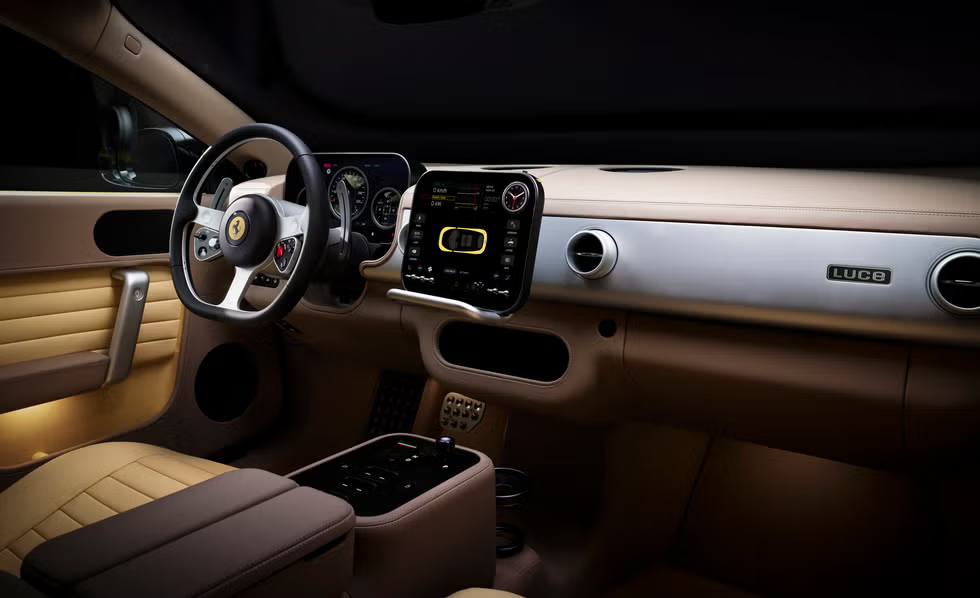
Inside, the Luce blends physical controls with digital interfaces instead of overwhelming occupants with screens. The cabin has a similar footprint to the Purosangue but eliminates the traditional central tunnel and rear transaxle, allowing seating for five passengers and creating the largest cargo area ever offered in a Ferrari.
The dashboard uses OLED displays integrated into a layered instrument panel design. Three metal-ringed digital gauges sit within a larger display. The center gauge shows speed and battery charge, the left display monitors available power and regenerative braking, and the right screen is customizable. Ferrari designed the entire cluster to move with the steering column.
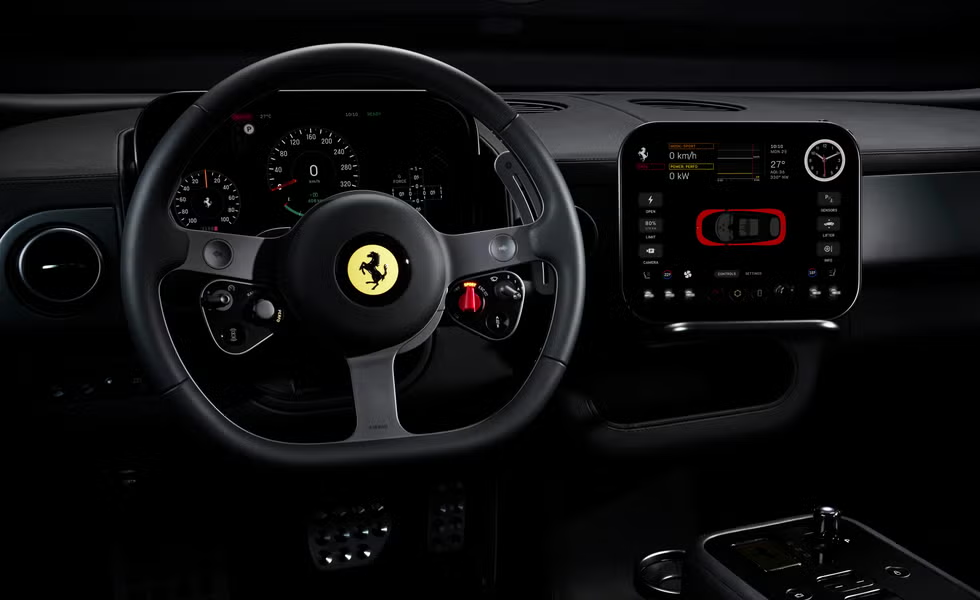
A compact center touchscreen can physically pivot toward either the driver or front passenger, while rear-seat passengers receive their own dedicated display mounted behind the center console. Ferrari also abandoned the controversial touch-sensitive steering wheel controls found in recent models, replacing them with traditional physical buttons and switches.
The steering wheel now features two separate manettino dials. One controls traditional drive dynamics, while the second “e-manettino” adjusts EV-specific powertrain behavior. Large paddles behind the wheel manage regenerative braking and torque delivery.
Power comes from four synchronous permanent-magnet motors developed entirely by Ferrari. The rear motors produce the majority of the output, generating 831 horsepower, while the front pair contributes 282 horsepower. Combined system output reaches 1,035 horsepower, making the Luce the most powerful road-going Ferrari ever built.
Despite weighing nearly 5,000 pounds, Ferrari says the Luce can sprint from 0 to 62 mph in 2.5 seconds and reach 124 mph in 6.8 seconds. Top speed is rated at 193 mph. A dedicated launch mode activated through an overhead-console pull handle temporarily unlocks an additional 54 horsepower while optimizing traction control.
Ferrari also attempted to recreate the involvement of traditional gear changes in an EV. The left steering-wheel paddle increases regenerative braking in five stages, simulating engine braking during corner entry. The right paddle progressively unlocks higher torque output when accelerating out of turns. A torque meter above the speedometer acts similarly to Ferrari’s traditional shift lights, guiding drivers on when to increase power delivery.
One of the biggest engineering challenges involved sound. Rather than simulating a V-12 soundtrack, Ferrari developed a patented system that captures and amplifies real mechanical noises generated by the rear axle and drivetrain. Sound intensity changes depending on the selected drive mode. “Perfo” delivers the loudest experience, “Tour” provides a moderate sound profile, and “Range” prioritizes quiet operation. External speakers also project the sound outside the vehicle.
The Luce uses a Ferrari-designed 122-kWh structural battery pack paired with an 800-volt electrical architecture capable of charging at speeds up to 350 kW. Ferrari estimates WLTP driving range at 330 miles, which would likely translate to roughly 280 miles under EPA testing.
The chassis includes four-wheel steering, advanced active suspension derived from the Ferrari F80 hypercar, adaptive dampers, and full torque vectoring across both axles. Massive brake rotors and enormous staggered wheels, 23 inches up front and 24 inches in the rear, reinforce the Luce’s supercar credentials. Buyers can choose between traditional five-spoke wheels or aerodynamic turbine-style designs that reduce drag by five percent.
European sales begin later this year with pricing around 550,000 euros, or approximately $640,000. U.S. pricing has not yet been announced.
The Luce arrives at a complicated moment for ultra-luxury EVs. Demand for high-end electric performance cars remains uncertain. Lamborghini recently delayed its EV ambitions after weak customer interest, while McLaren and Aston Martin have also expressed caution about the timing of fully electric supercars.
Ferrari executive chairman John Elkann described the Luce as an expansion of Ferrari’s identity rather than a replacement for it. Whether Ferrari enthusiasts embrace an electric future carrying the prancing horse badge remains one of the biggest unanswered questions in the automotive world.
EVinfo.net’s Take: The Age of Gas Powered Sportscars is Officially Over
The future of sports cars and racing is arriving faster than many enthusiasts expected, and it is increasingly electric. For decades, performance was defined by roaring engines, manual transmissions, and the smell of gasoline after a hard lap around a racetrack. But a new generation of electric performance vehicles is reshaping what speed, excitement, and competition look like.
The unveiling of the 2027 Ferrari Luce marks a major turning point. Ferrari, one of the world’s most iconic performance brands, has now fully entered the EV era with a 1,035-horsepower electric grand tourer capable of hitting 62 mph in just 2.5 seconds. That kind of acceleration would have seemed impossible for a four-door luxury EV just a few years ago.
Ferrari is not alone. Electric performance technology is rapidly moving from niche experiments into the center of the automotive world. Formula E has evolved into a legitimate all-electric global racing series, Rimac continues pushing hypercar boundaries, Porsche’s Taycan has proven EVs can dominate both drag strips and endurance runs, and even NASCAR and Formula One are investing heavily in electrification strategies.

What makes EVs so disruptive is not simply that they are cleaner. It is that electric motors fundamentally outperform combustion engines in many key areas. Instant torque delivery allows electric cars to accelerate harder out of corners. Torque vectoring enables software-controlled handling that would be impossible with traditional drivetrains. Lower centers of gravity improve stability. Advanced regenerative braking systems add new dimensions to vehicle control and energy management.
The traditional argument against EVs has always centered around emotion. Enthusiasts often point to engine noise, shifting gears, and mechanical vibrations as essential parts of the sports car experience. Automakers understand this concern, which is why companies like Ferrari are developing entirely new approaches to driver engagement. The Luce, for example, uses real amplified drivetrain sounds and paddle-controlled torque delivery systems to create a more interactive experience behind the wheel.
Racing itself is also evolving. Electric race cars are becoming dramatically quicker each year while requiring far less mechanical maintenance than combustion competitors. Software engineering, battery cooling, energy recovery systems, and power management are becoming just as important as aerodynamics and suspension tuning. In many ways, racing is transforming into a showcase for the next generation of mobility technology.
The new Mercedes-AMG GT 4-Door Coupe is proof in action of the trickle-down path of high tech such as axial flux motors to consumer vehicles. YASA’s motors are delivering unmatched power density, compactness, and efficiency. While axial flux designs have long promised superior performance compared to traditional radial flux motors, they were once dismissed as commercially unviable for mass production.
EVinfo.net reported in May 2025 that YASA CEO Tim Woolmer said the lessons being learned in high-performance applications are expected to ripple outward, making their way from high end EV sportscars and racecars to more accessible production EVs. “Whilst really being used in the niche sports car sector today, over time we will see that filter through to Mercedes-AMG vehicles, and then into the automotive sector more broadly,” said Woolmer.
Chinese EV giant BYD’s Yangwang U9 Xtreme is now the world’s fastest production car, reaching 308.4 mph on a German test track in September 2025, surpassing Bugatti’s Chiron Super Sport, which topped out at 304.5 mph.
The shift is not only happening because of regulation or climate goals. Performance buyers increasingly want the fastest machines available, and EVs are proving they can deliver extraordinary results. A modern electric supercar can outperform many traditional hypercars while offering instant responsiveness and daily usability.

Electric Vehicle Marketing Consultant, Writer and Editor. Publisher EVinfo.net.
Services