Toyota and Lexus Add EV Route Planning
The new 2026 Lexus ES will become the first Lexus model to feature Toyota Motor Corporation’s new Arene software platform, introducing several long-awaited EV-focused features, including native EV route planning.
For years, Tesla has set the standard for EV navigation with its Trip Planner system, which automatically maps charging stops along a route based on battery level and destination. Toyota and Lexus are now moving closer to that experience with the launch of the next-generation Lexus Interface multimedia system in the all-electric 2026 ES.
Powered by Automotive Grade Linux and Toyota’s Arene software-defined vehicle platform, the updated system was developed by Woven by Toyota. Arene first debuted in the 2026 RAV4 and is now expanding into upcoming Lexus EVs.
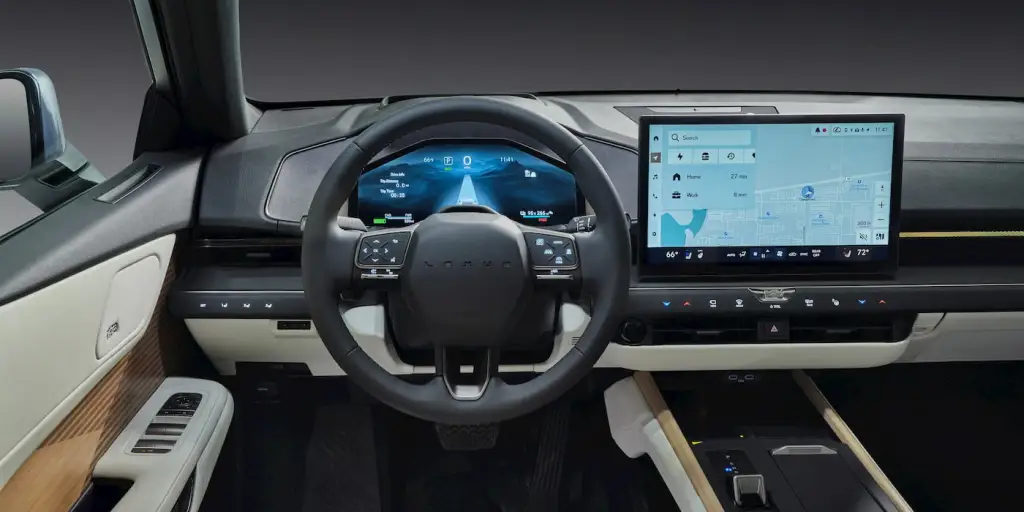
The platform enables over-the-air software updates, a faster smartphone-like interface, expanded personalization, and new connected vehicle features. Most notably for EV owners, the 2026 ES introduces native EV Routing and EV Charge Management.
For the first time in a Lexus vehicle, navigation maps and turn-by-turn directions can now appear directly in the driver’s multi-information display. The EV Routing system can automatically guide drivers to charging stops during road trips while displaying detailed station information including charger availability, hours of operation, charger speed, connector type, and maximum charging output.
The EV Range Map works alongside the routing system to calculate optimal charging stops based on the vehicle’s current battery level and destination.
Drivers can also monitor and manage charging remotely through the Lexus app. However, features including EV Routing and EV Range Map require an active Drive Connect subscription or trial.
The 2026 Lexus ES EV lineup includes two variants: the front-wheel-drive ES 350e and the all-wheel-drive ES 500e. Both are available in Premium and Luxury trims.
The base ES 350e Premium starts at $48,795, including destination fees, and offers an EPA-estimated 307 miles of driving range. The ES 500e AWD Premium starts at $51,795, while Luxury trims begin at $57,195 and climb to $60,195 for the ES 500e Luxury AWD.
Luxury models add features including a 17-speaker Mark Levinson audio system, ambient lighting, and a Panoramic View Monitor.
Like Toyota’s newest EVs, the 2026 ES also adopts a built-in NACS charging port, giving drivers direct access to Tesla Superchargers. Lexus says the sedan can recharge from 10% to 80% in approximately 30 minutes using DC fast charging.
Toyota has also been rapidly expanding EV functionality across its lineup. The company recently added Apple Maps EV Routing through Apple CarPlay for 2023 and newer EVs, while all 2026 Toyota EVs now include Plug & Charge capability for simpler charging authentication and payments.
The improvements appear to be helping Toyota gain traction in the EV market. Following major upgrades for the 2026 model year, the Toyota bZ became the third best-selling EV in the United States during the first quarter, while the updated Lexus RZ ranked eighth in EV sales, ahead of vehicles including the Tesla Cybertruck and Cadillac Lyriq.
Google Maps Simplifies Battery Predictions and Trip Planning for 350+ Android Auto EV Models
For drivers without native EV trip planning such as Toyota’s, there is another option. In March, Google announced that Google Maps expanded its AI-powered EV charging and trip-planning tools to more than 350 Android Auto compatible electric vehicle models, making long-distance driving easier and more convenient for EV owners.
The updated Maps experience can now recommend when and where drivers should charge based on their specific EV model and real-time battery level. By reducing the need for multiple charging apps and improving route accuracy, the feature is designed to help minimize range anxiety.
Drivers simply enter their EV information into Google Maps and choose a destination through Android Auto. Maps will then estimate battery consumption for the trip and, after the current charge level is added, suggest optimal charging stops along the route. The system also provides estimated battery percentage upon arrival and adjusts the ETA to account for charging sessions.
To improve prediction accuracy across hundreds of EV models, Google combines AI with advanced energy modeling that factors in vehicle characteristics such as battery capacity and weight. The system also uses real-time road and environmental data, including traffic conditions, elevation changes, and weather patterns.
The AI-powered battery prediction feature has rolled out across the United States for EVs from more than 15 automakers, with additional brands and models expected to be added soon.

Electric Vehicle Marketing Consultant, Writer and Editor. Publisher EVinfo.net.
Services