Australian Electric Aircraft Charging Company Enters U.S. Market
As electric aviation moves closer to commercialization, one company is focusing on a critical piece of the ecosystem that often receives less attention than the aircraft themselves: charging infrastructure. Australia-based Electro.Aero is building specialized charging solutions designed exclusively for electric aircraft, helping airports and vertiports prepare for the next generation of sustainable air transportation. The company says its mission is to support the future of electric aviation by delivering turnkey charging systems that meet the unique requirements of both fixed-wing aircraft and electric vertical takeoff and landing (eVTOL) vehicles.
Founded in 2014, Electro.Aero has established itself as a specialized independent supplier of aircraft charging infrastructure with customers across four continents. The company says it currently supplies six of the world’s ten largest electric aircraft original equipment manufacturers and has contributed to several industry milestones, including supporting the world’s first commercial operation of an electric aircraft in 2018 and the world’s first off-grid rapid charging of an electric aircraft in 2020. Its charging systems have also supported record-setting hybrid-electric and eVTOL flights in recent years.
Electro.Aero supports multiple charging standards, including CCS1, CCS2, GB/T, and the developing SAE AS6968 aircraft charging standard, which the company helped create. The company is also preparing to support future standards as they become finalized. Its charging products are manufactured in Australia, while key components are sourced from the United Kingdom and Switzerland.
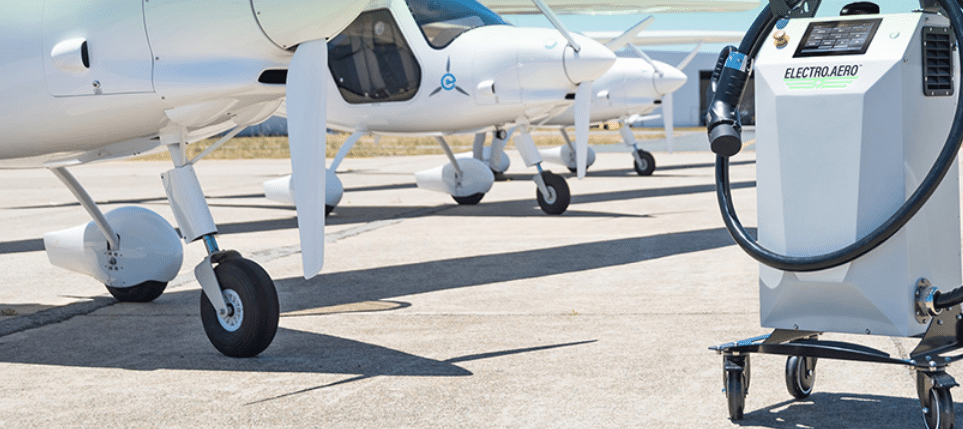
On June 18, EVinfo.net spoke with Richard Watson, CCO at Electro.Aero, about the company’s sales in the United States. Watson said the company is shipping a CCS1 variant to the U.S. next week for an electric aircraft customer. Later this year, the company will be finalizing distribution arrangements in the US for scaling in 2027, continued Watson.
Watson showed a video on Linkedin of one of the company’s units charging an EV, showing that the units can charge not only aircraft, but cars, trucks, and airport ground support equipment as well.
Watson said: “Airports have started purchasing electric aircraft chargers in anticipation of the imminent uptake of electric aircraft. But can these same chargers also accommodate EVs, and other ground support equipment at airports? Absolutely!”
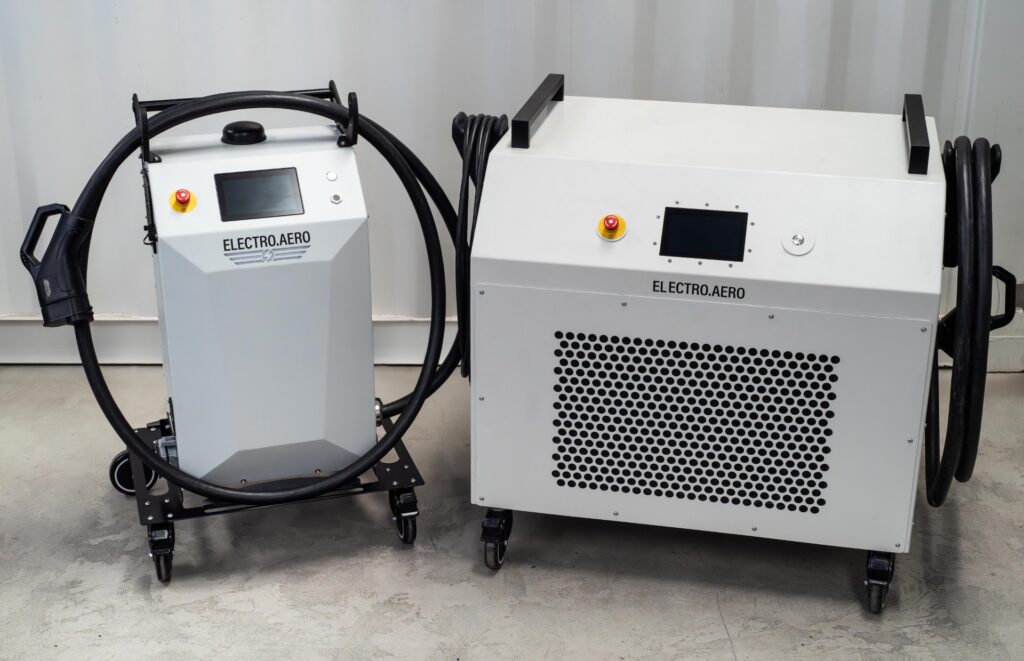
As electric aviation advances from demonstration projects toward commercial deployment, charging infrastructure will become just as important as the aircraft themselves. Companies like Electro.Aero are helping lay the foundation for a future where regional airports and urban vertiports can support reliable, low-emission air transportation on a global scale.
Electric Aircraft Moving to Commercial Deployment in United States
Electric aircraft are steadily moving from research laboratories and demonstration flights toward commercial deployment in the United States, potentially transforming regional air travel over the next decade. While electric vehicles have become increasingly common on American roads, a growing number of companies are working to electrify aviation, one of the most difficult transportation sectors to decarbonize.
Electric aircraft offer several potential benefits over conventional airplanes. They produce zero direct emissions during flight, generate significantly less noise, and have fewer moving parts, which could reduce maintenance costs over time. For shorter routes, electric propulsion may also lower operating expenses because electricity is often less expensive and less volatile than aviation fuel.
Several American companies are leading the development effort. California-based Joby Aviation and Archer Aviation are developing electric vertical takeoff and landing aircraft, commonly referred to as eVTOLs, that are designed to transport passengers over short urban and regional routes. These aircraft resemble a cross between a helicopter and an airplane, using multiple electric propellers to provide vertical lift and forward flight.
Vermont-based BETA Technologies is taking a slightly different approach by developing both cargo and passenger aircraft while simultaneously building a nationwide charging network for electric aviation. The company has already completed numerous demonstration flights and has established charging stations at airports throughout the United States. Rather than focusing exclusively on urban air mobility, BETA is targeting cargo operators, regional airlines, and military applications.
The Federal Aviation Administration is also accelerating efforts to integrate advanced air mobility into the nation’s transportation system. In early 2026, the agency announced an Advanced Air Mobility and Electric Vertical Takeoff and Landing Integration Pilot Program involving projects across dozens of states. The initiative is designed to help communities prepare for the safe introduction of electric aircraft while evaluating infrastructure requirements, operational procedures, and air traffic management systems.
One of the most promising use cases for electric aircraft involves short regional flights that are currently underserved by traditional airlines. Thousands of routes in the United States are less than 300 miles long, making them potential candidates for electrification as battery technology improves. Electric aircraft could reconnect smaller communities to regional transportation networks while reducing emissions associated with short-haul travel.
Hawaii has emerged as a potential early market because many inter-island routes are relatively short and fuel costs are high. Similar opportunities exist in Alaska, where remote communities often depend on aviation for essential transportation and cargo deliveries.
However, significant challenges remain before electric aircraft become commonplace. The biggest limitation is battery energy density. Modern lithium-ion batteries store far less energy per pound than conventional jet fuel, which restricts aircraft range and payload capacity. As a result, most first-generation electric aircraft will focus on shorter routes rather than replacing long-haul commercial jets.
Infrastructure development is another hurdle. Airports will require high-powered charging systems capable of rapidly recharging aircraft between flights. New facilities known as vertiports may also be needed in urban areas to support eVTOL operations. Utilities will have to work closely with airport operators to ensure electrical grids can support increased demand.
Safety certification is equally important. Before carrying passengers commercially, aircraft manufacturers must complete rigorous testing and receive FAA approval. Companies such as Joby Aviation have made significant progress through the certification process, but several regulatory steps remain before widespread commercial operations can begin.
Despite these challenges, investment in electric aviation continues to grow. Major airlines, automakers, and institutional investors have committed billions of dollars to developing next-generation aircraft and supporting infrastructure. Companies are also exploring hybrid-electric systems that combine batteries with conventional propulsion technologies to extend range while reducing fuel consumption.
Electric aviation could eventually complement the broader transition to transportation electrification already underway in the automotive industry. Just as electric vehicles are reducing emissions on roadways, electric aircraft may help reduce the environmental impact of short-distance air travel.
The transition will not happen overnight, and conventional aircraft will continue to dominate long-haul aviation for many years. However, the progress being made today suggests that quieter, cleaner, and more efficient air travel may soon become a reality. If battery technology continues to improve and infrastructure investments keep pace, electric aircraft could become one of the most significant transportation innovations of the next decade in the United States.

Electric Vehicle Marketing Consultant, Writer and Editor. Publisher EVinfo.net.
Services