Global Automakers Are Struggling to Keep Up With China’s EV Industry
The BBC reported in May 2026 that global automakers are facing an unprecedented challenge as Chinese companies continue to gain ground not only in electric vehicle production, but also in batteries, software, artificial intelligence, and next-generation mobility technologies.
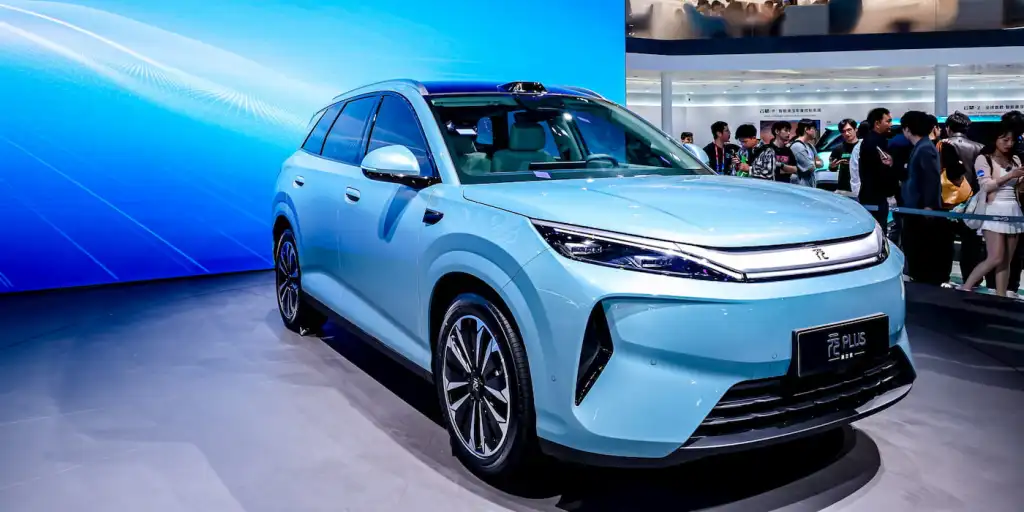
Visits to factories in Beijing and Hefei during Auto China 2026, the world’s largest automotive exhibition, revealed highly automated production facilities and software development capabilities that many traditional automakers are struggling to match.
After touring an advanced manufacturing plant in Shanghai, Honda CEO Toshihiro Mibe told Japanese media that his company had “no chance against this.” Ford CEO Jim Farley has also warned that Western automakers are now “in a fight for our lives” as Chinese competitors rapidly expand their global footprint.
For decades, international automakers invested heavily in joint ventures with Chinese companies to manufacture vehicles inside the country. Today, those partnerships are evolving into collaborations focused on software development and technology sharing as foreign brands attempt to remain competitive.
Industry analyst Bill Russo told the BBC that many companies outside China misunderstand the scale of the transition taking place.
“The biggest mistake that the developed world is making is believing that the transition is only about electric cars,” Russo said. “It’s about who will lead the next generation of mobility technology.”
China’s advantage extends far beyond vehicle production. According to Rhodium Group, China now leads global exports in more than 315 product categories, nearly double the number from a decade ago. Many of these categories support EV supply chains, including batteries, components, and manufacturing equipment.
The International Energy Agency estimates that producing a small electric SUV in China is at least 30% cheaper than in many advanced economies. Lower battery costs and highly integrated supply chains have created substantial cost advantages.
Years of government support have also accelerated growth. Rhodium estimates that China has invested tens of billions of dollars into EV and battery manufacturing, allowing companies to rapidly expand production and aggressively lower prices.
Competition within China has become another major catalyst for innovation. Technology giants such as Xiaomi, Huawei, and Alibaba have entered the automotive sector, bringing consumer electronics expertise into vehicle development.
According to Russo, Chinese companies are no longer focused on competing with Western automakers.
“They’re not racing the West anymore. They’re racing each other.”
As vehicles become increasingly dependent on software, Chinese companies are gaining another advantage. Features such as driver assistance systems, digital ecosystems, and entertainment platforms are becoming central to the ownership experience.
At Xiaomi’s EV factory outside Beijing, a vehicle rolls off the production line approximately every 76 seconds. Despite launching its first electric vehicle in 2024, Xiaomi has already become one of China’s best-selling EV brands.
The company’s strategy centers on integrating vehicles with smartphones, applications, and smart home devices to create a unified digital ecosystem.
Automation is equally impressive at Nio’s manufacturing facility in Hefei, where significant portions of production are almost entirely automated.
BYD continues to push charging technology forward with systems capable of adding approximately 400 kilometers (249 miles) of driving range in about five minutes, approaching the time required to refuel a gasoline vehicle.
Meanwhile, XPeng is investing heavily beyond automobiles. Founder and CEO He Xiaopeng told the BBC that the company is prioritizing humanoid robots and flying vehicles alongside electric cars.
“In the next decade, any car company will also be a robotics company,” said Xiaopeng.
Foreign automakers still rely heavily on China to support global operations. Tesla exports Shanghai-built Model 3 vehicles to Europe, while BMW manufactures electric Mini models in China for overseas markets.
However, many brands have struggled inside China itself. According to consultancy Automobility, foreign manufacturers’ share of China’s automotive market has fallen from 64% in 2020 to 32% in 2026.
The decline has affected the profitability of General Motors and several German manufacturers that historically depended on China for significant earnings.
Luxury brands are also facing increased competition. Huawei’s Maextro S800 luxury sedan has become China’s best-selling vehicle priced above $100,000, surpassing established imports such as the Porsche Panamera and BMW 7 Series that once dominated the segment.
China now exports approximately seven million vehicles annually, with nearly half consisting of electric vehicles.
As a result, global partnerships are evolving rapidly.
Stellantis recently signed a €1 billion agreement with state-owned Dongfeng to manufacture Peugeot and Jeep vehicles in China for both domestic and international markets. The company also plans to introduce Dongfeng’s Voyah electric brand into Europe and is evaluating the production of Chinese-designed vehicles at a facility in France.
Volkswagen has invested $700 million to gain access to XPeng’s software architecture and autonomous driving technology to accelerate development of its next generation of EVs, acknowledging it could not build these capabilities quickly enough internally.
XPeng CEO He Xiaopeng described the relationship as mutually beneficial.
“We study each other, so we trust each other, so we help each other,” said Xiaopeng.
Other automakers, including Toyota, Hyundai, Ford, and Nissan, are also expanding research efforts in China and exploring ways to incorporate Chinese vehicle designs into overseas production.
However, not every strategy has been successful.
Audi has been forced to heavily discount its China-specific E5 model after weaker-than-expected sales. General Motors has written down billions of dollars tied to its Chinese operations and reported a sales decline of more than 21% during the first quarter of 2026.
Japanese manufacturers have been slower to transition toward fully electric vehicles, leaving them increasingly vulnerable in China and Southeast Asia, where Chinese brands continue to gain market share.
Although Volkswagen briefly regained its position as China’s top-selling automotive brand earlier this year, analysts believe that was partly due to the expiration of certain EV subsidies that temporarily slowed domestic competitors.
China’s domestic market is also becoming more challenging. Growth has moderated after years of rapid expansion, while overcapacity and aggressive price competition are reducing profit margins throughout the industry.
These pressures are accelerating international expansion.
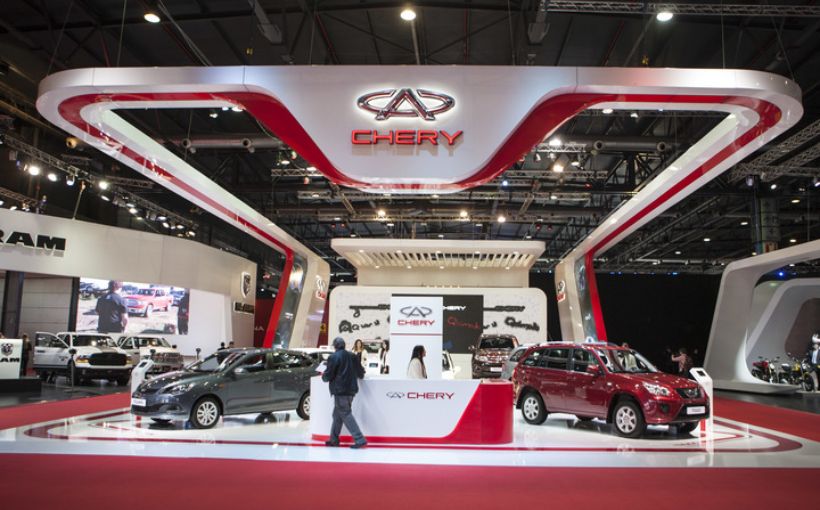
Brands such as BYD, Chery, and SAIC are aggressively entering Europe and emerging markets despite facing tariffs of up to 45% in the European Union.
Chery’s Jaecoo 7 became one of the United Kingdom’s best-selling new models within just 14 months of its launch. Meanwhile, tariffs exceeding 100% have effectively blocked Chinese automakers from entering the U.S. market.
Industry experts warn that as more vehicle manufacturing, battery development, and software innovation shift toward China, traditional automotive hubs in Europe and Southeast Asia could experience economic disruption and job losses.
Some analysts also question whether tariffs alone will be effective.
Consultant James Pearson told the BBC, “If you lock them out of one market, they will just find another.”
According to Bill Russo, the automotive industry’s center of gravity has already shifted. Companies willing to collaborate and adapt may still have opportunities to remain competitive, while those focused solely on resisting China’s rise risk falling further behind in the global transition to electric and software-defined mobility.

Electric Vehicle Marketing Consultant, Writer and Editor. Publisher EVinfo.net.
Services