GM Is Betting on Silicon Anodes as the Next Leap in EV Battery Technology
General Motors is among companies investing heavily in advanced lithium-ion batteries that use silicon-based anodes. Speaking at the recent GM Empower conference in San Francisco, Kurt Kelty, GM’s vice president of battery and sustainability, said the company sees silicon as the next major advancement in battery anode technology.
Solid-state batteries have dominated headlines in recent years, but most automakers do not expect the technology to be commercially viable until the end of the decade. In the meantime, battery manufacturers are focusing on several other innovations, including advanced lithium-ion batteries using silicon-based anodes.
The automotive industry’s goals for electric vehicles (EVs) remain unchanged: increase driving range, reduce charging times, and improve safety. The anode plays a critical role in achieving these objectives because it stores ions during charging and releases them during discharge.
Today, nearly all EV batteries rely on graphite anodes. While graphite provides stability and high energy density, its production carries environmental concerns, and more than 90% of processing takes place in China. By incorporating larger amounts of silicon while retaining some graphite to control expansion, battery manufacturers can significantly improve battery performance.
This transition is already underway. Silicon anode batteries are currently used in premium smartphones and are now being adapted for electric vehicles. Kelty said GM is deeply invested in the technology and expects silicon content in anodes to increase in the short to medium term.
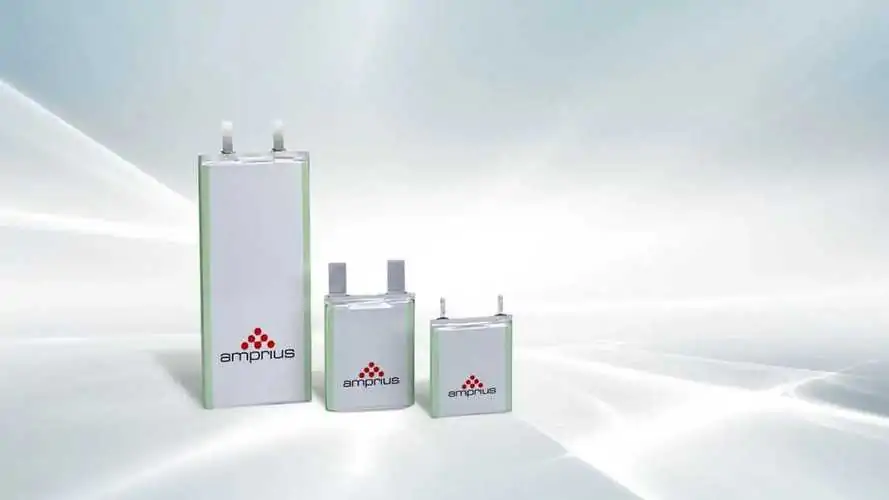
Although GM has not disclosed specific performance targets, several startups have demonstrated the technology’s potential. California-based Amprius Technologies claims a vehicle capable of traveling 310 miles with a conventional battery could achieve up to 574 miles using its silicon anode design. Another startup, Sila, says its high-silicon anodes can increase driving range by 20% without increasing battery pack size.
One of silicon anodes’ biggest advantages is their shorter path to commercialization compared to solid-state batteries. Some versions are already being produced at scale.
The McMurtry Spéirling hypercar, known for its record-setting performance at the Goodwood Festival of Speed, uses batteries from Molicel that incorporate Group14 Technologies’ silicon anodes. The system provides enough power to accelerate from 0 to 60 mph in just 1.55 seconds and complete a quarter-mile run in eight seconds.
Mercedes-Benz has also integrated silicon-containing anodes into its new AMG GT, enabling extremely fast charging capabilities. The company says the vehicle can charge from 10% to 80% in only 11 minutes at peak charging rates of 600 kilowatts.
The next challenge is scaling production, lowering costs, and making these batteries available in more affordable vehicles rather than limiting them to high-performance models.
Sila’s manufacturing facility in Moses Lake, Washington, is already operational and can initially supply battery materials for up to 50,000 EVs annually. The company has secured agreements with Mercedes-Benz and Panasonic, Tesla’s primary battery supplier. If demand increases, Sila could eventually expand production capacity to support 2.5 million EVs.
Group14 Technologies is also ramping up production. The company recently took full ownership of its joint venture facility in South Korea with SK Inc. and plans to produce up to 10 gigawatt-hours of silicon-anode battery materials, enough to power more than 100,000 electric vehicles.
Despite viewing silicon anodes as a near- and mid-term solution, GM continues to pursue multiple battery chemistries for different applications. The automaker is developing lower-cost lithium-manganese-rich batteries for large SUVs and pickup trucks expected to launch in 2028. It already utilizes high-nickel batteries across much of its lineup and lithium-iron-phosphate batteries in the Chevrolet Bolt. GM has also announced plans to develop sodium-ion batteries for grid-scale energy storage systems.
At the same time, the company continues to evaluate solid-state batteries, often described as the holy grail of battery technology because of their potential to virtually eliminate range anxiety and dramatically reduce charging times.
Kelty said GM has several solid-state prototypes currently being tested in its laboratories, emphasizing the importance of understanding emerging technologies as they develop.
The race to build better batteries is far from over. Instead of a single breakthrough replacing existing technologies, the future will likely involve multiple battery chemistries evolving simultaneously, much like internal combustion engines did over the past century. As these advancements continue, EV drivers could see dramatic improvements in both driving range and charging speeds within just a few years.

Electric Vehicle Marketing Consultant, Writer and Editor. Publisher EVinfo.net.
Services