Rivian’s Charging Network Is Growing Fast, and Makes a Great EV Road Trip
Rivian’s EV fast charging network, the Rivian Adventure Network (RAN), recently reached a significant milestone, surpassing 1,000 DC fast charging ports across 148 locations in the United States, according to the Department of Energy’s Alternative Fuels Data Center (AFDC). Over the past 40 days alone, Rivian added four new sites with a combined 44 charging stalls, highlighting the company’s ongoing investment in expanding its charging infrastructure.
The California-based electric vehicle (EV) manufacturer says its proprietary charging network is powered entirely by renewable energy. The network has grown substantially over the past year, increasing by approximately 40% from just over 700 charging stalls in 2025, according to EV Charging Stations. Rivian has also made accessibility a priority, with 97% of its stations open to non-Rivian electric vehicles. In addition, the company is steadily incorporating North American Charging Standard (NACS) connectors alongside the CCS1 connectors already deployed throughout the network.
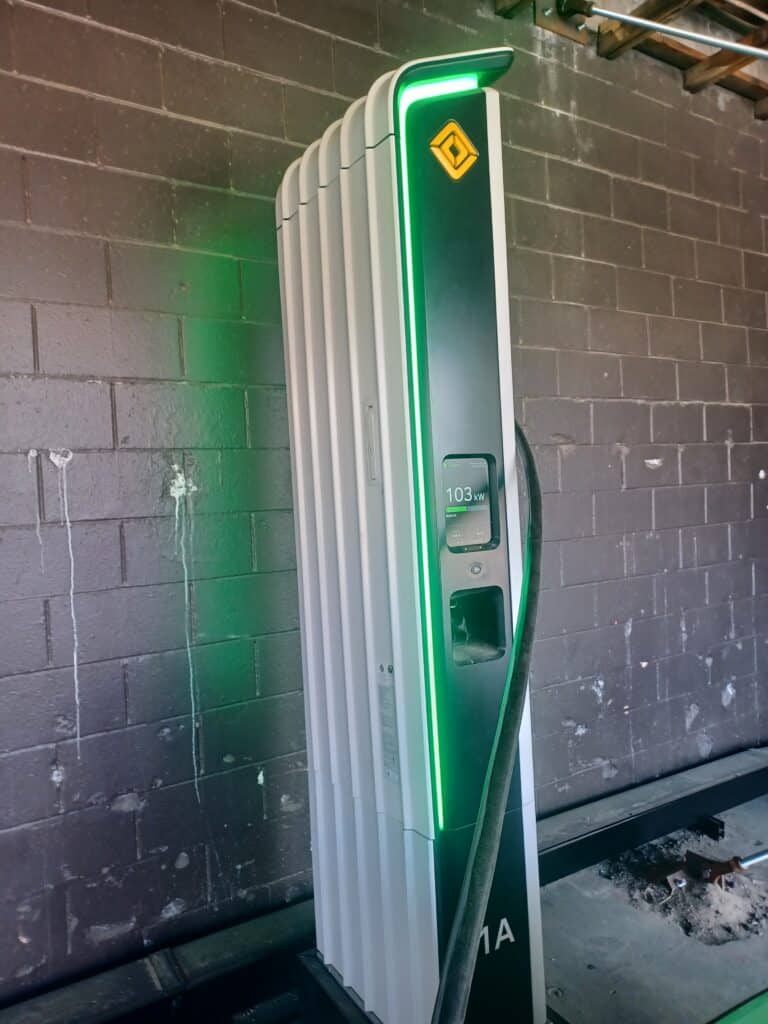
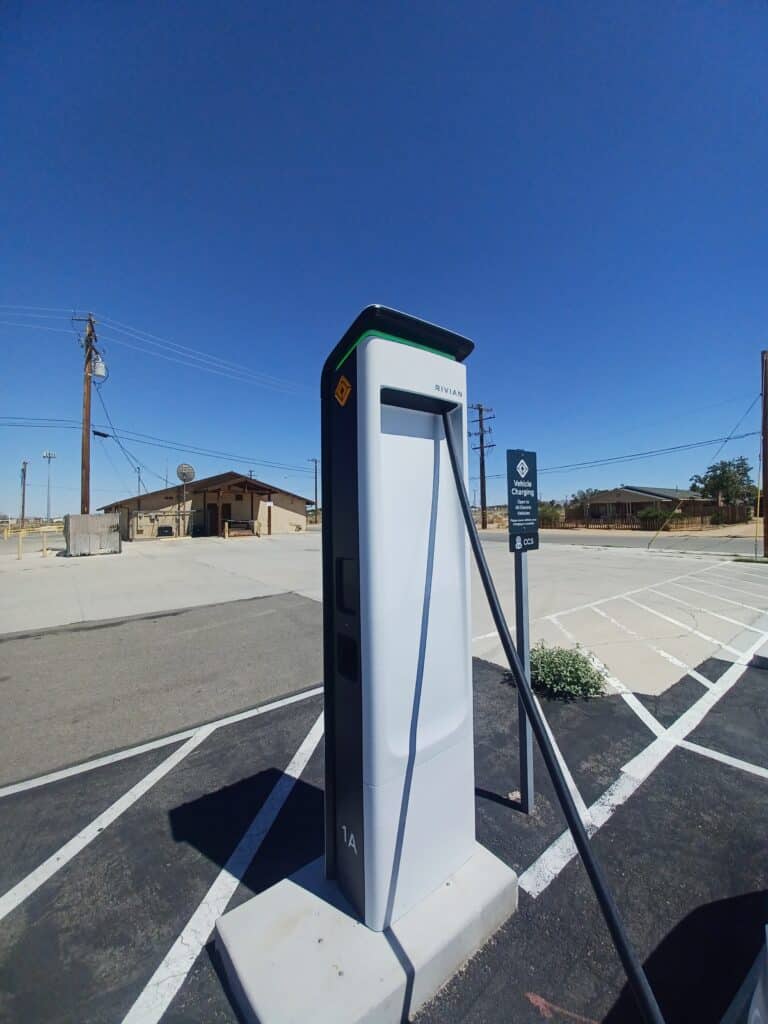
Rivian’s DC fast chargers use a single-cable design. Currently, 166 charging stalls, representing roughly 16% of the network, offer NACS connectors at about 50 locations. While there is still considerable work ahead to expand NACS availability, six Rivian Adventure Network stations are equipped exclusively with NACS connectors. This approach is uncommon within the industry, as most charging operators, with the exception of Tesla, typically provide both NACS and CCS1 options at their sites.
The decision aligns with Rivian’s evolving vehicle lineup. While first-generation R1S and R1T models were equipped with CCS1 charging ports, the updated flagship models and the upcoming R2 feature native NACS ports, eliminating the need for adapters at compatible charging stations. Additionally, all Rivian vehicles can access Tesla’s Supercharger network, which uses NACS connectors.
Rivian also reports strong charging reliability. By controlling its hardware, software, and maintenance operations in-house, the company achieved a 98% network uptime across its charging locations last year.
The Rivian Adventure Network was first announced in 2021, although its early expansion progressed slowly and initially offered free charging exclusively to Rivian owners. That strategy changed in 2024 when the company opened its chargers to other EV brands and introduced paid charging sessions. According to the DCFC Tracker website, the current average charging price is approximately $0.55 per kilowatt-hour.
Beyond its DC fast charging network, Rivian also operates its Rivian Waypoints Level 2 charging network, which currently includes 540 charging ports spread across 208 locations throughout the United States.

EVinfo.net’s Take: My EV Road Trip to California’s Mono Lake Was Great, Thanks to Rivian
As a lifelong environmentalist, I was first drawn to EVs because EVs are the most eco friendly vehicle. EVs are also the most cost effective vehicle for those able to charge at home, so since I’m a homeowner I was able to adopt an EV sooner than I could have otherwise, thanks to the tremendous cost savings.
I’m back in the office today, after a very enjoyable ten-day EV camping road trip from my home county of San Diego, California, to Mono Lake, 388 miles.
My EV is not a Rivian, and it uses the CCS charging connector. Thanks to Rivian, my road trip was very stress-free, and charging was very easy. I have an OEM-approved NACS adapter, but didn’t need to use it on this trip. I recommend an OEM approved NACS adapter for any non-Tesla EV owner, to maximize the number of locations where charging can take place.
I drove up the scenic and historic 395 highway. I paid with a credit card for Rivian charging, and it was very easy to use. I charged at Rivian in Inokern, and had a delicious meal at Classic Burgers, next to the charging station while the car was charging.
This is known in the industry as “dwell time,” and many smart business owners are installing charging to attract EV drivers like me. I also had a smooth charging experience at a Rivian charging station in Mammoth Lakes.
At other charging providers, I had the frustrating experience of finding stations that were out of order, and apps/payment systems that wouldn’t work. There is a long way to go to make EV charging more reliable.
The Exciting Rivian R2 is Coming Soon
The Rivian R2 is the company’s upcoming and exciting midsize electric SUV designed to bring the Rivian brand to a broader audience with a lower starting price and more mainstream appeal. Expected to begin production in 2026 at Rivian’s manufacturing facility in Normal, Illinois, the R2 will feature a native North American Charging Standard (NACS) port, giving owners direct access to Tesla Superchargers and compatible charging networks without requiring an adapter.
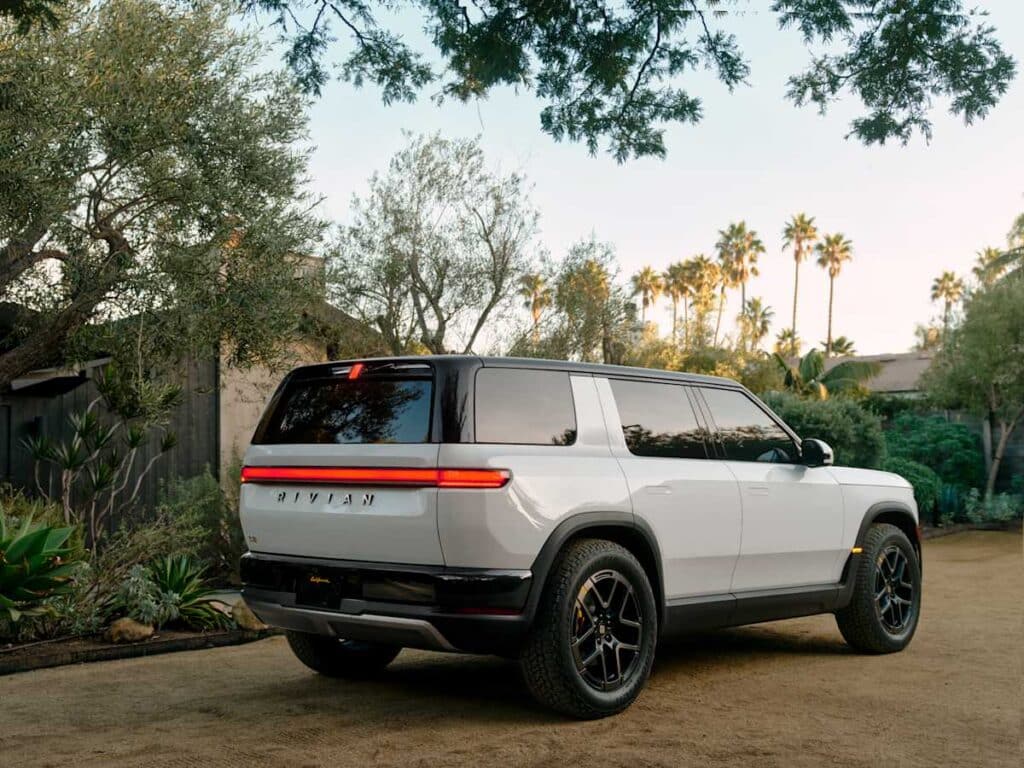
The SUV will offer multiple battery configurations and single, dual, and tri-motor powertrain options, with an estimated driving range exceeding 300 miles on select trims. While smaller and more affordable than the R1S, the R2 will retain Rivian’s signature design language, adventure-focused features, advanced driver assistance technologies, and versatile interior storage solutions, positioning it as a key vehicle in Rivian’s strategy to expand its customer base and compete in the growing midsize electric SUV segment.

Electric Vehicle Marketing Consultant, Writer and Editor. Publisher EVinfo.net.
Services