PowerStation Charging, Powered 100% by Solar, Offering Free EV Charging Until July 31, 2026
PowerStation Charging is taking a unique approach to EV charging by developing a network of off-grid, solar-powered DC fast charging stations designed to operate independently of traditional utility infrastructure.
The company’s first operational site is located at Rasor Road along Interstate 15 between Los Angeles and Las Vegas, one of the busiest EV travel corridors in the United States. The station utilizes large-scale solar arrays paired with battery storage to provide high-speed DC fast charging without relying on utility power. According to PowerStation, the network is designed to offer up to 360 kW DC fast charging while maintaining a zero-emission energy source.
The company announced it is offering free charging until July 31, 2026.
PowerStation’s mission is straightforward: make EV charging cleaner, more accessible, and less dependent on the electrical grid. The company is building charging stations powered entirely by on-site solar generation and battery storage, creating a self-sustaining energy ecosystem capable of delivering fast charging even in remote locations where grid connections may be expensive or unavailable.
Other PowerStation locations in California include Barstow, 1-10 Desert Center and I-8 Octillo, opening in 2027.
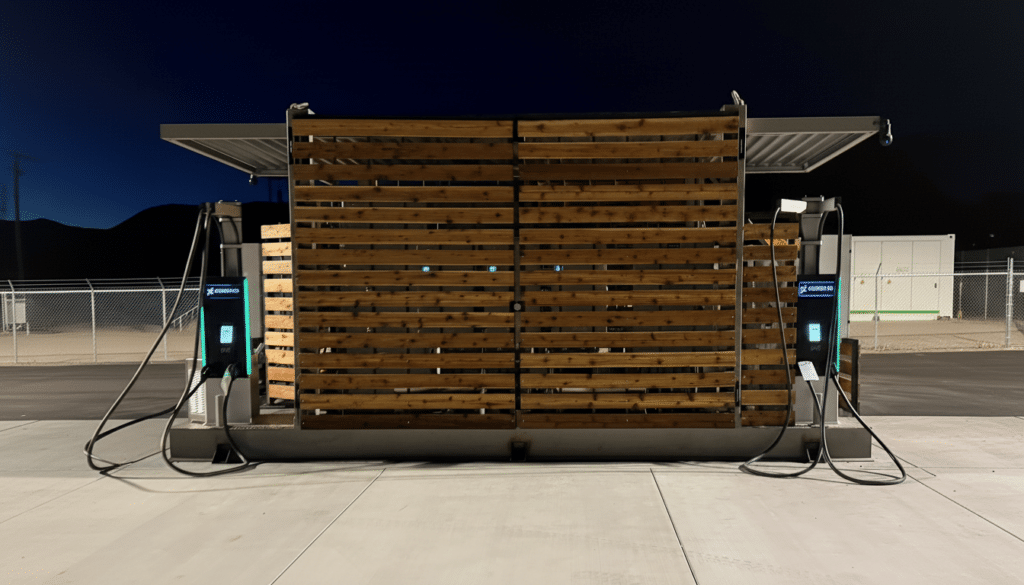
PowerStation Charging uses Carbon DC’s CarbonCore, a unified DC charge controller and energy management system featuring 600 kWh of integrated battery storage, scalable for peak shaving, backup power, and utility incentive programs. It delivers 15 kW to 600 kW of dynamic DC charging power, automatically adjusting output to meet vehicle demand while preventing panel overload and reducing wasted energy. The system also includes active thermal management and UL-certified safety controls to ensure reliable, safe operation in demanding environments.
Unlike many charging networks that require memberships or dedicated mobile applications, PowerStation focuses on simplicity. Drivers can pay using contactless payment methods, credit cards, Apple Pay, or Google Pay, eliminating the need for subscriptions or recurring fees. Following its promotional period, charging rates are expected to average around $0.40 per kWh, with pricing adjusted based on solar production, demand, and time of day.
A key differentiator is the company’s commitment to operating entirely on renewable energy generated at each site. By combining solar power generation with battery storage, PowerStation aims to reduce operating costs while avoiding many of the infrastructure challenges associated with traditional grid-connected charging stations. This model may be particularly attractive in sunny regions where utility power is costly or difficult to access.
Innovative approaches such as PowerStation’s off-grid solar charging model could play an important role in supplementing traditional charging networks. By focusing on renewable energy, fast charging, and simplified user experiences, PowerStation is working to create a new pathway for sustainable EV infrastructure development.
EVinfo.net’s Take: Solar-Powered EV Charging Growing Fast
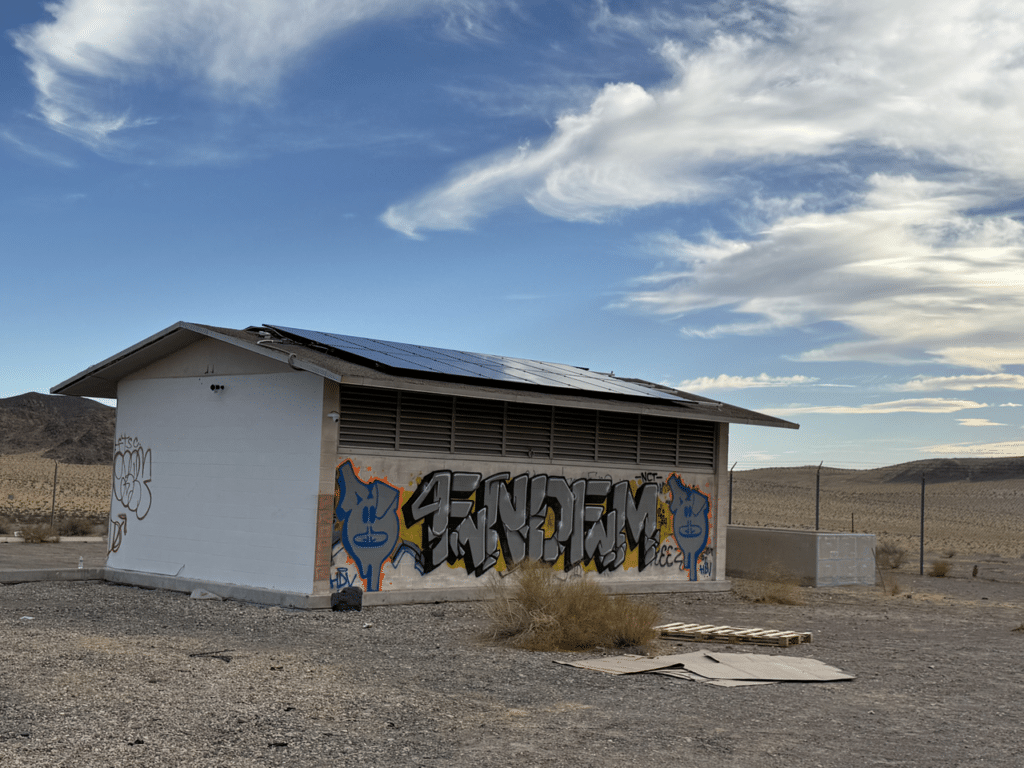
On July 17, 2026, the Las Vegas Review-Journal reported that CEO Jonathan Shinn’s EV charging station in the California desert includes a underground bunker, a former Cold War communications vault, which he plans to transform into a lounge.
I had the honor of speaking with Shinn, who described how he plans to keep the murals in the bunker intact.

Skyhook Launches the D6 Solar Station, Bringing Off-Grid and Grid-Optimizing Solar Power to EV Charging, Micromobility and More
Another stellar team I’ve had the honor of working with, offering solar-powered EV charging, is Skyhook Solar.
Skyhook Solar has launched the D6 Level X™ Solar Station, a transportable, solar-powered charging solution designed to provide off-grid and grid-supporting power for electric vehicles, micromobility fleets, emergency power, and communications infrastructure. The new system debuted at Aspen Ideas Fest in partnership with Rivian and features Skyhook’s OCPP-compatible charging app along with fleet and battery management software.
The D6 Solar Station combines a 28 kWh battery with more than 3,200 watts of bifacial solar panels, enabling on-site renewable energy generation and storage without requiring a traditional grid connection. The modular system can be expanded through the tandem D12 configuration, which doubles solar generation and battery capacity. Additional features include remote monitoring through LTE or satellite connectivity, integrated lighting, and optional advertising or messaging display panels.
Founded in 2019, Skyhook Solar specializes in transportable solar energy systems that integrate photovoltaic panels, battery storage, and intelligent energy management. Unlike conventional EV charging installations that can take months and require utility upgrades, trenching, and permitting, Skyhook’s stations arrive fully assembled and can be deployed in about an hour. The company’s solutions support EV charging, electric bike and scooter fleets, broadband communications, lighting, digital advertising, and emergency power applications.
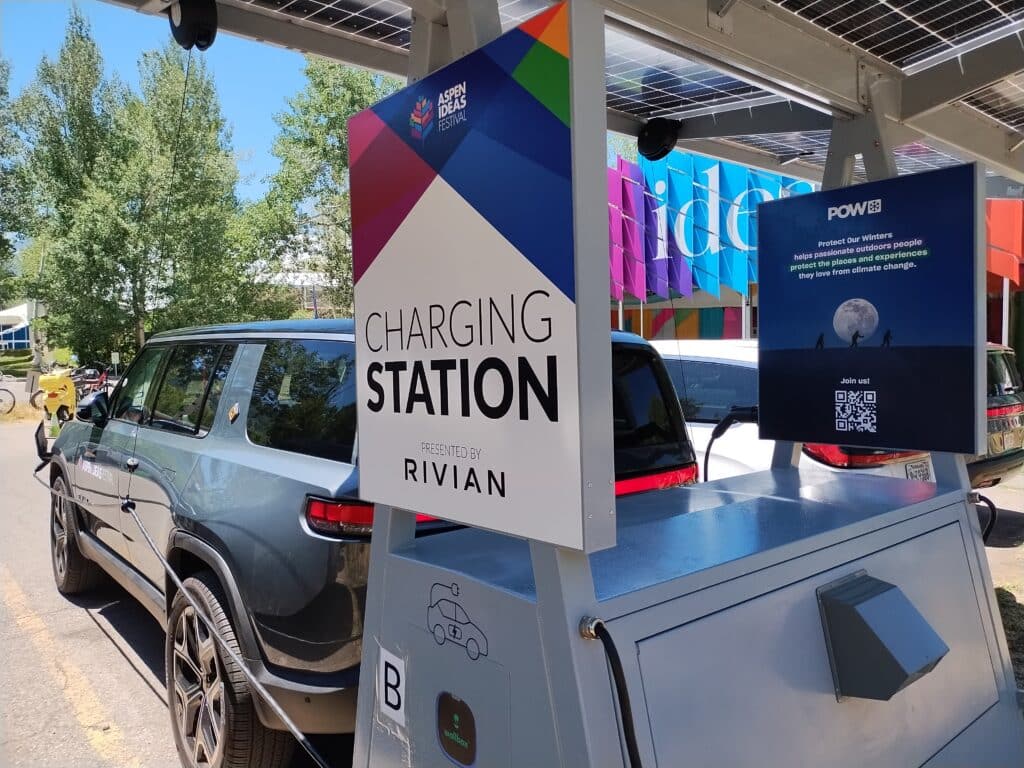
Priced at $54,500, the D6 Solar Station is aimed at municipalities, multifamily properties, workplaces, parks, campuses, events, remote locations, and residential users seeking resilient, clean-energy charging infrastructure. With deployments across North America and pilot projects in Europe, Skyhook is helping accelerate electrification by providing rapidly deployable solar-powered energy solutions that reduce reliance on the grid while supporting sustainable transportation and community resilience.

Electric Vehicle Marketing Consultant, Writer and Editor. Publisher EVinfo.net.
Services