Toyota Is Turning the bZ Electric SUV Into a Waymo Robotaxi, Starting in 2027
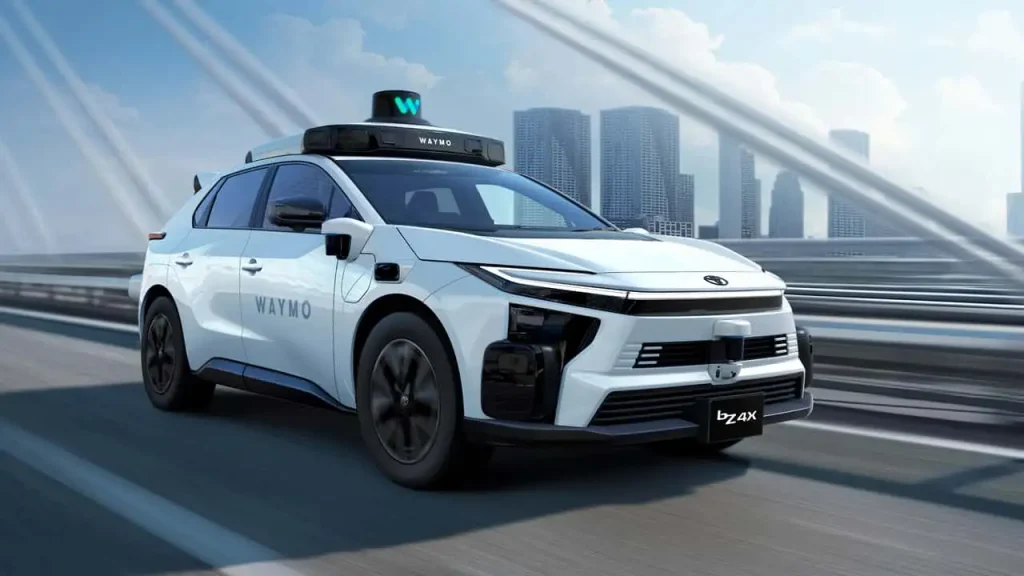
Toyota is expanding its partnership with Waymo to develop and manufacture autonomous electric vehicles, with driverless versions of the Toyota bZ electric crossover scheduled to begin testing in Japan in 2027. The vehicles will be built on the same assembly line as the standard bZ at Toyota’s Takaoka plant in Toyota City, Aichi Prefecture. Toyota will integrate Waymo’s self-driving hardware into the custom-built EVs at the factory.
The Japanese automaker’s manufacturing involvement represents a major step for Waymo as it expands beyond modifying existing vehicles at its Mesa, Arizona, facility. Waymo currently uses autonomous Jaguar I-PACE electric SUVs and Zeekr-built Ojai minivans for its robotaxi service. Hyundai has also announced plans to manufacture tens of thousands of robotaxis for Waymo at its Georgia factory, although production has not yet begun.
The Toyota bZ, called the bZ4X in Japan, will initially target right-hand-drive markets, including Japan and the United Kingdom. Waymo co-CEO Dmitri Dolgov said the companies envision eventually expanding the partnership into additional markets, but have not announced specific countries or deployment schedules.
The custom robotaxis will feature automatic doors, a powered liftgate and ambient lighting to improve passenger convenience. Toyota and Waymo have not disclosed production volumes or a specific timeline for a widespread commercial rollout.
Toyota and Waymo originally announced their partnership in April 2025 to develop a new autonomous vehicle platform and explore integrating Waymo’s technology into Toyota’s next-generation passenger vehicles.
Toyota Executive Vice President Hiroki Nakajima said the companies share a commitment to improving safety through automated driving technology and advancing toward a future with fewer traffic accidents.
GM Executive Criticizes Tesla’s Camera-Only Self-Driving Strategy
Toyota’s growing relationship with Waymo comes as automakers take different approaches to autonomous driving technology. GM Chief Product Officer Sterling Anderson, who led Tesla’s Autopilot program in 2015 and 2016, has sharply criticized Tesla’s decision to eliminate radar and rely on cameras alone.
In an October 27, 2026, interview with The Verge, reported by Electrek, Anderson described the camera-only approach as “a weird religious stance that ignores physics.”
Anderson argued that cameras cannot see through dense fog or directly measure instantaneous vehicle velocity like radar can. He said removing radar makes little sense because the technology is relatively inexpensive. He also explained that lidar can help camera systems improve when both technologies are used together during training.
Anderson is not simply an outside critic. Before joining GM in 2025 as chief product officer, he led Tesla’s Model X program and directed its Autopilot development during its early years. He later co-founded autonomous driving company Aurora.
GM is pursuing a different approach. The Cadillac Escalade IQ is expected to introduce the company’s eyes-off driving technology in 2028, wisely using a combination of lidar, radar and cameras, following the consensus of clear-headed leaders.
Anderson also questioned the use of eyes-off marketing language, arguing that highly capable driver-assistance systems can encourage drivers to become complacent even when they remain responsible for monitoring the road.
Tesla’s Radar Removal and Visibility Challenges
Tesla began removing radar from the Model 3 and Model Y in May 2021, introducing its Tesla Vision camera-based system with initial limitations. These included a 75 mph Autosteer speed restriction, increased minimum following distances and the temporary disabling of Smart Summon and Emergency Lane Departure Avoidance. Tesla subsequently removed ultrasonic sensors in 2022.
The decision was reportedly opposed by some Tesla engineers, who attempted to convince Tesla’s CEO to retain radar. The Tesla CEO argued that sufficiently high-resolution radar was not available at the time, although radar technology has continued advancing.
Visibility remains a significant concern for less safe camera-dependent systems. In March 2026, the National Highway Traffic Safety Administration (NHTSA) upgraded its investigation into Tesla’s Full Self-Driving system under reduced-visibility conditions to an Engineering Analysis covering 3,203,754 vehicles.
The investigation involved nine crashes, including a pedestrian fatality in November 2023. NHTSA found that Tesla’s camera degradation detection did not identify common roadway conditions that impaired camera visibility, including sun glare, fog and airborne dust, sometimes alerting drivers only shortly before crashes.

Electric Vehicle Marketing Consultant, Writer and Editor. Publisher EVinfo.net.
Services