Used and New EV Sales Surge Amid Economic Headwinds
Although consumer sentiment remains at a sustained low in the United States, with inflation spiking alongside rising jobless claims, sales of electric vehicles are defying expectations and taking off in a big way. Cox Automotive reported that the electric vehicle (EV) market gained strong momentum in July, with new and used EV sales rising sharply as consumers accelerated purchases ahead of the Inflation Reduction Act’s tax credit expiration.
In today’s fragile economic climate, consumers are cautious, cutting back on both luxuries and essentials. Historically, downturns have hit the automotive industry especially hard, as buyers delay or avoid long-term financial commitments. During the 2008 financial crisis, for instance, the federal government was forced to step in to prevent American automakers from collapsing entirely.
EV Sales Hit Record Highs in August as Incentives Near Expiration
August marked the second consecutive month of strong growth for the U.S. electric vehicle (EV) market, with record-setting sales and rising market share in both the new and used segments. Much of the momentum was driven by consumers moving quickly to take advantage of federal tax credits under the Inflation Reduction Act before they expire at the end of September. According to Cox Automotive, demand remained robust in August 2025 even as inventories tightened, with incentives continuing to play a critical role in fueling purchases.
New EV Sales Reach All-Time High
New EV sales climbed to a record 146,332 units in August, up 14.1% from July and 17.7% year-over-year, pushing market share to an unprecedented 9.9%. Thirteen brands recorded their strongest EV sales of 2025, signaling broad-based strength across the industry.
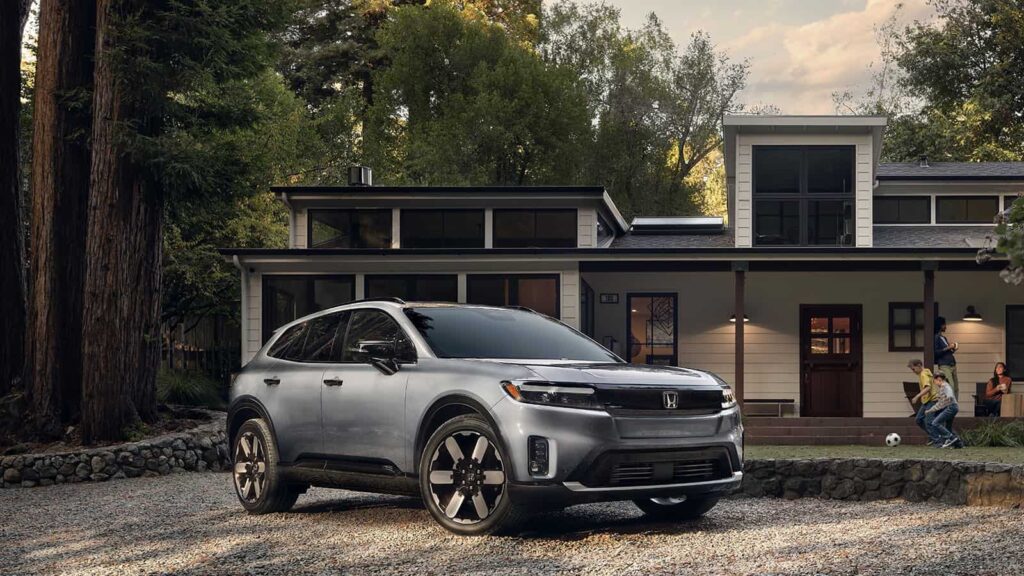
Tesla led the market with 55,500 units sold, though its share fell by four points to 37.9% as rivals offering better and more advanced models posted faster growth. Chevrolet (12,191), Ford (10,414), Hyundai (10,186), and Honda (9,347) rounded out the top five. Honda, powered by its new Prologue, surged 47.9% month over month to capture 6.4% of the market. Among luxury marques, Audi stood out with a 65.1% jump to 7,326 units, securing a 5% share.
Used EV Market Sets Records
Pre-owned EV sales also reached new highs, climbing to 40,960 units in August. That’s a 22% gain over July and 59% higher than a year ago, lifting used EV market share to a record 2.4%.
Tesla remained the volume leader at 17,164 units, but its share slipped to 41.9%, mostly due to an aging lineup. Competitors with newer, better and more advanced models surged, including Chevrolet (3,801), Ford (2,456), BMW (2,031), and Nissan (1,888), each posting double-digit growth. Ford (+39.6%) and BMW (+38%) were particularly strong performers, while Ford and Volkswagen both gained 0.8 percentage points in market share.
Price Trends Show Mixed Signals
Pricing trends diverged in August. The average transaction price (ATP) for new EVs rose to $57,245, up 3% from July but essentially flat year-over-year (-0.1%). By contrast, used EVs became slightly more affordable, with the average listing price slipping to $34,704, down 1.1% month over month and 2.6% year-over-year.
A Market on the Verge of Change
With record demand meeting tighter inventories and the phase-out of key government incentives just weeks away, the EV market is entering a critical transition point. August’s results highlight both the growing appeal of EVs across mainstream and luxury buyers and the uncertainty about how sales will respond once the current wave of incentives recedes.
How Will the Loss of the Tax Credit Affect EV Sales?
The expiration of federal tax credits under the Inflation Reduction Act will create a noticeable ripple in the U.S. EV market, beginning with an immediate slowdown in sales after the surge of activity seen in recent months. Many buyers have already rushed to purchase before the deadline, so demand in the final quarter of 2025 and early 2026 will likely soften. Without the $7,500 incentive, the price of many EVs will suddenly feel less competitive against traditional gasoline and hybrid models, especially for mass-market consumers.
The impact will not be uniform across the industry. Used EVs may prove more resilient since the credits were mostly applied to new vehicles and prices in the pre-owned market continue to trend lower. That dynamic could push more cost-conscious buyers into used EVs, keeping that segment healthy. Luxury brands are also less likely to see a major dip, since their customers are not as sensitive to government incentives and are drawn more by performance, design, and brand cachet.
In the medium term, automakers are set to introduce more affordable EV models in the $30,000 to $40,000 range, which could help fill the gap left by incentives. Commercial and fleet adoption will also remain strong, as businesses still see a financial advantage from lower fueling and maintenance costs.
Looking further ahead, the industry’s trajectory remains positive. Battery costs are falling steadily, and analysts predict EVs could reach cost parity with internal combustion vehicles by the latter part of this decade. Once that happens, incentives will be far less important, as EVs will stand on their own in terms of price and total cost of ownership. At the same time, continued improvements in charging infrastructure and a growing supply of used EVs will support broader adoption.
In the short run, the loss of tax credits will likely create a pause in momentum, particularly for first-time EV buyers who are most sensitive to upfront costs. But the long-term outlook suggests that adoption will continue to grow, fueled by technology, infrastructure, and shifting consumer expectations, even without government-backed incentives.
EVs are the most eco-friendly, efficient, and cost-saving vehicles over the long term, as opposed to gas powered or hybrids. It’s mostly the cost-effectiveness that will propel America to enter the mass EV adoption phase, as many parts of the globe have already started mass adoption, for instance China and Europe.

Electric Vehicle Marketing Consultant, Writer and Editor. Publisher EVinfo.net.
Services