Realtor.com Lists EV Charging as 5th Fastest Growing Trend in 2025
Homebuyers in 2025 are prioritizing sustainability and efficiency like never before, and EV charging has officially entered the mainstream. According to a new Realtor.com analysis, EV charging ranked as the fifth fastest-growing home feature of the year, soaring 91.6 percent in listing mentions compared with 2024.
The ranking comes from an in-depth review of how often specific features appear in for-sale listings year over year. By tracking the rise in listing mentions, Realtor.com identifies which trends are resonating most with both buyers and sellers. The results make one thing clear: EV charging is no longer a luxury amenity. It is a top-tier selling point for modern homes.
The broader context behind the rankings is a housing market shaped by rising prices due to skyrocketing inflation, changing tastes, tighter energy demands, and a growing focus on eco-friendly living. As EV adoption grows, consumers are paying more attention to efficient, future-ready home upgrades. Features like WaterSense fixtures, biophilic design elements, and net-zero readiness all surged in popularity alongside EV charging.
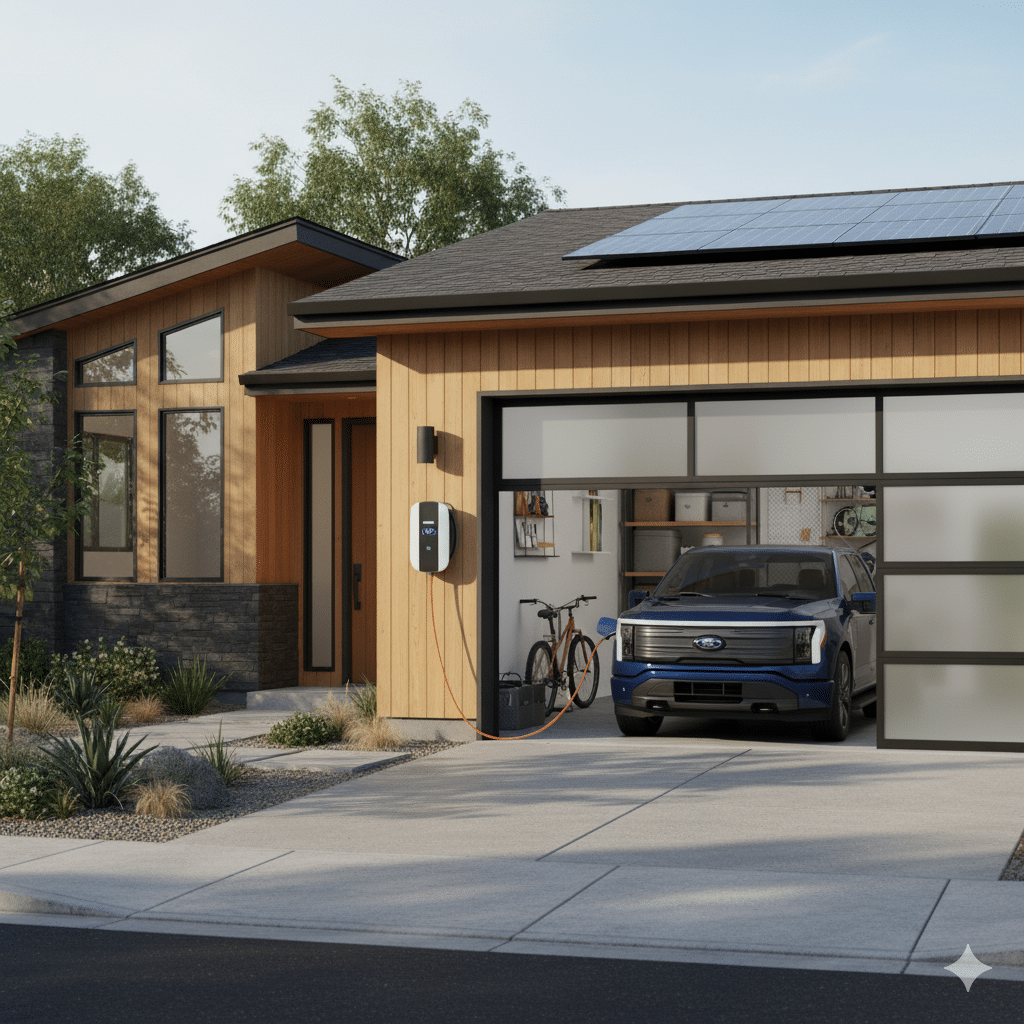
What makes EV charging stand out is its widespread appeal. Unlike some niche design trends, EV charging is now labeled as “Widespread” in Realtor.com’s analysis, meaning it appears in a large share of listings across price points. Yet homes featuring this amenity still command a strong median listing price of $839,000, signaling that buyers are willing to pay more for properties that support electric mobility.
For homeowners and sellers, the message is simple: adding EV charging can boost a property’s desirability and market value. For buyers, it signals a home that is ready for the future, especially as EV sales continue to break records and more households embrace electric transportation.
As EV adoption accelerates, having a place to plug in at home is rapidly becoming an expectation rather than a bonus. Realtor.com’s 2025 ranking confirms it: EV charging is one of the hottest home trends of the year, and its momentum is only beginning.
Most EV Owners Charge at Home, It’s Reshaping the Future of Driving
As electric vehicle adoption accelerates across the United States, one trend continues to stand out: most EV owners charge their vehicles at home. This simple habit is doing more than keeping cars powered. It is reshaping expectations around convenience, fueling costs, and what it means to own a vehicle in an electric era.
For many drivers, home charging is the biggest advantage of switching to an EV. Instead of detouring to gas stations or waiting in line at public chargers, owners simply plug in when they park and wake up each morning with a full battery. It turns refueling into a background task, woven seamlessly into daily routines.
Cost savings are another major benefit. Residential electricity rates are typically lower than public fast charging and fluctuate far less than high gasoline prices. Many utilities now offer time-of-use plans that allow EV owners to save even more by charging overnight. Over the course of a year, these savings add up, especially for commuters and families who drive frequently.
However, access to home charging is not equal for everyone. Renters and residents of apartments or condos often face barriers, making it harder for them to benefit from the convenience that homeowners enjoy.
Multifamily EV Charging Remains a Major Challenge for Drivers
As electric vehicles continue to gain popularity, one reality is becoming increasingly clear: drivers who live in multifamily housing still face some of the toughest barriers when it comes to reliable home charging. While most EV owners in single-family homes can simply plug in overnight, millions of apartment and condo residents do not share that same convenience, and the gap is slowing EV adoption.
For residents, this often means relying on public stations, workplace chargers, or expensive fast charging. It adds time, inconvenience, and stress to daily life. Drivers may also have to compete for limited chargers in their building, which can lead to frustration and conflict among neighbors.
The result is a persistent equity issue. Apartment dwellers, including many urban residents, renters, and lower-income households, are unable to enjoy the primary benefits of owning an EV: the ability to charge affordably and predictably at home.
Until multifamily charging becomes as accessible as charging in a home garage, the EV market will continue to face unnecessary friction, and drivers will continue to feel left behind.
EVinfo.net’s Take: EV Growth in North America Will Continue Despite Federal Cutbacks
Realtor.com’s listings showing EV charging so prominently is just another sign that America is close to entering mass EV adoption, despite foolish federal cutbacks in EV support.
Federal subsidies and incentives have played an important role in accelerating electric vehicle adoption, but the long-term trajectory of EV growth in North America has become much larger than any single policy. Even as federal programs face reductions or uncertainty, the EV market is poised to keep expanding for several key reasons that go far beyond government support.
Consumer demand for EVs continues to rise, driven by better performance, lower operating costs, and rapidly improving technology. One example of technology improvements and falling prices is the all-new 2026 Nissan Leaf, a clean-sheet redesign with up to four times the range of the original (up to 303 miles) at roughly the same price point, coming soon to the USA. The new leaf was recognized as a winner of the Wards 10 Best Engines and Propulsion Systems award for 2025.

Batteries are becoming more efficient, more affordable, and more reliable, making electric vehicles competitive with gas cars even without incentives. Drivers are discovering that EVs offer smoother acceleration, quieter operation, and significantly less maintenance, all of which contribute to strong word-of-mouth momentum.
Automakers are also heavily invested in electrification. Nearly every major car manufacturer has committed billions toward EV platforms, new models, and dedicated production lines. These companies are not stepping back simply because of short-term policy shifts. They are betting their future on electrification, expanding product lineups, and reaching new segments from trucks to small crossovers. With global markets pushing aggressively toward clean transportation, North America cannot afford to fall behind.
Infrastructure growth is creating another powerful tailwind. Charging options are expanding across cities, highways, workplaces, and multifamily housing. Utilities and private charging companies remain committed to large-scale deployment because they recognize the long-term value of electrified transportation. Even without federal support, state and local governments, along with private investment, are continuing to fill the gap.
In addition, many North American states have their own strong EV policies. Places like California, Colorado, New York, and British Columbia maintain ambitious emissions targets and zero emission vehicle requirements. These regional commitments help stabilize the market and encourage automakers to continue prioritizing EV availability in North America.
Most importantly, market forces are doing what incentives were meant to jumpstart. As total cost of ownership becomes increasingly favorable and more charging becomes available, EVs are shifting from early adoption to mass adoption. The transition is becoming self sustaining.
Federal cutbacks may slow progress at the margins, but they cannot reverse the broader trend. Technology, consumer preference, industry investment, and regional leadership are driving a long term shift toward electric transportation. EVs are here to stay, and in North America, their growth will continue to accelerate regardless of temporary policy changes.
Case Study: How Pando Electric Delivered Affordable, Scalable EV Charging for Woodland Creek HOA
As electric vehicles become more common, one group of drivers continues to face the biggest challenges: people living in apartments and condos. While homeowners can simply plug in each night, multifamily residents often struggle with limited access, unreliable charging options, and outdated building infrastructure. Pando Electric is stepping in to change that.
Pando Electric, in partnership with Peninsula Clean Energy (PCE), successfully deployed ninety High Power Level 2 EV charging stations at the Woodland Creek HOA, covering one hundred percent of the community’s parking spaces. This project demonstrates how modern, grid efficient systems can deliver full property electrification at a cost that was once thought impossible for multifamily communities.
Using Pando Electric’s unique EV charging architecture, Woodland Creek was able to complete the installation at a cost seventy percent lower than the next lowest contractor bid. The total savings exceeded one hundred thousand dollars, allowing the HOA to upgrade the entire property while remaining well within budget.
Because of the incentives offered by PCE, Pando Electric delivered fully installed stations for less than five hundred dollars per parking space, a price point that is typically associated with slow Level 1 setups. Yet residents now benefit from the convenience and performance of High Power Level 2 charging.
Pando Electric focuses on making EV charging simple, fair, and accessible for multifamily communities. Instead of forcing property owners into costly construction projects or confusing technology, Pando delivers turnkey charging solutions designed specifically for apartment living. The goal is straightforward. Give every resident a dependable place to charge at home without the headaches that typically come with installing new infrastructure.
Autel Energy’s MaxiCharger AC Elite Home, a Great Choice
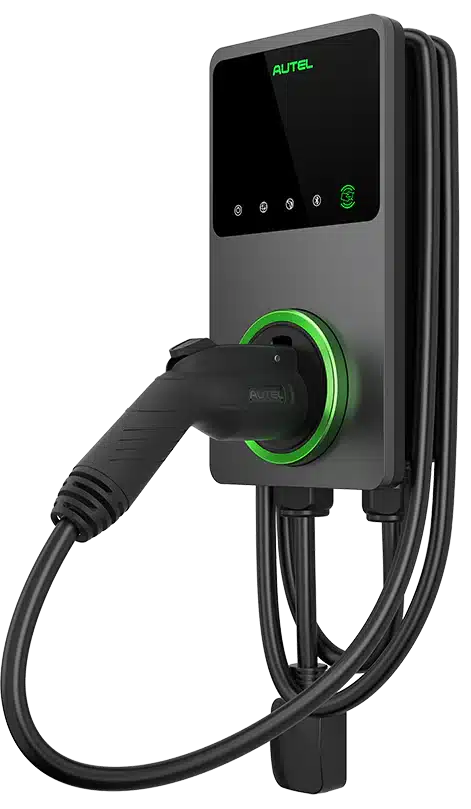
For homeowners looking for quality home chargers, Autel Energy – North America offers an excellent choice. The MaxiCharger AC Elite Home 40A EV Charger is up to 50 AMPS, a reliable Level 2 Smart Charger compatible with all EV and Plug-in Hybrid vehicles. It features an attractive, sleek contemporary design in dark gray and is installable indoors or outdoors.

Electric Vehicle Marketing Consultant, Writer and Editor. Publisher EVinfo.net.
Services