B2u Launches Structured Finance Fund for 7 BESS Projects Using Second-Life EV Batteries
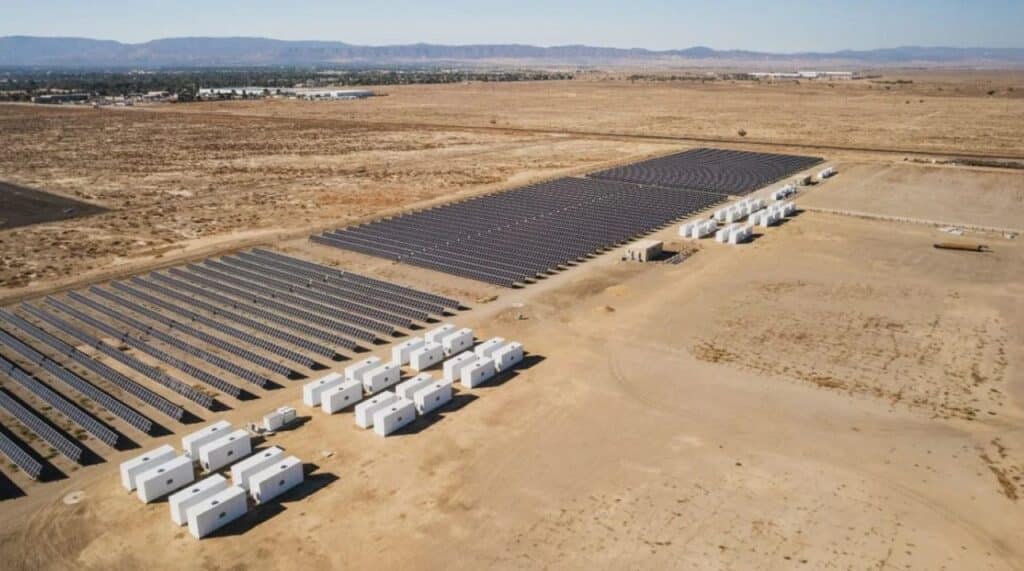
Second-life EV battery energy storage company B2U Storage Solutions recently launched a structured finance fund anchored by a portfolio of seven battery energy storage system (BESS) projects. The company repurposes end-of-life EV battery packs for large-scale grid storage, and the new fund is backed by several undisclosed investors. Four grid-connected BESS projects are already operational, with three located in California and one in Texas, while the remaining Texas-based projects are scheduled to come online in 2026.
B2U will retain an ownership interest in the fund and continue managing day-to-day operations, using the transaction to divest operating assets and reinvest capital back into the business. The company described the move as an evolution of its business model, shifting from operating primarily as an independent power producer toward a more scalable, capital-efficient structure. Its patented EV Pack Storage technology enables plug-and-play deployment of EV batteries without remanufacturing, resulting in low levelized cost of storage while delivering grid services revenue comparable to first-life BESS, according to the company.
This approach provides a competitive advantage as falling lithium-ion and LFP battery prices narrow the cost gap between new and second-life systems. While second-life batteries can be cheaper upfront, the costs associated with disassembly, testing, and reassembly often weaken the overall economics. B2U CEO Freeman Hall said the fund launch was enabled by the company’s scalable and profitable model, adding that a secured pipeline of EV batteries positions the company for significant growth. B2U’s systems utilize batteries from OEMs including Honda, Nissan, General Motors, and Tesla.
More broadly, interest in second-life EV batteries is increasing across the energy storage sector. Batteries typically retain 75% to 80% of capacity at the end of their automotive life, supporting reuse in stationary applications. Investment in EV battery recycling and reuse continues to rise, with nearly $9.65 billion deployed in U.S. recycling facilities since 2020, though the U.S. still lags globally. The IEA estimates that about 80% of global battery recycling capacity remains in China, compared with roughly 2% in the U.S. and Europe, driven in part by extended producer responsibility policies already in place in China and the EU.
EVinfo.net’s Take: Second-Life Applications for EV Batteries Are Emerging as One of the Clearest and Most Practical Examples of the Circular Economy in Action
While an EV battery may no longer meet the performance demands required for automotive use, it can be used for other purposes. Rather than being prematurely recycled or discarded, these batteries can be redeployed into stationary energy storage systems, extending their useful life by years while extracting significantly more value from the materials and energy already invested in their production.
This reuse model delivers both economic and environmental benefits. Second-life batteries can lower the cost of energy storage for grid operators, renewable energy developers, and commercial and industrial customers, while reducing demand for newly mined critical minerals such as lithium, nickel, and cobalt. By deferring recycling and maximizing asset utilization, second-life storage also helps mitigate supply chain constraints and reduce lifecycle emissions associated with battery manufacturing.
From a grid perspective, second-life EV batteries are well suited for applications such as peak shaving, renewable energy firming, backup power, and grid services. Companies deploying modular, plug-and-play architectures are demonstrating that repurposed batteries can deliver performance and reliability comparable to first-life systems, often at a lower levelized cost of storage. As battery prices decline and grid flexibility needs grow, these systems are becoming an increasingly viable part of the energy storage mix.
As EV adoption keeps growing, the volume of end-of-vehicle-life batteries will rise sharply, making circular solutions not just attractive but necessary. Second-life battery use bridges the gap between first use and recycling, creating a more resilient and resource-efficient battery ecosystem. By keeping valuable materials in productive service longer, second-life EV batteries exemplify how circular economy principles can scale alongside electrification and deliver long-term economic and sustainability gains.

Electric Vehicle Marketing Consultant, Writer and Editor. Publisher EVinfo.net.
Services