Solid-State EV Battery Maker Factorial Is Going Public After a Test Run of Over 745 Miles
Factorial Energy’s solid-state batteries are already demonstrating significant real-world potential, with recent testing delivering more than 745 miles of range on a single charge. Now, the U.S.-based battery developer is preparing to go public as it accelerates plans to bring its next-generation technology to market as early as 2027.
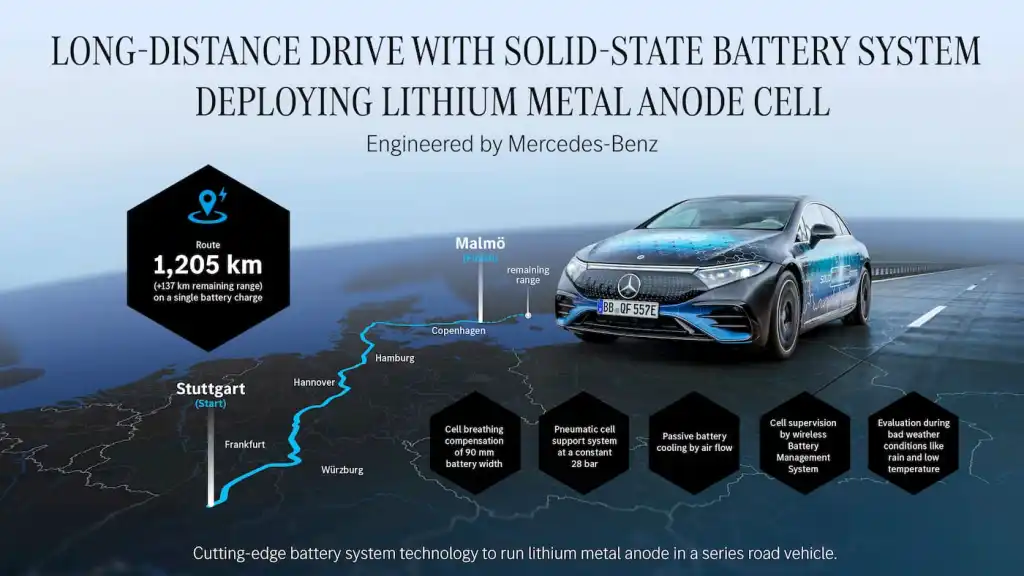
In September, a modified Mercedes-Benz EQS equipped with Factorial’s solid-state battery cells drove more than 745 miles (1,200 kilometers) without stopping and still retained remaining charge. Mercedes has described the cells as a “true gamechanger,” highlighting the promise of solid-state technology for future EVs.
Factorial Energy is working with major global automakers including Mercedes-Benz, Stellantis, and Hyundai Motor to commercialize its batteries. The company plans to fund its next growth phase through a business combination with Cartesian Growth Corporation III, a special-purpose acquisition company. Factorial CEO Dr. Siyu Huang called the agreement a “pivotal inflection point” as the company transitions from laboratory development to real-world validation and commercialization.
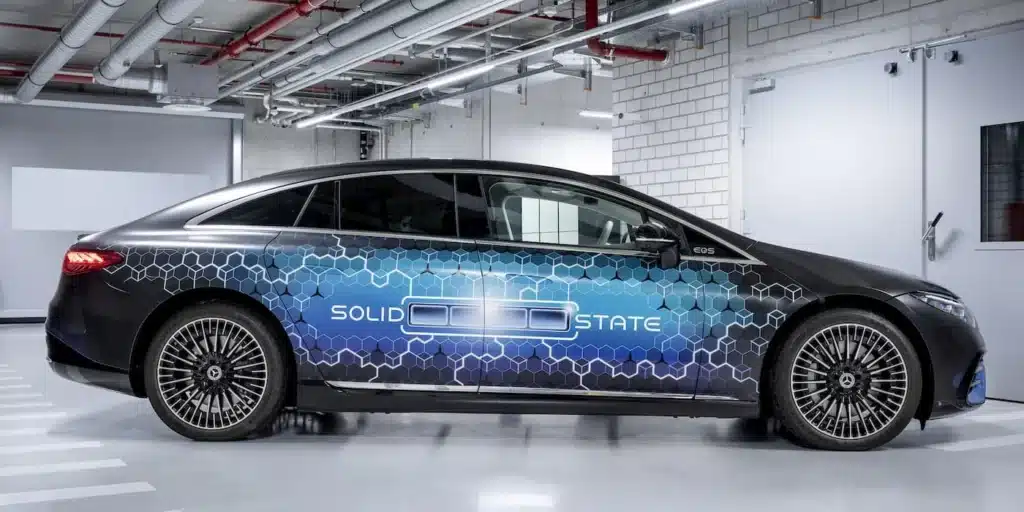
The technology has already been proven beyond controlled environments. Mercedes validated Factorial’s 106 Ah cells on public roads, while Stellantis confirmed the performance of 77 Ah cells in laboratory testing, citing high energy density, fast charging capability, and strong performance across temperature extremes.
Beyond electric vehicles, Factorial intends to supply solid-state cells to markets such as defense, aerospace, and robotics. The proposed merger is expected to close in mid-2026, after which Factorial will trade on the Nasdaq under the ticker symbol FAC. The transaction values the company at approximately $1.1 billion and provides about $100 million in growth capital.
Huang has stated that Factorial’s batteries could begin powering EVs by 2027, likely debuting in high-performance or luxury models before broader adoption. Despite some automakers moderating EV plans, Factorial believes next-generation battery technology will be key to driving the next wave of EV adoption.
Solid-State EV Batteries: The “Holy Grail” of Electric Vehicle Technology
For more than a decade, lithium-ion batteries have powered the rise of electric vehicles, steadily improving in cost, range, and performance. Yet despite this progress, today’s batteries still face fundamental limitations related to energy density, safety, charging speed, and longevity. This is why solid-state batteries are often described as the “holy grail” of EV technology, a potential breakthrough capable of redefining what electric vehicles can deliver.
At a basic level, solid-state batteries replace the liquid or gel electrolyte used in conventional lithium-ion cells with a solid electrolyte. This seemingly simple change has far-reaching implications. Liquid electrolytes degrade over time, and constrain how tightly energy can be packed inside a cell. Solid electrolytes, by contrast, can be more stable, and better suited to supporting high-energy electrode materials, including lithium metal anodes.
The most widely cited advantage of solid-state batteries is higher energy density. By enabling lithium metal anodes and more compact cell architectures, solid-state designs could significantly increase driving range without increasing battery size or weight. In practical terms, this could mean EVs capable of traveling hundreds of additional miles on a single charge, or achieving today’s ranges with much smaller, lighter battery packs that improve efficiency and handling.
Solid-state technology also promises faster charging and longer battery life. Solid electrolytes can be more resistant to degradation, enabling higher charging currents without the same level of damage seen in liquid-based cells. Over time, this could translate into EVs that charge in minutes rather than hours, while retaining capacity over many more charge cycles.
Despite the promise, solid-state batteries remain challenging to manufacture at scale. Issues such as material stability, interface resistance between solid layers, production yields, and cost have slowed commercialization. However, progress is accelerating. Companies such as Factorial Energy, QuantumScape, Solid Power, and major automakers including Toyota, Mercedes-Benz, BMW, and Hyundai are investing heavily in development and validation, with road-tested prototypes and pilot production lines already underway.
Most industry observers expect solid-state batteries to appear first in premium or performance vehicles later this decade, where higher costs can be absorbed in exchange for superior range and performance. As manufacturing processes mature and economies of scale improve, the technology could gradually move into mass-market vehicles.

Electric Vehicle Marketing Consultant, Writer and Editor. Publisher EVinfo.net.
Services