New Geotab Analysis Shows EV Battery Health Remains Strong Despite Rising Fast-Charging Use
Updated electric vehicle (EV) battery health findings from Geotab Inc., a global provider of connected vehicle and asset management solutions, indicate that modern EV batteries continue to deliver strong performance over their service life, even as fast charging becomes increasingly prevalent. GeoTab announced the news on January 13, 2026.
The latest study analyzed real-world data from more than 22,700 EVs across 21 makes and models, leveraging several years of aggregated telematics information. The updated results identify an average annual battery degradation rate of 2.3 percent, compared with 1.8 percent reported in Geotab’s 2024 analysis.
The increase reflects shifts in operating behavior, particularly greater dependence on high-power DC fast charging. Understanding how batteries age across different charging patterns, climates, and utilization levels enables both individual drivers and fleet operators to optimize performance, safeguard battery health, and refine deployment strategies throughout the vehicle lifecycle.
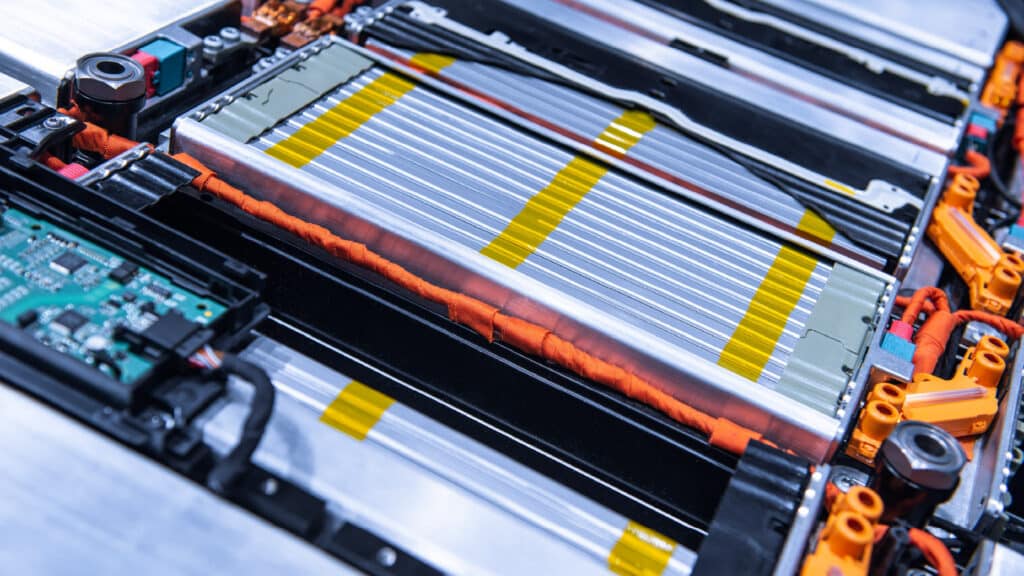
“EV battery health remains strong, even as vehicles are charged faster and used more intensively,” said Charlotte Argue, Senior Manager, Sustainable Mobility at Geotab. “Our latest data shows batteries are lasting well beyond the replacement cycles most fleets anticipate. What has changed is that charging behavior now plays a more pronounced role in aging, creating opportunities to manage long-term risk through smart charging strategies.”
Charging Power Emerges as the Leading Driver of Battery Aging
Geotab’s analysis identifies charging power as the dominant operational factor affecting battery degradation. Vehicles that rely heavily on DC fast charging above 100 kW experience degradation averaging up to 3.0 percent per year, compared with approximately 1.5 percent among vehicles primarily charged using AC or lower-power methods.
Climate exerts a smaller independent effect. Vehicles operating in high-temperature regions degrade around 0.4 percent faster annually than those in moderate climates.
Rigid Charging Rules Are Less Critical Than Previously Assumed
The data suggests that strict daily charging limits may be less necessary than once believed. Regular use across a wide state-of-charge range did not significantly increase degradation unless vehicles spent prolonged periods near full charge or near empty.
Higher-utilization vehicles experienced slightly faster degradation, about 0.8 percent per year more than the lowest-use group, but this increase is generally offset by gains in productivity and total cost of ownership. For many fleets, increased asset utilization directly reduces lifecycle cost per mile.
“For fleets, the objective is balance,” Argue said. “Selecting the lowest charging power that still supports operations can meaningfully improve long-term battery health without constraining availability.”
Understanding EV Battery Degradation
Battery degradation is the gradual decline in the amount of energy a battery can store over time, measured as state of health (SOH). Batteries begin service at 100 percent SOH and deteriorate progressively. For example, a 60 kWh battery operating at 80 percent SOH performs as though it were a 48 kWh battery.
Geotab’s findings show that although degradation varies by model, charging approach, and usage profile, most modern EV batteries remain functional well beyond typical ownership and fleet replacement intervals.
The Value of Battery Health Data
Accurate SOH insight, enabled by comprehensive telematics, is essential to optimizing EV performance. Geotab’s EV Battery Health report provides fleets with visibility into real battery capacity, degradation rates, and lifecycle value, supporting informed decision-making across operations.
Geotab Is a Global Leader in Connected Vehicle and Asset Management Solutions
Headquartered in Oakville, Ontario, with U.S. headquarters in Atlanta, Georgia, the company leverages advanced data analytics and AI to enhance fleet safety, efficiency, and sustainability. Serving more than 55,000 customers worldwide, Geotab processes 100 billion data points daily from over 5 million vehicle subscriptions. The company is trusted by Fortune 500 enterprises, mid-market fleets, and leading public-sector organizations, including the U.S. federal government, and maintains FIPS 140-3 and FedRAMP authorizations. Through its open platform and partner ecosystem, the Geotab Marketplace delivers hundreds of fleet-ready third-party solutions. In 2026, Geotab marks 25 years of innovation. Learn more at geotab.com and follow Geotab on LinkedIn.