The New Volvo EX60 Uses ‘Cell-To-Body’ Technology to Lower Car’s Weight
When it launches in the U.S. this spring, The Volvo EX60 marks a turning point for the Swedish automaker and sets a new benchmark for its electric ambitions. With a class-leading range of up to 400 miles, ultra-fast charging speeds of as much as 370 kilowatts, and an array of advanced technologies, the EX60 is positioned to become the most sophisticated electric vehicle (EV) Volvo has ever produced.
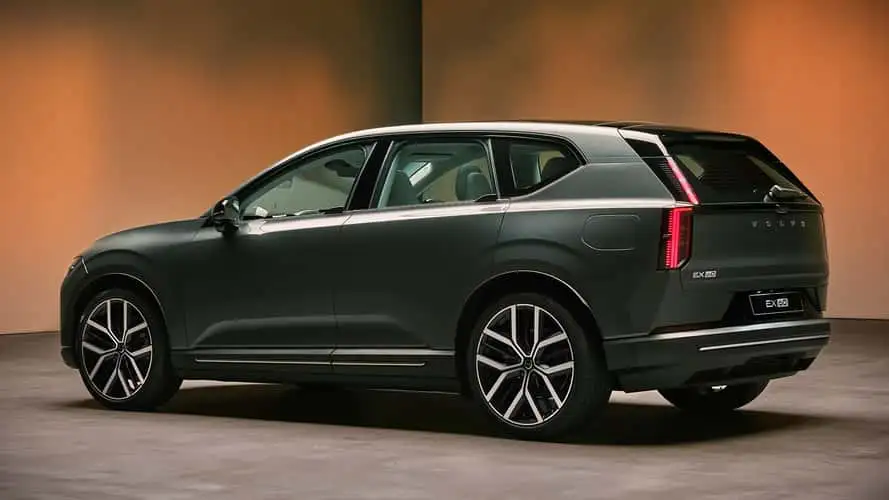
The EX60 will also place Volvo in an exclusive group of manufacturers adopting next-generation battery architecture. Alongside models such as the upcoming Porsche Cayenne Electric, the EX60 will feature a structural battery design. Volvo refers to this as a “cell-to-body” battery, an approach that fundamentally changes how the vehicle is built.
The Porsche Cayenne Electric’s structural battery design is shown in the image below.
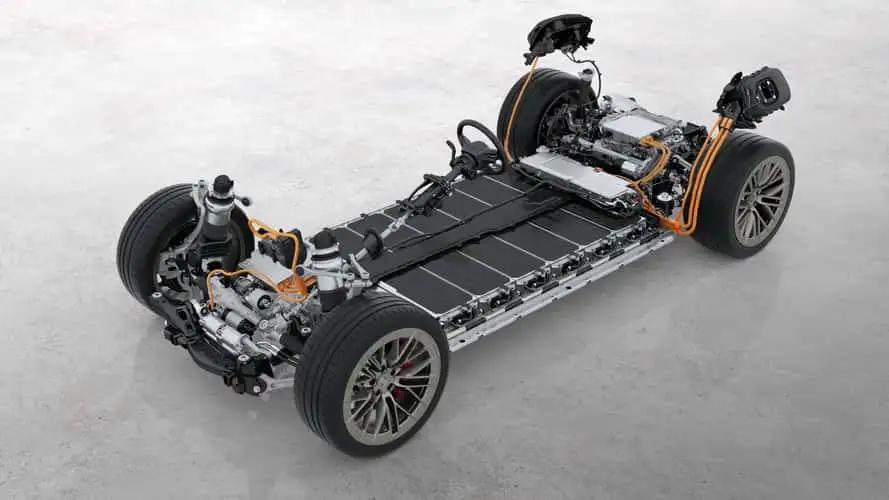
Traditionally, EV batteries are built using a module-based structure, where individual cells are grouped into modules that are then assembled into a pack and bolted to the chassis. While proven and flexible, this approach adds complexity, weight, and unused space. Newer cell-to-pack designs eliminate modules, stacking cells directly into the pack for higher energy density and lower mass. Volvo takes this concept even further with cell-to-body construction, where the battery pack itself becomes a load-bearing part of the vehicle. In this configuration, the cells are integrated into sections of the floor and effectively form part of the car’s structural skeleton.
This strategy reflects Volvo’s push to reduce parts and maximize efficiency. By standardizing large prismatic cells and integrating them directly into the vehicle structure using advanced adhesives and a fully sealed enclosure, Volvo has been able to unlock significant gains in packaging and performance. The results are evident in the specifications. While the larger EX90 carries a 111 kWh battery (107 kWh usable) for roughly 310 miles of EPA range, the EX60’s top P12 AWD trim features a 117 kWh pack with 112 kWh usable, delivering up to 400 miles of range. Remarkably, this is achieved in a vehicle that is nearly 10 inches shorter and has a slightly smaller wheelbase than the EX90.
The EX60 uses high-nickel battery chemistry, with its 80 kWh and 91 kWh usable packs supplied by Sunwoda, and the flagship 112 kWh battery sourced from CATL. Combined with Volvo’s new SPA3 platform, the cell-to-body design enables far more efficient energy packaging than the SPA2 architecture used by the EX90.
Volvo claims the structural battery improves energy density by 20%, reduces weight and raw material usage, and occupies less interior space. It also enables 31% faster charging and a 37% reduction in CO₂ footprint, underscoring that the benefits extend well beyond increased driving range. On the service side, Volvo says most battery-related issues stem from electronics rather than the cells themselves. Unlike older EVs that require dropping the entire battery pack for service, the EX60 allows technicians to access battery electronics through an opening beneath the rear seats.
While the long-term serviceability of structural batteries will ultimately be proven over time, momentum is clearly building. With Porsche, Volvo, and several Chinese automakers embracing this approach, structural batteries are rapidly emerging as the future foundation of EV manufacturing.

Electric Vehicle Marketing Consultant, Writer and Editor. Publisher EVinfo.net.
Services