NYC Launches City’s First Community-Powered E-Mobility Recycling Program
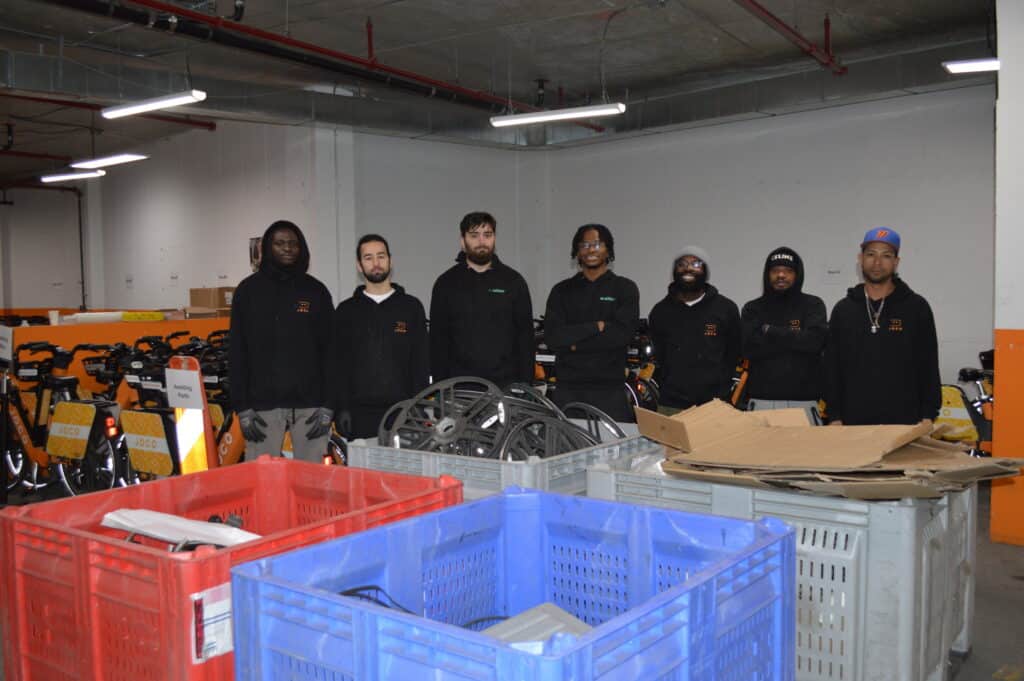
On January 22, 2026, JOCO, the city’s leading e-mobility platform for last-mile delivery, and WALTER (Working And Learning Together Environmental Recycling), a Brooklyn-based recycling social enterprise dedicated to employing young adults facing barriers to work, announced the launching of New York City’s first e-mobility waste recycling program. The initiative addresses the environmental footprint of last-mile delivery while creating equitable workforce development opportunities in underserved neighborhoods.
Together, JOCO and WALTER have developed a first-of-its-kind model for the safe and responsible recycling of e-bike components and batteries in Brooklyn. The program operates across JOCO’s warehouse and fleet facilities citywide and generates paid employment opportunities for young adults in Brownsville, a neighborhood in eastern Brooklyn, New York City. WALTER services JOCO locations twice weekly, collecting and processing cardboard, metals, aluminum, plastics, wood, and batteries.
In less than six months, the partnership has recycled 23,815 pounds of material from JOCO operations, avoided 168,603 pounds of CO2 emissions, and created 768 paid employment hours for marginalized New York City youth. These outcomes are environmentally equivalent to planting 3,066 trees, preserving 44 acres of forest, eliminating 197,066 vehicle miles traveled or 912 round trips between New York City and Boston, and saving 8,605 gallons of fuel, comparable to avoiding the use of 84,280 pounds of coal.
“Above all else, we believe in a clean future for our city, where everyone has a chance at employment,” said Guillaume Charvon, founder of WALTER, who spent over twenty years working with marginalized youth people across France, Burkina Faso and the U.S.
“The promise of e-mobility as a positive force only works when the system is sustainable across its full lifecycle and provides equitable access to opportunity for the communities and workers who power this industry” said Jonathan Cohen, co-founder of JOCO.
JOCO is Revolutionizing Last-Mile Delivery With Light Electric Vehicles
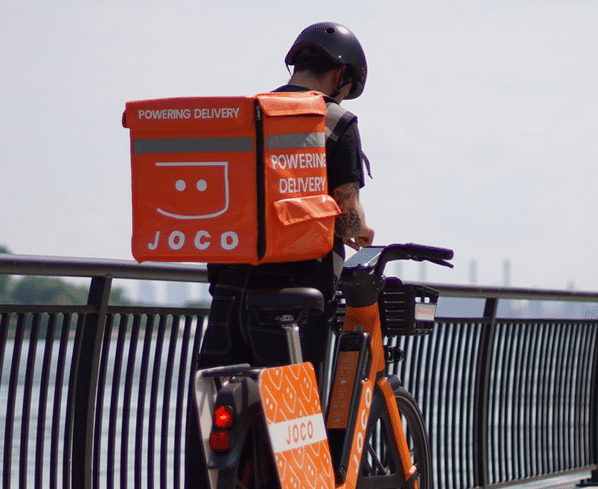
JOCO is the first end-to-end platform designed to enable gig workers and companies to seamlessly use light electric vehicles for last-mile delivery. Through its technology platform and citywide LEV infrastructure network, JOCO eliminates the burden of owning, storing, charging, and maintaining a bike. Guided by a strong social mission, JOCO has already helped thousands of couriers complete millions of deliveries with no upfront investment. At a time when carbon emissions and urban congestion are at record highs, JOCO is focused on delivering cleaner air and more efficient cities.
With more than 50 locations across New York City, JOCO makes it easy to find a vehicle and start riding immediately. Couriers never need to worry about maintenance or charging and can simply grab a bike and go. The JOCO app puts full control at users’ fingertips, allowing them to manage rides and securely lock their vehicle between deliveries. JOCO’s fully electric fleet helps couriers deliver faster while reducing reliance on cars, lowering carbon emissions, and supporting a more sustainable urban transportation system.
WALTER (Working and Learning Together Environmental Recycling), Helps Businesses Meet Their ESG Goals
WALTER is an environmental services organization that helps businesses meet environmental, social, and governance goals through responsible recycling, secure material disposal, and clean-out services. Every WALTER project is intentionally designed to create paid employment and job training opportunities for young adults from marginalized communities, with a particular focus on Brownsville, Brooklyn in New York City, New York.
EVinfo.net’s Take: Why E-Bikes, Responsible Recycling, and Workforce Development Matter for Climate and Social Justice
Cities around the world are confronting two closely linked challenges: human-caused climate change and persistent social inequality. The way goods move through urban environments, how waste is managed, and who has access to economic opportunity all play a critical role in shaping cleaner and more equitable communities. E-bikes for last-mile delivery, responsible recycling and secure material disposal, and intentional workforce development programs each address these challenges in complementary ways.
Last-mile delivery is one of the fastest-growing sources of urban emissions and congestion. Traditional delivery models rely heavily on gas-powered vehicles that contribute to air pollution, greenhouse gas emissions, noise, and traffic. Light electric vehicles, especially e-bikes, provide a practical alternative by enabling efficient deliveries with zero tailpipe emissions. Replacing car and van trips with e-bikes can significantly reduce carbon emissions while improving local air quality, which is particularly important in dense neighborhoods that experience higher exposure to traffic-related pollution.
As cities electrify and adopt new technologies, responsible waste management becomes increasingly important. Batteries, electronic components, metals, plastics, and packaging materials must be handled carefully to prevent environmental harm. Responsible recycling and secure material disposal ensure that valuable materials are recovered and reused, hazardous components are managed safely, and fewer pollutants enter landfills, air, soil, and waterways. Clean-out services and structured recycling programs also help businesses reduce waste, improve operational efficiency, and meet environmental and regulatory expectations.
Environmental progress is most effective when it is paired with social impact. Underserved neighborhoods are often the most affected by poor air quality and environmental degradation while also facing limited access to stable employment. Creating equitable workforce development opportunities within sustainability initiatives helps address both challenges at once. Paid jobs and training in e-mobility, recycling, and clean-out services provide pathways to economic mobility while supporting climate-focused work.
Kudos JOCO and WALTER for your important work. EVinfo.net hopes to see more companies and organizations throughout the world and the United States follow your impressive leadership, needed now more than ever. More leaders like these are needed now, as the federal government of the United States moves away from helping people and the planet, and moves more towards supporting polluting gas vehicles in the name of profit.

Electric Vehicle Marketing Consultant, Writer and Editor. Publisher EVinfo.net.
Services