New Study Says Used EVs Cheapest Car to Own Over 7-Year Ownership Period
A new peer-reviewed study from researchers at the University of Michigan finds that used battery electric vehicles (BEVs) deliver the lowest total cost of ownership (TCO) of any powertrain in the United States. The research, published January 27, 2026 in Environmental Research Letters, is the first comprehensive TCO analysis focused specifically on used vehicles, which account for roughly 70 percent of all vehicle purchases nationwide.
The authors evaluate internal combustion engine vehicles (ICEVs), hybrid electric vehicles (HEVs), plug-in hybrid electric vehicles (PHEVs), and BEVs across five vehicle classes and 17 U.S. cities under multiple charging scenarios, including drivers using only public charging.
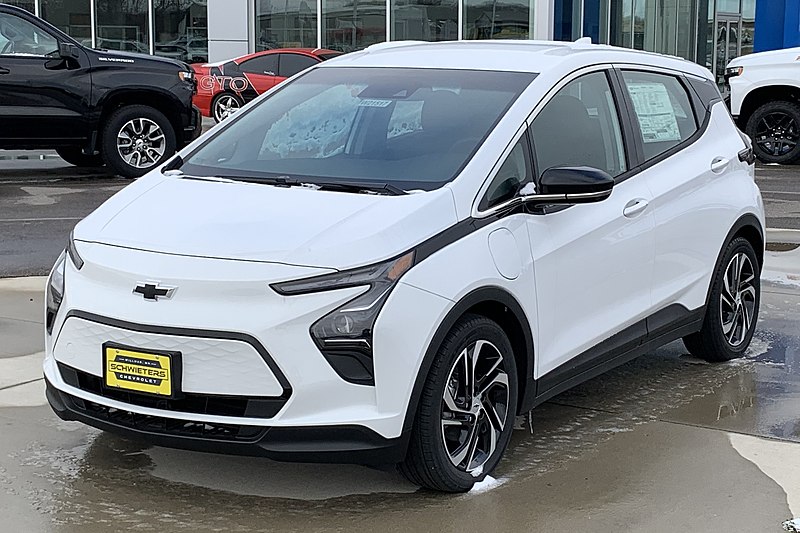
Using regression modeling based on approximately 260,000 publicly available used-vehicle listings collected throughout 2024, the researchers quantify depreciation trajectories across powertrains. The results show that BEVs experience steeper depreciation during their first three years relative to ICEVs, HEVs, and PHEVs, followed by similar depreciation rates thereafter. This accelerated early depreciation materially lowers acquisition cost for second owners.
The study models a 10-year total vehicle lifespan, assuming resale after year three and a seven-year ownership period for the used buyer. Annual vehicle miles traveled are set at 15,000 miles. The TCO framework incorporates purchase price, depreciation, financing assumptions, fuel or electricity costs, insurance, maintenance, repair expenses, taxes, registration fees, and residual value at end of ownership.
Over the seven-year ownership horizon, purchasing a three-year-old midsize SUV instead of a new vehicle yields average TCO savings of approximately $3,000 for an ICEV, $1,000 for an HEV or PHEV, and about $13,000 for a BEV. These savings are driven by both lower entry price and reduced operating expenditures, particularly energy and maintenance.
Electricity cost modeling reflects geographically differentiated pricing structures across 17 cities. The analysis assumes 80 percent home charging and 20 percent public charging. Home charging costs incorporate time-of-use rate structures including off-peak, part-peak, and peak periods, as well as the capital and installation cost of a Level 2 charger. Public charging assumptions are split evenly between Level 2 and DC fast charging. For BEVs, the cost of installing home charging infrastructure is included in total ownership calculations to reflect first-time EV adoption.
To standardize cross-vehicle comparisons, the researchers employ representative synthetic vehicles rather than individual nameplates. Performance, efficiency, and cost parameters are derived from vehicle system simulations developed by Argonne National Laboratory, including the Autonomie and Battery Electric Vehicle Analysis and Network tools. Fuel prices and electricity rates are city-specific rather than national averages, capturing regional heterogeneity in energy markets.
Across nearly all modeled geographies and charging behaviors, used BEVs demonstrate the lowest total cost of ownership among the four powertrain categories. In scenarios with elevated public charging reliance or high electricity prices, the margin relative to hybrids narrows, but BEVs typically retain a cost advantage over conventional gasoline vehicles.
The authors identify several sensitivities. An out-of-warranty battery replacement would significantly increase ownership costs. Depreciation trajectories may evolve as the EV market matures, consumer perceptions shift, and incentive structures change. Electricity pricing volatility and charging infrastructure access also influence outcomes. Nonetheless, under the modeled assumptions, three-year-old BEVs consistently outperform comparable ICEVs, HEVs, and PHEVs on a total cost basis over a seven-year ownership period.
EVinfo.net’s Take: Great News for Used EV Buyers
At EVinfo.net, we hope used car buyers will consider this study proving that used EVs are the most cost effective choice. EVs also provide cleaner air for everyone in addition to the lower costs.
Lectrium helps automotive dealerships turn their online electrified vehicle shoppers into informed, confident buyers with interactive tools that answer questions around range, charging, affordability, and sustainability right on their websites.