Wink Motors Unveils $19,995 Street-Legal Microcar EV for the U.S.
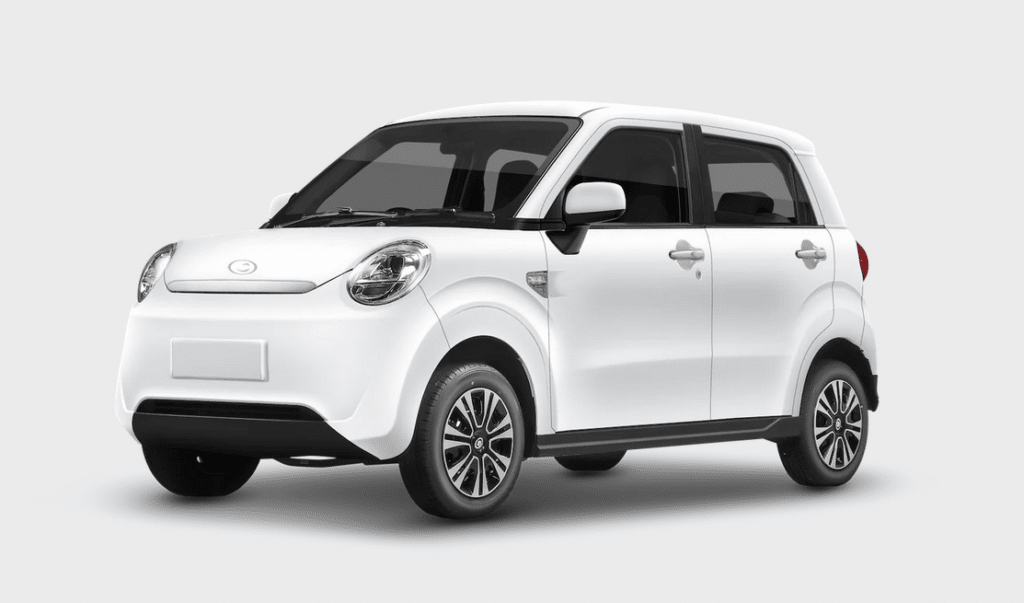
Wink Motors has introduced the Mark3, a fully enclosed electric microcar priced at $19,995, positioning it as one of the most affordable street-legal EVs in the United States. The five-door hatchback is engineered to meet U.S. Department of Transportation standards and can be registered in 49 states for use on public roads with speed limits of 35 mph or lower, with New York currently excluded.
The Mark3 is designed to deliver practical urban mobility in a compact form while maintaining everyday usability. Despite its small footprint, the vehicle is built to accommodate four adults, including taller occupants, and comes equipped with features typically expected in larger vehicles. These include air conditioning and heating, power windows and locks, Bluetooth connectivity with hands-free calling, and a high-definition backup camera. Wink Motors founder and president Mark Dweck emphasized that the goal was to create a microcar tailored specifically for American roads while delivering comfort and functionality comparable to conventional vehicles.
Safety and build quality are central to the vehicle’s positioning. The Mark3 uses a reinforced steel unibody structure that forms a protective passenger cell and incorporates more than 30 safety features that exceed federal low-speed vehicle requirements. Standard equipment includes DOT-rated three-point seatbelts and a dual-circuit braking system with front disc and rear drum brakes. Additional visibility and safety elements such as a six-lamp hazard system, a high-mounted center brake light, and a door alert system enhance awareness for both occupants and surrounding drivers. Production relies on robotic welding and automated assembly processes to ensure consistency and structural integrity.
Powering the Mark3 is a lithium iron phosphate battery, a chemistry increasingly used across the EV industry due to its durability, long cycle life, and thermal stability. The vehicle is designed for simple charging, allowing owners to plug into standard 110-volt or 220-volt outlets, with most drivers able to recharge overnight without the need for specialized equipment. Range is listed at 75-85 miles.
Wink Motors is also taking a different approach to sales and service. Prospective buyers can explore the vehicle through live virtual demonstrations, while service is handled through a nationwide network of independent mechanics. During the warranty period, the company ships replacement parts overnight at no cost and pays service providers directly, eliminating the need for a traditional dealership model.
Microcars Offer Cost Savings and Environmental Benefits
Microcars are emerging as one of the most practical solutions for reducing both transportation costs and environmental impact, especially for short, around-town trips. In a market still dominated by oversized vehicles, they offer a fundamentally different approach: right-sizing mobility to match actual daily use.
For most urban and suburban drivers, the majority of trips are short, low-speed journeys, including grocery runs, commuting a few miles, school drop-offs, or quick errands. Using a full-size gas-powered vehicle for these tasks is inherently inefficient. Internal combustion engines consume the most fuel during stop-and-go driving, and larger vehicles carry excess weight and unused capacity that further increases operating costs. Even larger electric vehicles, while cleaner, still require bigger batteries, more raw materials, and higher upfront costs.
Microcars solve this mismatch. Their smaller size and lighter weight dramatically improve energy efficiency, whether powered by electricity or other means. This translates directly into lower operating costs, with less energy required per mile and reduced wear on components like brakes and tires. For electric microcars, the savings are even more pronounced. Smaller battery packs mean lower purchase prices and faster, simpler charging, often from a standard household outlet without the need for expensive infrastructure upgrades.
Beyond cost savings, microcars also deliver meaningful environmental benefits. They require fewer raw materials to manufacture, which reduces their overall lifecycle emissions compared to larger vehicles. When used in place of traditional gas cars for short trips, they cut tailpipe emissions entirely. Even compared to larger EVs, their reduced energy consumption lowers the strain on the electrical grid and improves overall system efficiency.
Urban environments stand to benefit the most. Microcars take up less space on the road and in parking areas, helping to ease congestion and reduce the demand for large parking infrastructure. In dense cities where space is limited and traffic is persistent, this efficiency can have a compounding effect on mobility and livability.
The key insight is not that microcars should replace all vehicles, but that they are highly effective for a specific use case.