Scania, Unicon Deploy Fully Electric Concrete Mixer Trucks in Denmark
Scania and Denmark-based Unicon have deployed a fully electric concrete mixer truck into daily operations, marking a significant step forward for one of the most difficult segments to electrify. Developed in collaboration with Liebherr-Mischtechnik, the solution combines a battery-electric chassis with an integrated electric mixer powered by an electric power take-off system.
The truck features a battery capacity of up to 400 kWh, delivering an operational range of about 200 kilometers on typical delivery routes. Unlike traditional mixer trucks that rely on diesel-powered auxiliary systems, this design uses an ePTO to draw energy directly from the main battery, enabling both propulsion and drum operation without tailpipe emissions.
Concrete transport has long posed a challenge for electrification due to heavy payloads, variable routes, off-road job sites, and the constant energy demand required to keep the mixing drum in motion. Rather than adapting existing systems, the Scania, Unicon, and Liebherr teams engineered the vehicle as a fully integrated platform, aligning the powertrain, mixer, and energy usage into a single system optimized for real-world operations.
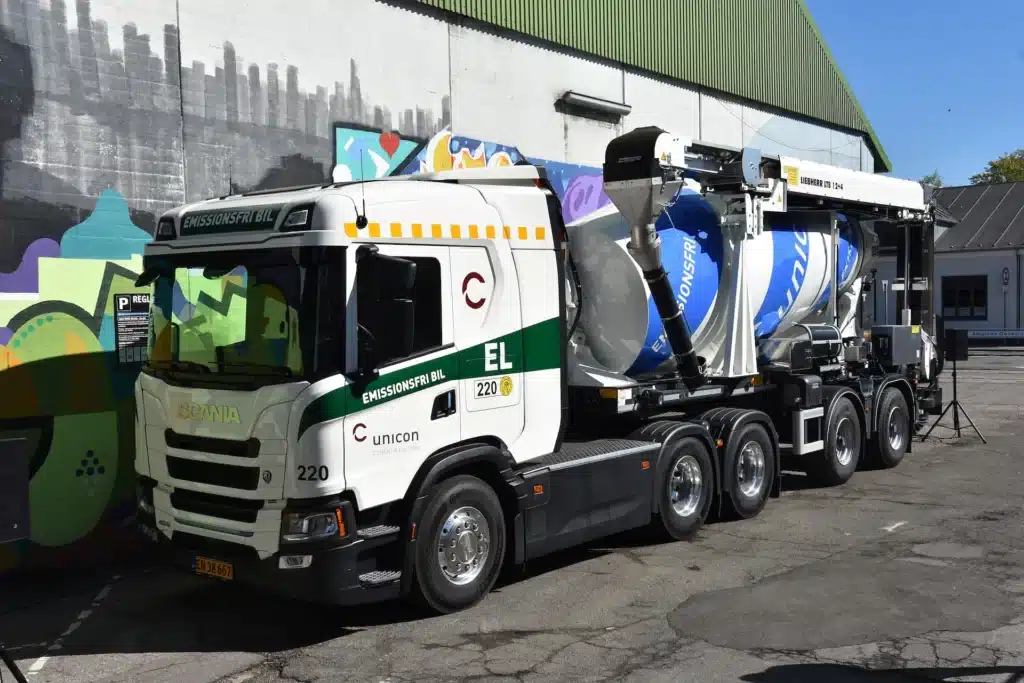
Unicon has already placed orders for 10 additional electric mixer trucks and has set a goal to transition its entire concrete transport fleet to zero emissions by 2035. The company emphasized that this deployment is not a pilot project but a scalable, production-ready solution designed for everyday use.
The approach reflects a broader shift in commercial electrification, moving beyond demonstration vehicles toward full fleet integration. With duty cycles centered around urban and regional deliveries from fixed batching plants, the operating profile aligns well with depot-based charging strategies.
As construction logistics begins to decarbonize, projects like this highlight how electrification can extend into even the most energy-intensive applications, delivering both emissions reductions and improved working conditions without compromising operational performance.
EVinfo.net’s Take: EVs Reach Another Milestone as Cement Mixers Go Electric
For the second time, EVinfo.net is reporting on a fully electrified concrete mixer truck, a milestone that highlights just how far electric mobility has progressed. In over 1,000 articles, we have covered electric vehicles across land, air, and water, from passenger cars and delivery vans to aircraft and marine vessels. Now, one of the most demanding and energy-intensive applications in transportation is joining that transition in greater numbers.
The world’s first fully electric heavy concrete mixer was a Volvo FMX electric mixer deployed in 2023, put into service in Berlin, Germany. In June 2025, EVinfo.net reported on how CEMEX expanded its electric mixer fleet across EMEA.
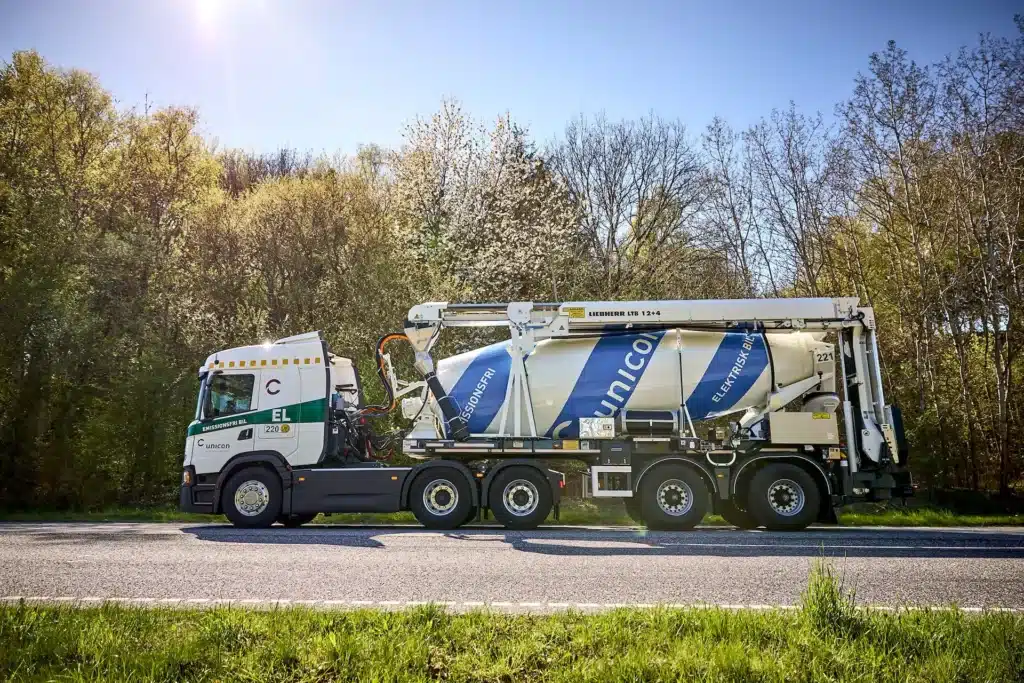
What stands out is not just the technology, but the economics. Electric vehicles are increasingly proving their value through lower operating costs, reduced maintenance, and improved energy efficiency. As battery performance improves and charging infrastructure expands, applications that once seemed out of reach are becoming practical.
This development reinforces a clear trend. Electrification is no longer limited to early-adopter segments or light-duty use cases. It is steadily moving into heavy-duty, vocational, and industrial applications where reliability and cost control are critical.
The electrified concrete mixer is more than a niche innovation. It is another data point showing that EVs are scaling across every layer of transportation. From city streets to construction sites, and across multiple modes of movement, the transition is accelerating.

Electric Vehicle Marketing Consultant, Writer and Editor. Publisher EVinfo.net.
Services