Scientists Found a Faster, Cleaner Way to Extract Lithium for EV Batteries
In January 2026, the Columbia University School of Engineering and Applied Science reported that researchers at Columbia Engineering have developed a faster, cheaper, and more environmentally friendly way to extract lithium, a critical mineral for electric vehicle (EV) batteries, and other applications.
Global demand for lithium is accelerating as automakers ramp up electric vehicle production and utilities deploy massive battery storage systems to support renewable energy. But current lithium extraction methods remain slow, geographically limited, and environmentally damaging, creating growing pressure to develop cleaner and faster alternatives.
Researchers at Columbia Engineering have now unveiled a new lithium extraction method that could significantly reduce processing times, access lower-quality lithium resources, and cut environmental impacts tied to traditional lithium production.
In a study published in the journal Joule, the research team describes a process called switchable solvent selective extraction, or S3E, which uses a temperature-sensitive solvent system to directly extract lithium from underground brines. Unlike conventional methods that require high-quality lithium deposits, the new approach can efficiently recover lithium even from low-concentration brines contaminated with similar minerals.
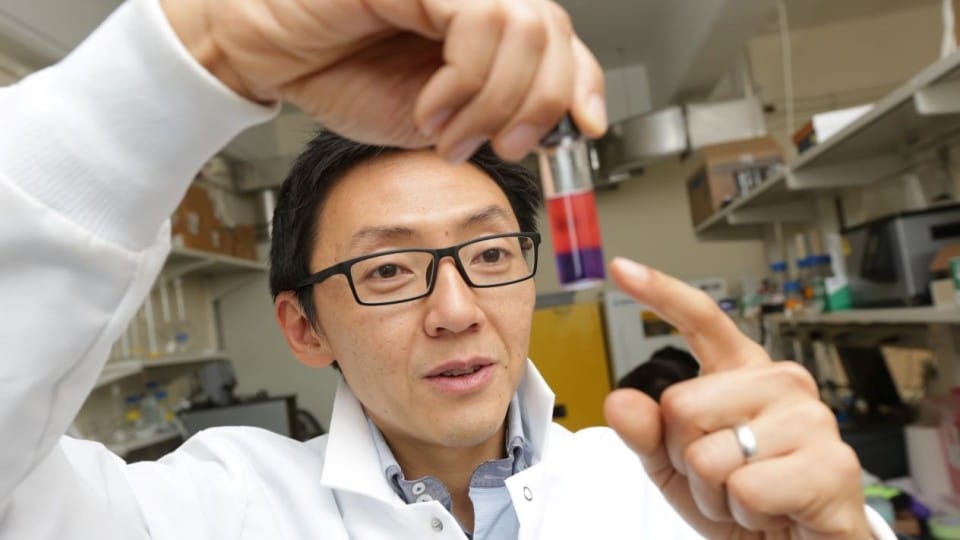
The researchers found the system demonstrated strong lithium selectivity, extracting lithium up to 10 times more effectively than sodium and 12 times more effectively than potassium. The process also removes magnesium, one of the most difficult contaminants in lithium brines, through a chemical precipitation step.
Today, roughly 40% of global lithium production relies on solar evaporation ponds, where salty brine is pumped into large desert basins and left to evaporate under the sun for months or even years. The process requires huge amounts of land and water and is largely limited to dry regions like Chile’s Atacama Desert and parts of Nevada.
“There’s no way solar evaporation alone can match future demand,” said Ngai Yin Yip, associate professor of Earth and Environmental Engineering at Columbia University. “And there are promising lithium-rich brines, like those in California’s Salton Sea, where this method simply can’t be used at all.”
Unlike traditional direct lithium extraction systems, S3E does not rely on binding chemicals or extensive post-processing. Instead, the solvent changes behavior based on temperature. At room temperature, it pulls lithium and water from the brine. When heated, the solvent releases purified lithium and regenerates itself for reuse.
Lab testing using synthetic brines modeled after California’s Salton Sea showed the system recovered nearly 40% of lithium over four extraction cycles using the same solvent batch, suggesting potential for continuous operation.
Researchers say the technology remains in the proof-of-concept stage, but early results suggest it could eventually offer a cleaner alternative to evaporation ponds and hard-rock lithium mining as the global clean energy transition accelerates.
EVinfo.net’s Take: Will Columbia’s Method and California’s Salton Sea Lithium Solve America’s Electric Vehicle Battery Problem?
In 2023, EVinfo.net reported on how an estimated 18 million tons of Salton Sea lithium could help pivot the United States to a leading position in the global lithium supply market. DOE estimated that Salton Sea lithium could furnish batteries for over 375 million electric vehicles (EVs).

Columbia’s new lithium extraction method, used at the Salton Sea and other locations around the United States could reduce dependence on other countries for these materials, increasing national security.
Lithium Mining and Battery Production Don’t Make EVs Less Clean Than Gas Vehicles
Critics often point to lithium mining and battery production as reasons electric vehicles are not truly clean. But a growing body of research continues to show that EVs produce far fewer greenhouse gas emissions than gasoline-powered vehicles over their full lifetimes.
A comprehensive life-cycle analysis published in the journal Nature is one of many similar studies that found that electrifying light-duty vehicles in the United States delivers significant emissions reductions across every vehicle type and powertrain, even under unfavorable conditions.
The study, titled Electrifying light vehicles in the United States shows emission reduction potential for all vehicle types and powertrains, was authored by Nick Santero, Laurel Nelson, Yunzhu Chen, Marisa Meredith, Pablo Busch, and Alissa Kendall and published in Communications Sustainability in 2026.
The researchers examined the entire vehicle life cycle, including raw material extraction, battery manufacturing, electricity generation, vehicle operation, and end-of-life impacts. While battery production does create upfront emissions, the study found those impacts are quickly offset by the dramatically lower operational emissions of EVs compared to gasoline vehicles.
As the U.S. electrical grid continues adding more renewable energy, EV emissions are expected to fall even further. Meanwhile, gasoline vehicles continue producing carbon pollution every mile they are driven.
The findings reinforce what numerous previous studies have already shown: despite the environmental challenges tied to mining and manufacturing, electric vehicles remain substantially cleaner than internal combustion vehicles over their lifetime and are a critical tool for reducing transportation emissions.

Electric Vehicle Marketing Consultant, Writer and Editor. Publisher EVinfo.net.
Services