Beta Technologies’ All-Electric Aircraft Could Transform Regional Air Travel and Deliveries
The transition to electric transportation is expanding beyond cars, trucks, and buses. One company helping lead the next phase of electrification is Beta Technologies, a Vermont-based aerospace manufacturer developing all-electric aircraft that could help transform regional air travel, package delivery, and medical transport in the years ahead, and the infrastructure needed to support them.
ABC News transportation correspondent Gio Benitez recently flew aboard the battery-powered aircraft alongside Beta Technologies founder and CEO Kyle Clark. Clark, who has spent decades advocating for electric aviation, believes the technology has the potential to fundamentally change how people and goods move across the country.
The aircraft can recharge in approximately 50 minutes and costs about $13 to fully charge, according to the company. Beta says the plane can travel more than 300 miles on a single charge and can become airborne in just 15 seconds. The aircraft also captures energy during descent, helping recharge the battery while in flight.
Clark said the low operating costs could be particularly attractive for logistics companies such as UPS and Amazon, enabling faster and more affordable delivery services. Beta estimates that a one-hour flight consumes about $8 worth of electricity, significantly less than a comparable gasoline-powered aircraft.
Safety remains a key focus for Beta Technologies. Although the aircraft appears to have a single propeller system, it actually utilizes two independent electric motors. During the demonstration flight, Clark showed how the aircraft could continue flying even if one motor failed. He also demonstrated its ability to glide safely with both motors turned off.
Beta Technologies is preparing for the next phase of testing and certification, with aircraft expected to begin appearing across the United States for final evaluations later this year. The company currently has the capacity to produce one aircraft per day at its Vermont manufacturing facility.
Clark envisions a future in which electric aircraft operate similarly to ride-sharing services, transporting passengers between urban centers and surrounding communities. As electric aviation technology advances and regulatory approvals move forward, the industry could be approaching a major shift toward cleaner, quieter, and more cost-effective air transportation. In March, the Federal Aviation Administration (FAA) announced eight proposals, including Beta’s, were selected as part of the brand-new Advanced Air Mobility and Electric Vertical Takeoff and Landing (eVTOL) Integration Pilot Program (eIPP).
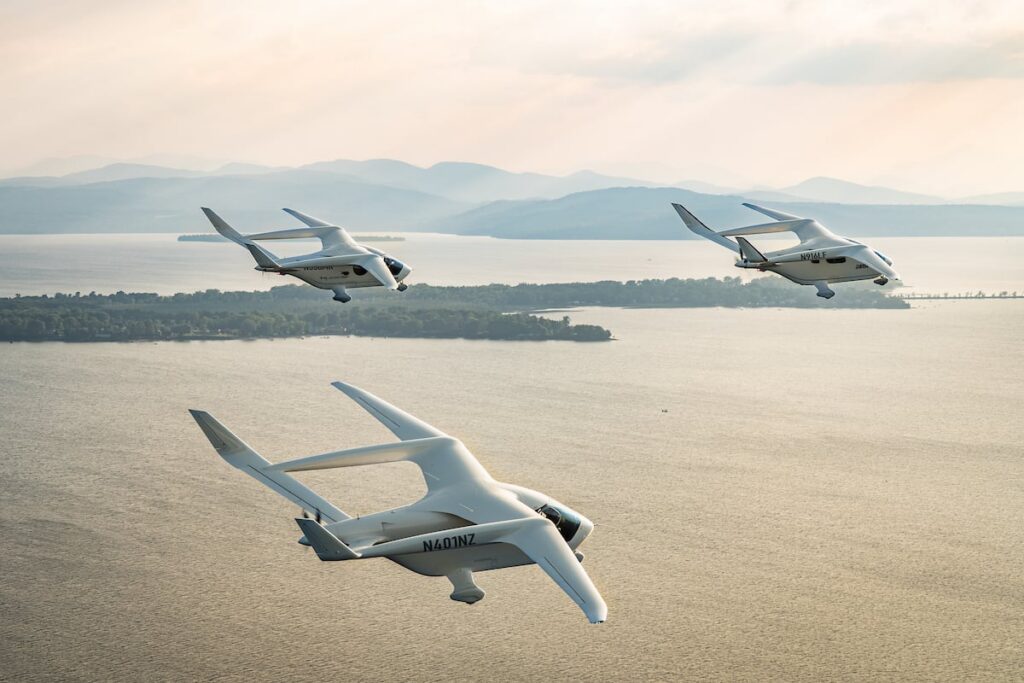
Founded in 2017 by aviation entrepreneur Kyle Clark, BETA Technologies is focused on creating practical electric aircraft for cargo transport, medical missions, military applications, and eventually passenger travel. The company’s ALIA family of aircraft includes both conventional takeoff and landing (CTOL) and vertical takeoff and landing (VTOL) models, offering flexibility for a wide range of use cases.
Unlike many companies pursuing urban air taxi concepts, BETA has taken a broader approach by developing not only aircraft, but also charging infrastructure, batteries, electric propulsion systems, pilot training programs, and support equipment. The company has already built a growing charging network across the United States, helping establish the foundation for future electric aviation operations.
Momentum continues to build for the company. BETA recently announced partnerships that will help launch passenger operations and expand aircraft deployment across the country.
Manufacturing is scaling as well. BETA operates a nearly 200,000-square-foot net-zero manufacturing facility in Vermont and plans significant workforce expansion as demand for electric aircraft grows. The company reports a backlog of more than 800 aircraft orders and commitments from customers and partners across commercial, medical, and government sectors.
Electric aviation remains in its early stages, but BETA Technologies is demonstrating that battery-powered flight is moving beyond prototypes and into real-world operations. As aircraft certification progresses and charging infrastructure expands, electric airplanes could provide a cleaner, quieter, and more cost-effective option for regional transportation and logistics in the years ahead.

Electric Vehicle Marketing Consultant, Writer and Editor. Publisher EVinfo.net.
Services