Iran War, High U.S. Gas Prices Are Making Used EVs More Expensive and Boosting Sales
On July 8, 2026, CNBC reported that rising gasoline prices linked to the conflict involving Iran are driving increased consumer interest in used electric vehicles, pushing pre-owned EV prices higher, while May 2026 used EV sales were 24.7% higher than May 2025, according to data from Cox Automotive.
The company reported that its Manheim Used Vehicle Value Index for EVs, which tracks wholesale auction prices, rose 12% in June compared with the same month a year earlier. By comparison, prices for non-electric vehicles increased just 1.7% over the same period.
Used EV wholesale prices have now increased every month in 2026. As a result, average wholesale EV pricing has climbed 11.5% this year to approximately $30,400. Non-EV vehicles have seen less than a 1% increase, with average wholesale prices reaching $19,125.
Consumer-facing prices are also trending upward. According to Cox Automotive’s Kelley Blue Book, the average listed price for a used EV reached $37,083 in May. Retail pricing typically follows wholesale market trends, suggesting continued strength in the used EV market.
“EVs continue to show strong performance, while prices for SUVs and pickups falter compared to this time last year,” Manheim said in its report.
Used EV demand remains robust. Cox Automotive estimates that consumers purchased 42,923 used EVs in May, an increase of 5.5% from April and 24.7% higher than May 2025. Used EVs accounted for 2.8% of the overall used vehicle market. Tesla remained the dominant brand with an estimated 15,353 units sold, followed by Hyundai, Chevrolet, Ford, and BMW electric models.
Jonathan Gregory, Senior Director of Cox Automotive, said fuel prices are likely to remain a key factor influencing EV demand during the second half of the year. While a growing wave of off-lease EVs is expected to enter the used market, higher gasoline costs could help absorb the additional supply.
“The risk we’re watching for the second half is that steep ramp in off-lease supply, EVs especially, which could pressure specific segments even as the headline holds firm,” Gregory said. “Gas is the swing factor. If pump prices keep falling, some of that EV demand could fade as availability increases.”
According to AAA, the national average gasoline price is approximately $3.80 per gallon, about 21% higher than a year ago. Although prices have retreated from recent peaks, renewed tensions in the Middle East have contributed to volatility in oil markets.
The strong performance of used EVs contrasts sharply with the new EV market, where many automakers reported significant sales declines during the second quarter. Industry analysts note that comparisons are complicated by unusually strong EV demand last year, when consumers rushed to purchase vehicles before federal incentives of up to $7,500 expired. That buying surge pushed EVs to nearly 10% of all new vehicle sales in September before demand cooled later in the year.
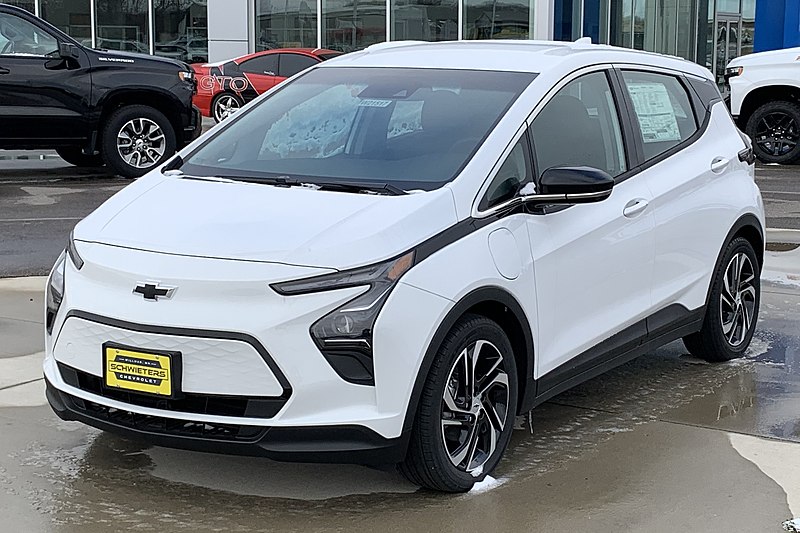
EVinfo.net’s Take: Strong Used EV Sales Will Boost New EV Sales, Gas Prices Heading Back Up
The used and new vehicle markets are closely connected. A healthy used EV market improves resale values, reduces depreciation concerns, and gives consumers greater confidence when purchasing a new electric vehicle. Buyers are more willing to invest in a new EV when they know there is strong demand for pre-owned models later.
In addition, many of today’s used EV buyers become tomorrow’s new EV buyers. As battery technology improves, vehicle range increases, and charging infrastructure expands, many drivers who entered the market through a used EV eventually upgrade to newer models offering the latest features and capabilities.
Higher gasoline prices could create a ripple effect across the entire EV industry. Increased demand for used EVs may strengthen resale values and expand consumer familiarity with electric transportation, while simultaneously encouraging more shoppers to consider new EVs.
Recent spikes in oil prices following escalating tensions between the United States and Iran are once again highlighting one of the strongest drivers of electric vehicle adoption: high gasoline prices.
After a series of military strikes between the two countries over the last few days, today the U.S. President indicated that additional U.S. strikes against Iran were likely. The uncertainty immediately rattled global energy markets. International benchmark Brent crude surged nearly 8%, climbing above $80 per barrel, while West Texas Intermediate (WTI), the primary U.S. oil benchmark, rose more than 7% to approximately $75 per barrel. If tensions continue, motorists should expect gasoline prices to rise as well.
History has shown that when fuel prices increase, consumers begin looking more closely at alternatives to gasoline-powered vehicles. One of the first places that demand appears is in the used EV market.
Lectrium Helps Dealers Turn EV Interest Into EV Sales
As electric vehicle adoption continues to grow, dealerships face a challenge that many never encountered during the transition from gasoline vehicles to hybrids: educating customers about an entirely new ownership experience. Questions about charging, range, home charging installation, battery health, and energy costs can slow the sales process and create uncertainty for buyers. That’s where Lectrium is working to make a difference.
Founded in 2021 after studying Norway’s highly successful EV market, Lectrium was created with a mission to help accelerate electrified vehicle adoption in the United States. The company develops software tools that help automotive dealerships better educate consumers while improving the online shopping experience for hybrid, plug-in hybrid, and battery-electric vehicles.
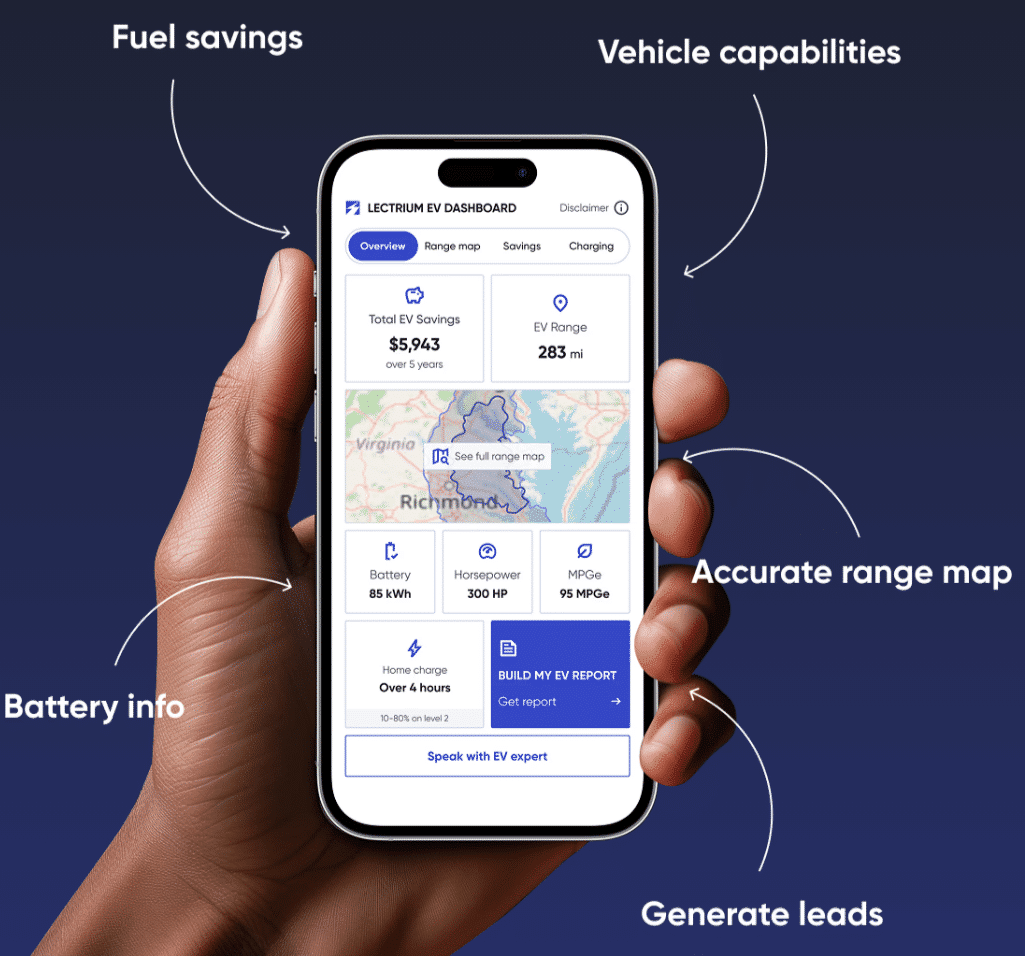
Lectrium’s platform integrates directly into dealership websites, providing shoppers with detailed EV information before they ever speak with a salesperson. Buyers can explore charging options, estimate fuel savings, review ownership costs, locate nearby charging stations, and even view range maps based on real-world driving routes. By answering many of the most common EV questions online, dealerships can reduce friction in the buying process and help consumers make more informed decisions.
The company reports that its electrified merchandising platform can significantly increase customer engagement. According to Lectrium, dealerships using its tools have seen lower bounce rates on vehicle detail pages, increased shopper interactions, and higher EV lead volumes. The platform also provides analytics that help dealerships better understand customer behavior and identify high-intent EV shoppers.
Beyond consumer education, Lectrium integrates with partners that support home charging installations and EV battery assessments, helping dealers address concerns that often arise during the transition to electric mobility. The company also emphasizes seamless integration with major dealership website providers and CRM systems, enabling sales teams to receive detailed information about customer interests and follow up more effectively.
As automakers continue investing billions of dollars in electrification, customer education remains one of the most important factors influencing EV adoption. Consumers increasingly conduct their research online before visiting a showroom, making digital merchandising tools more valuable than ever. By helping dealerships answer questions about charging, range, and ownership upfront, Lectrium is positioning itself as a bridge between consumer curiosity and EV confidence.
For an industry navigating one of the largest technology transitions in automotive history, tools that simplify the EV buying journey may prove just as important as the vehicles themselves.

Electric Vehicle Marketing Consultant, Writer and Editor. Publisher EVinfo.net.
Services