The New Mercedes-AMG CLA EV’s Impressive 670hp Comes From Axial Flux Motors
Mercedes-AMG has unveiled the all-new CLA 45 4Matic+, a high-performance electric sedan that combines cutting-edge EV technology with the brand’s signature focus on speed and driving excitement. Building on the impressive foundation of the standard CLA EV, the AMG version delivers significantly more power, enhanced performance, and several features designed to create a more engaging driving experience.
At the heart of the CLA 45 4Matic+ are three axial-flux electric motors, a technology also used in some of the world’s most advanced performance vehicles and plug-in hybrid supercars. Axial-flux motors are lighter and more compact than traditional electric motors, allowing Mercedes-AMG to deliver exceptional performance without adding excessive weight. Together, the three motors produce 670 horsepower, enabling the compact electric sedan to accelerate from 0 to 62 mph in just 3.0 seconds, or 2.7 seconds with rollout.
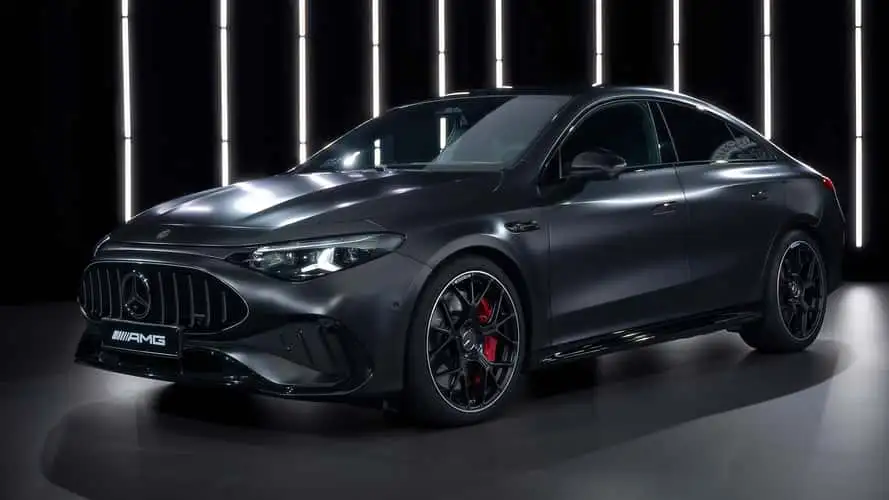
The powertrain features one motor on the front axle and two on the rear, creating a sophisticated all-wheel-drive system. The front motor, which produces 301 horsepower, is integrated into a High-Performance Electric Drive Unit that includes a gearbox, silicon carbide inverter, and advanced cooling system. To improve efficiency, the front motor can disengage during certain driving conditions when full power is not required.
Energy is supplied by a 94-kWh usable battery pack that delivers an estimated WLTP driving range of up to 416 miles for the sedan and 397 miles for the Shooting Brake version. Mercedes-AMG says the battery utilizes silicon oxide blended with graphite in the anodes, increasing energy density by up to 20% compared with conventional graphite-based batteries.
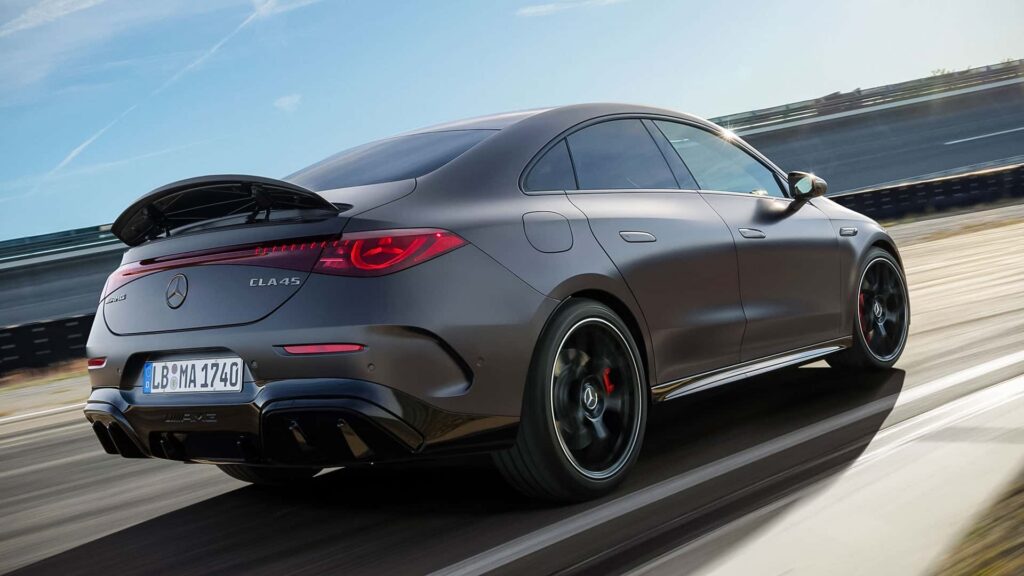
The CLA 45 4Matic+ also benefits from the same 800-volt electrical architecture found in the standard CLA EV. With DC fast-charging capability of up to 330 kW, the battery can recharge from 10% to 80% in approximately 22 minutes under optimal conditions.
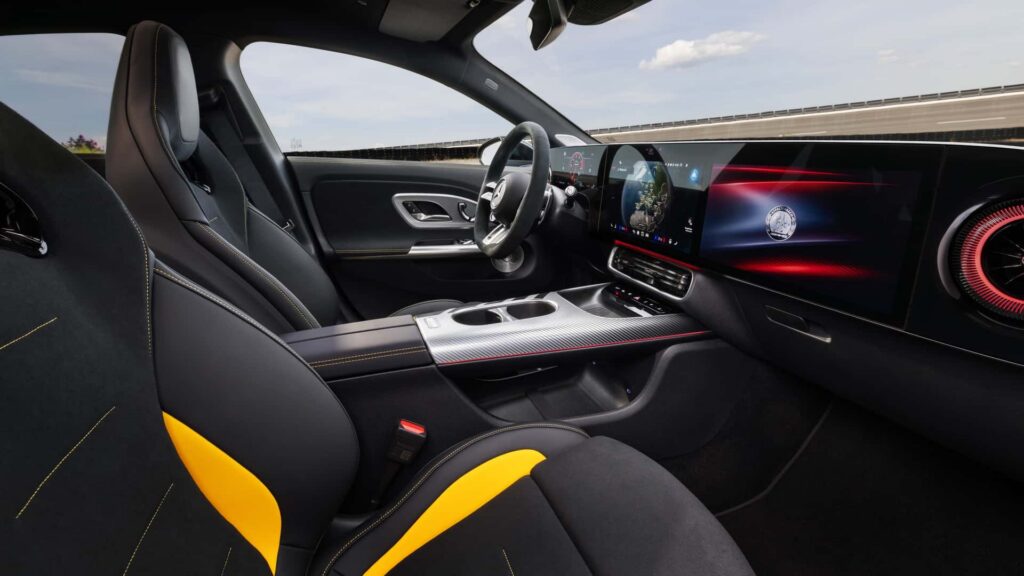
To enhance driver engagement, Mercedes-AMG has introduced AMGFORCE S+, a system that simulates the feel and sound of a traditional performance car. The feature incorporates virtual gear changes, traction-shift interruptions, active seat feedback, customized displays, and synthesized engine sounds developed using extensive recordings from the gasoline-powered AMG 45 S.
The performance-focused EV also receives larger brakes, active aerodynamic elements, an aggressive AMG body kit, and a sportier interior. Standard 19-inch wheels are included, while 20-inch wheels are available as an option. With its combination of high-performance engineering, long-range capability, ultra-fast charging, and advanced driver-focused technology, the new CLA 45 4Matic+ represents Mercedes-AMG’s latest step into the electric performance era.
EVinfo.net’s Take: Why Axial Flux Motors Are Changing the Game for Electric Vehicles
For years, most electric vehicles have relied on radial-flux motors, the cylindrical electric motors that have become the industry standard. While these motors have helped power the global EV revolution, a new technology is beginning to attract attention from automakers looking for higher performance, greater efficiency, and improved vehicle packaging: the axial flux motor.
Once found primarily in specialty applications and high-performance vehicles, axial flux motors are now making their way into production EVs from leading manufacturers. Companies such as Mercedes-AMG, Ferrari, Lamborghini, McLaren, and others are embracing the technology because of its ability to deliver exceptional power in a compact and lightweight package.
The biggest advantage of an axial flux motor is its design. Traditional radial-flux motors generate torque through magnetic fields that flow outward from the center of the motor. Axial flux motors operate differently, with magnetic fields flowing parallel to the motor shaft. This seemingly small engineering change creates significant performance benefits.
Because the design is flatter and more compact, axial flux motors can deliver much higher power density than conventional electric motors. In simple terms, they can produce more power and torque while taking up less space and weighing considerably less. For vehicle manufacturers, this creates new opportunities to improve performance without increasing vehicle weight.
In June 2025, EVinfo.net reported that YASA’s advancements in axial flux motors, combined with the newly upgraded Yarnton facility, are poised to help bridge the gap between high-performance EVs and the broader mass-market future.
YASA Commercial director Andy North emphasized in an interview with the BBC that YASA is “really on the cutting edge of performance,” and that this innovation is helping redefine what’s possible in vehicle electrification. The lessons being learned in high-performance applications are expected to ripple outward. “Whilst really being used in the niche sports car sector today, over time we will see that filter through to Mercedes-AMG vehicles, and then into the automotive sector more broadly,” added CEO Tim Woolmer.
This “trickle-down” path has been a well-worn one in the auto industry, and figures like Andy Palmer, who is widely known as the Godfather of EVs for his work at Nissan, see the same trajectory playing out with YASA’s technology.
EVinfo.net’s Take: EV Tech Advances Coming Fast
Axial flux motors are one example of the lightning-fast speed of innovation in the EV industry, compared to gas vehicle innovations.
Mack Hogan, the new Editor-in-Chief of InsideEVs, wrote a great article on a topic that I’ve discussed many times. I’ve been writing about EVs for the last 4+ years at EVinfo.net, and I believe there are far more fast-moving innovations going on in the electrified vehicle industry, as opposed to the rapidly declining gas vehicle industry.

Electric Vehicle Marketing Consultant, Writer and Editor. Publisher EVinfo.net.
Services