Slate Tests Affordable New EV Truck, Introduces New Colors
Slate Auto’s affordable new EV truck is undergoing testing. On July 13, 2026, Eric Keipper, Head of Engineering at Slate, shared an update on Linkedin about putting the new truck through its paces.
Keipper said: “Spent the weekend in the seat of our Slate Truck prototype, and it was a great one — the kind of weekend that reminds you why we do this.
Ride and handling? Sharp. Steering feel? Landing right where we want it — final calibration passes are paying off. Took it out on dirt roads and let it stretch its legs — composed, planted, no drama, even when the terrain got loose.
Behind the scenes, every mile is being captured — data recorders pulling everything off the CAN bus so we can fine-tune one-pedal drive response and steering calibration down to the smallest detail. The software is integrating well to the hardware, and it shows.
And that’s on top of the durability work and software validation the team is grinding through in parallel — stress-testing, edge-case hunting, making sure this truck holds up to real life, not just a test loop.
Windows down. Crank windows (yes — and I genuinely love them). JBL speaker riding shotgun. Just a truck, a road, and good music.
Here’s the thing: none of this happens by accident. Our engineering team is putting in the obsessive, unglamorous work — the kind nobody sees — to make sure this truck delivers on what actually matters: safety, reliability, durability, and ease of use. Those are our cornerstones, and this team lives them every single day.
Proud doesn’t begin to cover it. Can’t wait for you all to feel what we’re building.”
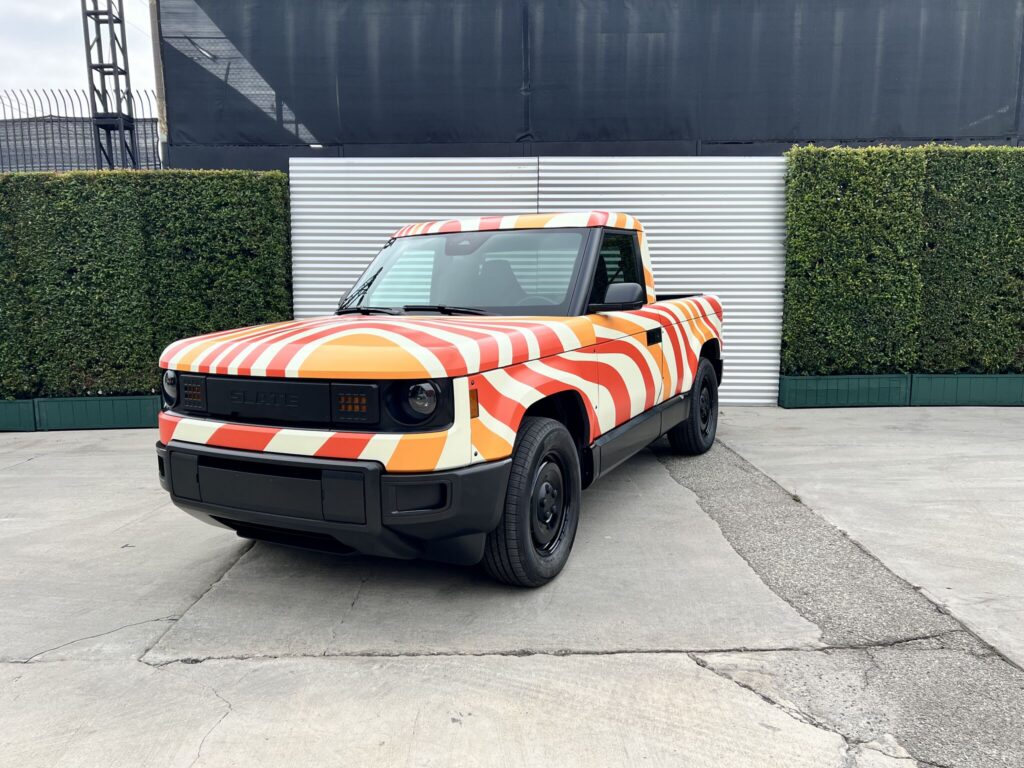
Slate Partners With Crayola on New Color Wraps, An Industry First
Slate has announced a colorful new partnership with Crayola, bringing some of the iconic crayon maker’s most recognizable colors to its customizable electric vehicles. The collaboration marks Crayola’s first-ever automotive partnership and highlights Slate’s unique approach to vehicle personalization.
Designed around customization and affordability, the Slate Truck claims it will be the most affordable truck in America. Slate has also built its vehicles with wraps in mind, allowing owners to easily transform the appearance of their vehicle over time. Through the new partnership, customers will be able to choose from five Crayola-inspired vehicle wraps featuring the classic colors Cerulean, Fern, Jersey Tomato, Razzmatazz, and the fan-favorite Dandelion.
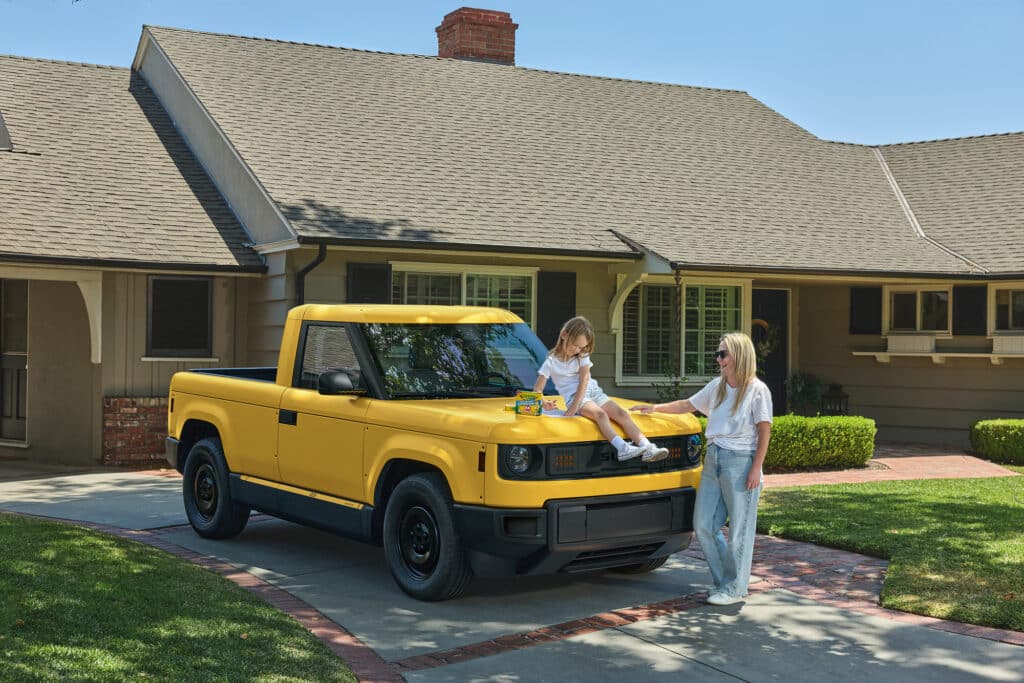
According to Slate Head of Brand and Marketing Ben Whitla, the collaboration brings together two brands that share a focus on creativity and self-expression. He noted that Slate vehicles are designed to be accessorized and personalized, making Crayola’s instantly recognizable color palette a natural fit. The partnership gives owners another way to make their vehicle uniquely their own while celebrating individuality through color.
Crayola also sees the partnership as an extension of its long-standing mission to encourage creativity. Anna Roca, Head of Global Partnerships at Crayola, said color has always been a powerful form of self-expression and that the collaboration transforms a vehicle into a creative canvas. The company believes the partnership offers drivers a bold and unexpected way to showcase their personalities while reflecting values both brands share.
The Slate x Crayola wraps will be available as starter packs that include matching decals, a custom key fob cap, and a clip-on dashboard “Slatelet.” Like other accessories offered by the company, the packages will be sold directly through the Slate Marketplace.
Customers can currently reserve a Slate vehicle with a $300 refundable preorder. Before delivery, buyers will have the option to purchase a Slate x Crayola starter pack, with pricing beginning at $1,549.99.
Slate Will Use LFP Batteries
Slate Auto has replaced the nickel manganese cobalt (NMC) batteries originally planned for its upcoming electric pickup with lower-cost lithium iron phosphate (LFP) batteries supplied by Gotion and manufactured in Illinois. The move supports the company’s goal of offering one of the most affordable new EVs in the U.S. while reducing production and logistics costs.
The truck produces 181 horsepower and 195 lb-ft of torque, prioritizing affordability over high-performance specifications.
LFP batteries have become increasingly popular because they are less expensive and more durable than NMC batteries, though they typically offer lower energy density. Advances in domestic LFP production and changes in federal EV incentive policies made the switch more practical for Slate.
The company’s new 65-kWh battery pack uses a module-free design with prismatic cells integrated directly into the battery enclosure, improving packaging efficiency. Thanks to the new battery system, the production version of the truck is now expected to achieve approximately 205 miles of range, up from the originally projected 150 miles.
Slate Auto Wants to Reinvent the American Vehicle for the EV Era
For decades, new vehicles have followed a familiar pattern: larger screens, more features, higher prices, and increasing complexity. While technology has advanced, affordability has often moved in the opposite direction. Slate Auto is attempting to challenge that trend with a radically different idea: build a simple, affordable electric vehicle that owners can customize as their needs change.
Founded in 2022, Slate Auto is one of the most interesting startups in the electric vehicle industry because it is focusing on a market many automakers have largely abandoned. Instead of launching a luxury EV packed with premium features, Slate is developing an affordable electric truck with a starting price of $24,950 before incentives. The two-seat electric pickup is designed as a minimalist vehicle, featuring crank windows, optional speakers, and the ability to convert into a five-passenger SUV for an additional $5,000.
If the company succeeds, it could introduce one of the most accessible new electric vehicles available in the United States.
At the heart of Slate’s strategy is simplicity. The company has stripped away much of the complexity that drives up vehicle costs. Rather than offering dozens of trim levels and endless factory options, Slate plans to build a standardized platform that can be personalized through accessories, wraps, and modular upgrades. Customers can start with a basic pickup truck and later transform it into one of two SUV configurations, creating a level of flexibility rarely seen in the automotive industry.
This modular approach has several advantages. Buyers can purchase only the features they need today and add others later. A vehicle that begins as a work truck can evolve into a family vehicle without requiring the owner to buy an entirely new car. This could help extend vehicle lifecycles while reducing ownership costs.
Slate is also emphasizing domestic manufacturing. The company plans to assemble vehicles at a reindustrialized factory in Warsaw, Indiana, supporting American jobs while helping strengthen domestic EV production capacity.

Electric Vehicle Marketing Consultant, Writer and Editor. Publisher EVinfo.net.
Services