Porsche Advances Closed-Loop EV Battery Recycling
Porsche has reached a new milestone in battery recycling, producing battery cells whose cathode active material is made entirely from recycled raw materials recovered from the company’s own high-voltage batteries. The achievement is part of a pilot project with partners including German battery recycling specialist cylib, focused on creating a more circular battery supply chain. The company announced the news on September 17, 2026.
The pilot project replaces primary raw materials with recycled materials and is now testing the resulting battery cells under real-world operating conditions. The recycled cathode active material contains lithium, nickel, cobalt and manganese. Since May 2026, end-of-life high-voltage batteries from Porsche Centers across Germany have been recycled using a water-based process. The recovered materials are expected to become available for new battery cell production beginning in 2028.
Porsche said the project represents another step toward a closed-loop circular economy for high-voltage batteries while potentially strengthening the resilience of critical raw material supplies. In cooperation with cylib, Porsche has successfully produced battery cells using cathode active material made exclusively from raw materials recovered from its own end-of-life high-voltage batteries. The cells are currently undergoing extensive operational testing.
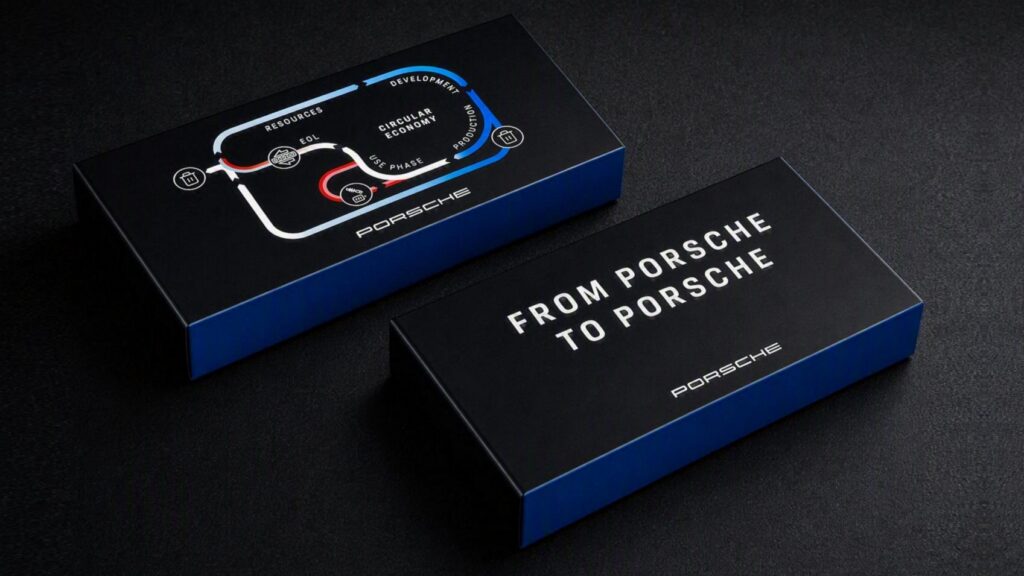
“With battery cells made entirely from recycled raw materials such as lithium and cobalt, we have achieved an important technological milestone,” said Joachim Scharnagl, Porsche’s Member of the Executive Board for Procurement. He said the innovation supports circular economy principles and raw material resilience while focusing on progress, quality and resource efficiency. The work builds on a high-voltage battery recycling pilot project launched by Porsche and its partners the previous year.
The recycling process recovers valuable materials from end-of-life batteries, processes them into new battery materials and uses those materials in battery cells for Porsche test vehicles. The latest phase marks the first time that recycled active materials have fully replaced conventionally sourced primary materials.
cylib said the project demonstrates that recovered materials from Porsche batteries can potentially be returned to new high-performance batteries. “cylib closes the battery recycling loop, from end-of-life batteries to recovered raw materials,” said Dr. Lilian Schwich, Co-CEO and Co-Founder of cylib.
Porsche is also evaluating the quality and performance of the recycled materials. Initial testing has demonstrated the technical feasibility of the approach, while additional results are expected during the second half of 2026. The findings could support the future use of recycled materials in series-production battery cells.
The pilot is already influencing Porsche’s regular battery disposal process. End-of-life high-voltage batteries collected from Porsche Centers throughout Germany are being recycled through the partnership with cylib. The recovered materials are tracked through a dedicated material account and will be available to Porsche and selected partners for battery cell production beginning in 2028. Porsche said the approach could reduce dependence on global raw material sources and eventually allow battery materials recycled in Europe to be used in high-voltage batteries for Porsche vehicles.
Porsche’s broader circular economy strategy focuses on responsible raw material use, resource conservation and extending the useful life of vehicles and their components. The company is pursuing circular solutions for high-voltage batteries, recycled materials, waste reduction and remanufacturing across the vehicle value chain.
Founded in Aachen, Germany, in 2022, cylib was established by Dr. Lilian Schwich, Paul Sabarny and Dr. Gideon Schwich. The company grew out of research at RWTH Aachen University and focuses on producing high-quality materials for sustainable batteries and resilient European supply chains. Its German operations include research and development in Aachen, hydrometallurgical processing under development in Dormagen, and dismantling and mechanical processing in Wernberg-Köblitz.
Electric Vehicle Marketing Consultant, Writer and Editor. Publisher EVinfo.net.
Services