Baja Carports Unveils PowerColumn Solar Energy Storage and EV Charging System
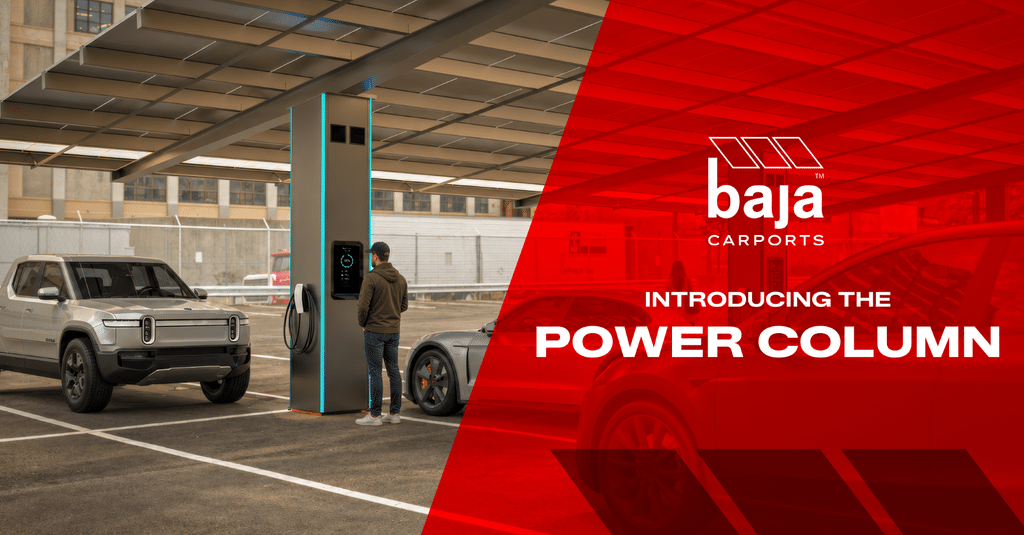
Baja Carports unveiled the first prototype of PowerColumn™, an integrated energy platform that stores and distributes solar electricity through the support columns of solar carports. The system combines solar generation, battery storage, EV charging and backup power to help businesses reduce grid dependence and maintain critical operations during outages.
Announced November 16, 2026, PowerColumn places energy storage and distribution equipment inside the carport’s structural columns. Solar panels mounted overhead generate electricity, which can be stored and directed to EV chargers beneath the canopy or selected building systems.
Unlike traditional standby diesel generators that typically remain idle until an outage, PowerColumn can provide everyday value by supplying electricity during peak demand and charging parked vehicles. During power interruptions, appropriately sized systems can reserve stored energy for critical equipment such as refrigeration and security systems.
“PowerColumn is the next step forward for Baja, and it lets businesses store that power where they need it,” said Aric Nissen, CEO of Baja Carports.
He highlighted the potential for grocery stores to use solar carports to shade vehicles, charge EVs and keep refrigerated inventory cold during grid outages.
The launch comes as electricity demand increasingly challenges power generation and transmission capacity. The North American Electric Reliability Corporation warns that 13 of the 23 areas it assesses face challenges meeting electricity demand reliably over the next decade.
Baja Carports designs, engineers and installs its structures and electrical systems, providing property owners and solar partners with a coordinated solution. The company also plans to explore virtual power plant programs that could connect energy storage systems across multiple properties to support utilities.
PowerColumn is available across the United States. Baja is inviting project developers, solar and electrical contractors, and utilities to evaluate installation requirements, operating economics and backup capabilities.
Founded in 1981, Baja Carports manufactures and installs commercial shade carports, solar structures and covered RV and boat storage facilities.
EVinfo.net’s Take: Solar Carports With Integrated EV Charging Make Parking Lots More Valuable
Solar carports with integrated electric vehicle (EV) charging offer businesses and property owners an efficient way to turn ordinary parking spaces into clean energy and transportation infrastructure. By installing solar panels above parking areas and EV chargers beneath them, businesses can generate renewable electricity while providing convenient charging for employees, customers and fleet vehicles.
Unlike traditional ground-mounted solar installations, solar carports make productive use of existing parking areas without requiring additional land. They also provide valuable shade and weather protection for parked vehicles, helping reduce interior temperatures during hot weather.
The electricity generated can power EV chargers, supply buildings, charge stationary battery storage systems or feed excess energy back into the grid. Adding battery storage can further improve the economics by storing solar electricity for evening charging, reducing peak electricity demand and providing backup power during outages.
For businesses, solar carports can lower electricity expenses, support sustainability goals, attract EV-driving customers and create additional revenue opportunities. They are particularly attractive for shopping centers, workplaces, hotels, airports, multifamily properties and fleet depots.
As EV adoption and electricity demand increase, combining solar generation, energy storage and charging infrastructure makes increasing economic and practical sense. Solar carports turn parking lots from passive spaces into productive energy assets while helping accelerate transportation electrification.

Electric Vehicle Marketing Consultant, Writer and Editor. Publisher EVinfo.net.
Services