Ford and GM Launch Programs Extending Use of $7,500 EV Lease Credit
On September 30, 2025, the long-standing $7,500 federal tax credit for leasing electric vehicles officially expired. But industry momentum and consumer demand don’t vanish overnight, and neither have the incentives. In a surprising turn, both Ford and General Motors have devised programs aimed at preserving the value of that subsidy for several more months.
Rather than building entirely new mechanisms, the automakers are leveraging their finance arms to make down payments on EVs already in dealer inventories. By doing so, those vehicles become eligible under the tax credit before the deadline. The dealers can then lease those same cars to consumers, effectively passing along the benefit as lower lease payments.
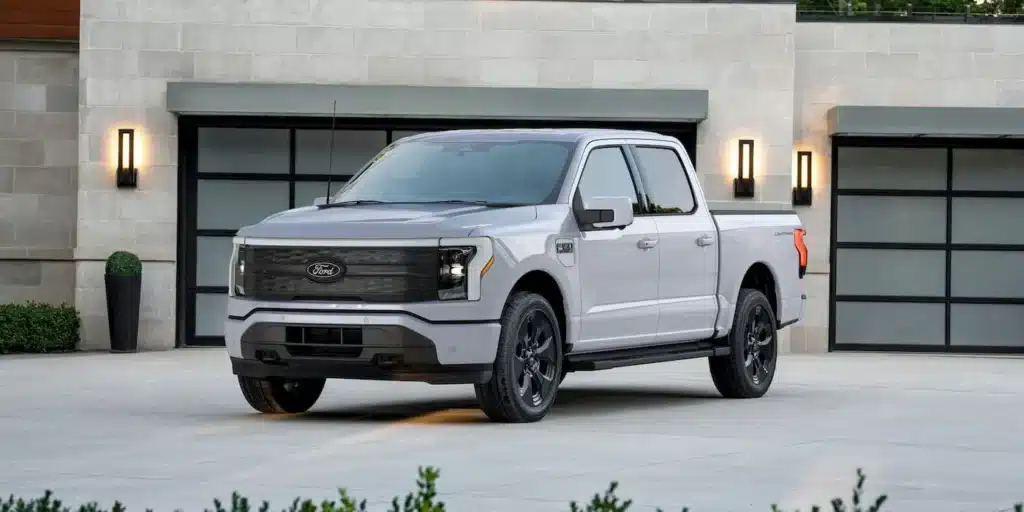
For Ford, the initiative is structured to last through December 31, 2025, giving its EV lease programs a buffer period during which customers can still access competitive lease pricing. GM is coordinating with its dealer network to adopt a similar structure.
This strategy is clearly intended to soften a predicted dip in EV demand now that the tax credit is no longer available for new lease or purchase contracts. Automakers, dealers, and analysts alike have warned that without such incentives, leasing and buying EVs could become less attractive—or even financially challenging—for many buyers.

It’s worth noting that to qualify for the credit, Ford and GM reportedly consulted with IRS officials to ensure the approach meets legal requirements. Still, the strategy reveals just how dependent the EV market has become on public policy and incentives. When subsidies vanish, the entire value proposition for many buyers shifts, automakers must make adjustments to sustain momentum.
Beyond the technicalities, the bigger picture is that Ford and GM are signaling they’re not yet ready to let go of the financial levers that have fueled EV adoption. For now, they’ll shoulder the upfront cost to keep lease pricing attractive, but whether this is a sustainable model or just a stopgap measure remains to be seen.
EV Adoption Will Keep Growing Thanks to Cost Effectiveness and Fresh Models
The end of federal EV tax credits may feel like a setback for some buyers, but the larger story of electric vehicle adoption is far from slowing down. In fact, the momentum is expected to accelerate in the coming years, powered by the simple economics of EV ownership and an ever-expanding lineup of new models.
At the heart of the shift is cost effectiveness. Battery prices, which once made EVs prohibitively expensive, have steadily declined over the past decade and are expected to fall even further as manufacturing scales. This means automakers can produce affordable EVs without sacrificing range or performance. For drivers, the total cost of ownership tells the story even more clearly: electricity is often cheaper than gasoline on a per-mile basis, and EVs require less maintenance since they have fewer moving parts and no oil changes. Over the lifetime of the vehicle, many owners are discovering they save thousands compared to a gas-powered equivalent.
At the same time, automakers are pushing out new models across nearly every vehicle segment. From compact crossovers and pickup trucks to luxury sedans and performance EVs, the variety has never been greater. This expansion means buyers no longer have to compromise on style, size, or capability when choosing electric. In fact, many upcoming EVs are designed to meet mainstream needs, offering ranges well above 250 miles and charging speeds that make long-distance travel practical.
The New Bolt and Leaf Are Set to Boost EV Adoption
Two of the most recognizable names in the electric vehicle market, the Chevrolet Bolt and the Nissan Leaf, are making a comeback, and their return could play a major role in accelerating EV adoption. Long considered the most accessible electric cars on the market, both models are being reintroduced with upgraded designs, improved ranges, and more competitive pricing that directly address mainstream consumer needs.
EVinfo.net reported recently that Nissan is cutting its Ariya for the US market, however the new 2026 Leaf aims to win back budget-conscious EV shoppers with big improvements. It looks like a smaller Ariya, rides on a new 75-kWh battery pack, and delivers up to 303 miles of EPA-rated range in its base S+ trim. Even the range-topping Platinum+ model offers 259 miles, well above the outgoing LEAF’s max of 212. The SV+ falls in the middle with 288 miles.

For years, the Bolt and the Leaf have been the entry point into EV ownership for thousands of drivers. Their affordability, practicality, and proven reliability made them popular choices, even when the EV landscape was dominated by premium models with higher price tags. Now, with the next generation of these vehicles arriving, automakers are doubling down on the formula that works: EVs that don’t just appeal to early adopters, but to everyday drivers seeking value and dependability.
The new Bolt is expected to deliver more range at a lower cost, while taking advantage of GM’s Ultium battery technology for faster charging and improved performance. Meanwhile, Nissan is bringing fresh energy to the Leaf with a redesigned look and technology upgrades, positioning it as a versatile option for commuters and families alike. Together, these models are tackling two of the biggest hurdles to mass adoption, price and practicality.
The timing couldn’t be better. As the federal EV tax credit phases out, consumers are looking for vehicles that deliver affordability without relying heavily on subsidies. The Bolt and Leaf offer just that, creating opportunities for more drivers to switch to electric.
Crucially, consumer attitudes are changing. Early adopters paved the way, but now middle-market buyers are stepping in, motivated less by environmental ideals and more by practical economics. With broader selection, better technology, and long-term savings, EVs are moving from niche to normal.
Even without the boost of federal subsidies, the forces driving EV adoption, which are cost effectiveness, consumer choice, and technological maturity, remain firmly in place. For automakers and drivers alike, the electric future is not just coming; it’s already here, and it’s only getting stronger.

Electric Vehicle Marketing Consultant, Writer and Editor. Publisher EVinfo.net.
Services