Nissan Cancels Ariya in the US, Adds LEAF EV for 2026
Nissan is reshaping its U.S. EV strategy, and the Ariya SUV is the first to feel the impact. The company has confirmed that the Ariya will not be offered in the U.S. for the 2026 model year as it shifts focus to the launch of the all-new Nissan LEAF. For anyone interested in the Ariya, the message is clear: get one while you still can. Dealers were notified in a recent memo that production for the U.S. market is ending, though the SUV remains on sale for now. Whether it will return in 2027 is uncertain.
The move comes as Nissan pursues a comeback strategy built on cutting costs and streamlining its lineup. Between higher import tariffs and the looming end of federal EV tax credits, the automaker is reallocating resources toward a more affordable EV. According to Nissan, the 2026 LEAF will carry the lowest starting MSRP of any new EV in the U.S., at $29,990. Early production will be limited to around 500 units as battery supply ramps up, but Nissan sees the LEAF as the foundation of its future lineup.
Meanwhile, the Ariya has struggled to compete despite recent sales growth. Discounts helped push 7,471 U.S. sales through the first half of 2025, up 43% year-over-year, but the SUV’s pricing and specs were under pressure from newer rivals. The 2025 Ariya starts at $39,770 with a 216-mile range, while the extended-range Evolve trim with 289 miles starts at $44,370. Nissan has promised ongoing support for current Ariya owners, but its U.S. future is uncertain.
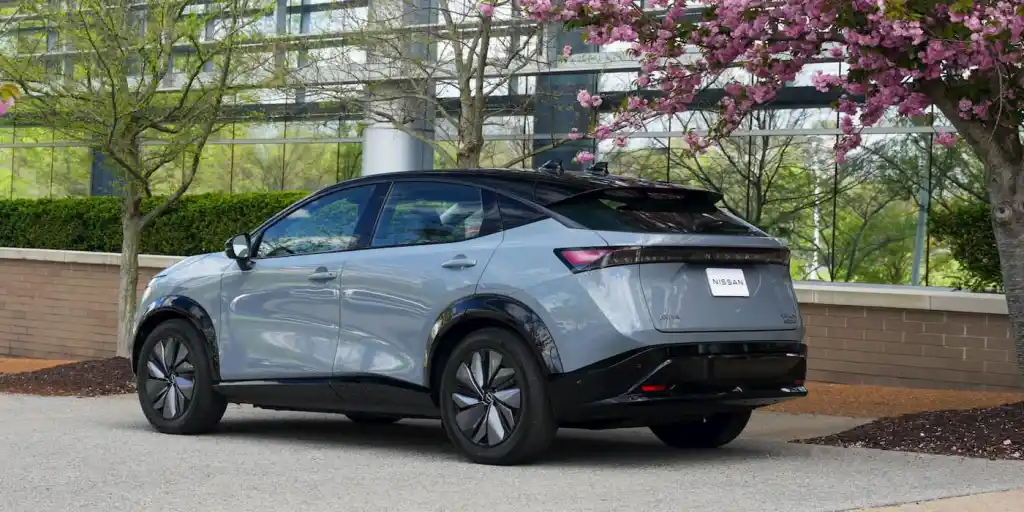
New Leaf Aims to Win Back Budget-Conscious EV Shoppers With Big Improvements
The new LEAF, however, aims to win back budget-conscious EV shoppers with big improvements. It looks like a smaller Ariya, rides on a new 75-kWh battery pack, and delivers up to 303 miles of EPA-rated range in its base S+ trim. Even the range-topping Platinum+ model offers 259 miles—well above the outgoing LEAF’s max of 212. The SV+ falls in the middle with 288 miles.
Beyond range, the LEAF upgrades its technology and comfort features. Standard equipment includes adaptive cruise control, blind-spot warning with intervention, a 360-degree camera, and dual 12.3-inch screens for driver info and infotainment. Wireless smartphone integration comes standard as well. Higher trims add premium features like Bose audio, dual 14.3-inch displays, a power liftgate, and Nissan’s dimmable panoramic glass roof, which can turn semi-opaque at the touch of a button.
Charging is also future-proofed. The old LEAF’s CHAdeMO plug is gone, replaced with two ports: an NACS (Tesla) connector for fast charging up to 150 kW and a J1772 for Level 2 AC charging. Under ideal conditions, Nissan says the new LEAF can charge from 10% to 80% in about 35 minutes using DC fast charging.
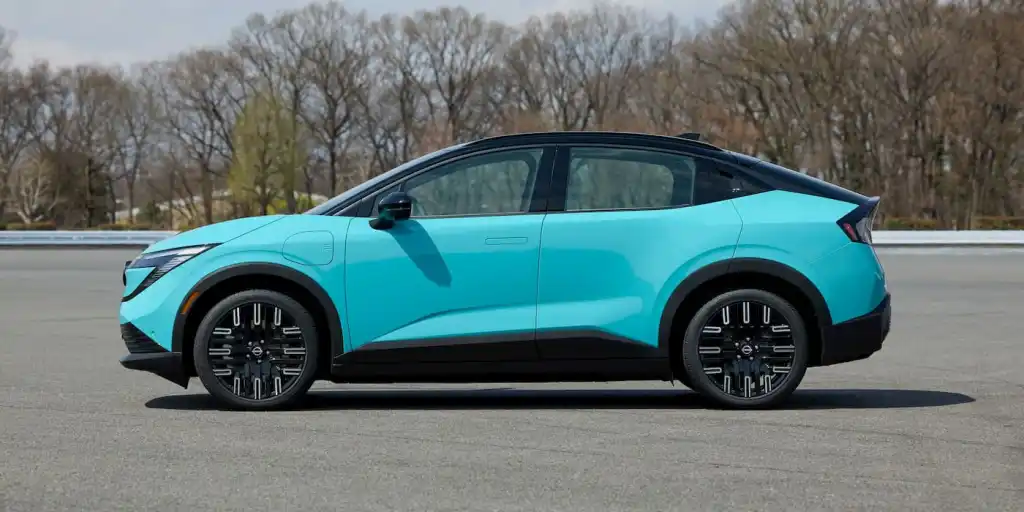
Inside, Nissan focused on comfort and usability. The front seats use “Zero Gravity” padding to ease long drives, though some drivers may find them narrow. The back seat remains tight for taller passengers, but higher trims add rear-seat heating, vents, and USB-C ports.
Taken together, Nissan’s 2026 plan signals a pivot back to affordability and practicality. While the Ariya departs, the all-new LEAF looks ready to pick up the slack with more range, better tech, and a price tag that makes it the cheapest new EV in the country. For Nissan, this could be the start of a much-needed EV comeback.
Could New LEAF Solve Nissan’s Financial Problems?
In December 2024, EVinfo.net reported Nissan had a 90% drop in profits. Nissan has had a tough few years, and the Ariya’s U.S. exit is just the latest reminder of the automaker’s uphill battle. Once a leader in EVs with the original LEAF, Nissan has since fallen behind as rivals like GM, Hyundai, and Ford surged ahead with vehicles offering more range, more tech, and more excitement. Now, Nissan is betting big on a return to its roots with the 2026 LEAF, a car that promises to be the most affordable new EV in America. The question is whether this shift can help solve Nissan’s financial problems.
The new LEAF starts at $29,990, a price that undercuts nearly every competitor. Pair that with up to 303 miles of range in the base S+ model, and Nissan suddenly has an EV that checks two of the most important boxes for mainstream buyers: affordability and practicality. That combination could make the LEAF a volume seller in a segment where too many options remain out of reach for average households. If Nissan can deliver these cars at scale, it could dramatically improve its sales numbers.
But Nissan’s financial future hinges on more than just pricing. The company is still dealing with the fallout from years of restructuring, weak margins, and shifting global policies. The administration’s 15% import tariff on EVs and the winding down of federal tax credits put even more pressure on automakers like Nissan, which rely heavily on overseas production. By focusing on the LEAF, Nissan is taking a cost-cutting approach, hoping to produce a vehicle that doesn’t just sell, but sells profitably.
There are also risks. Initial reports suggest Nissan will only allocate around 500 units of the 2026 LEAF in its early months due to battery supply constraints. That could blunt the momentum of what looks like a promising launch. Meanwhile, dropping the Ariya from the U.S. lineup could alienate some buyers who want a larger, more premium Nissan EV. If the LEAF is left to carry too much of the weight, Nissan’s recovery could stall before it starts.
Still, the LEAF represents a strategic return to what Nissan has always done best: building affordable cars for the masses. The original LEAF put the brand on the EV map. If the 2026 model can combine that legacy with modern performance, range, and tech, Nissan may have found the spark it needs to reignite its business. Solving its financial problems won’t happen overnight, but a strong-selling, profitable EV could give Nissan the stability it desperately needs.

Electric Vehicle Marketing Consultant, Writer and Editor. Publisher EVinfo.net.
Services