Komatsu’s PC20E-6 Electric Mini Excavator Delivers
Japanese equipment giant Komatsu is continuing its push into electric construction machinery with the launch of its latest model, the PC20E-6 electric mini excavator. Despite its modest size, the PC20E-6 is designed to deliver a full day’s work on a single charge, making it a practical alternative to diesel machines in small to mid-scale applications.
The machine’s development was guided by extensive real-world data. Komatsu analyzed more than 40,000 working days of diesel mini excavators and discovered that in 90% of cases, these machines are in active use for less than 3.5 hours a day. That insight set the performance target: deliver at least four hours of reliable runtime per charge. By matching the typical duty cycle rather than overbuilding, Komatsu has been able to keep the new model attractively priced while still meeting customer needs.
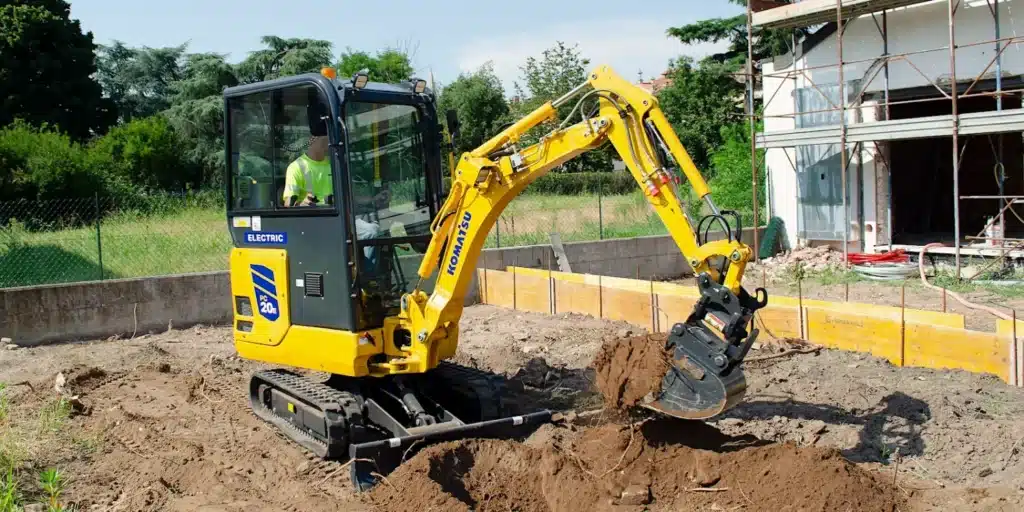
Powering the PC20E-6 is a 23.2 kWh battery paired with an 11 kW (about 15 hp) high-torque electric motor. On paper, the numbers may not impress, but in practice, the excavator’s 2,190 kg operating weight and four-hour continuous runtime are more than enough to cover the majority of real-world tasks. If extra runtime is needed, operators can recharge using the onboard 230V, 3 kW AC charger with standard plug adapters, or opt for an external 400V, 12 kW DC fast charger to get back to work quickly.
Komatsu is also addressing customer concerns about long-term ownership with its E-Support maintenance program. The PC20E-6 comes with free scheduled service from Komatsu-trained technicians, a 3-year/2,000-hour machine warranty, and a 5-year/10,000-hour warranty on the electric driveline. The battery itself is expected to last 10 years, giving buyers confidence in the technology. While official pricing has not yet been released, Komatsu has confirmed that series production of the PC20E-6 will begin this October, signaling the company’s commitment to electrifying construction equipment without compromising reliability or affordability.
Why Electric Construction Equipment Provides Cleaner Air, Lower Costs, and Is Growing Fast
Komatsu’s electric mini excavator is just one example out of many in construction, an industry that is rapidly electrifying its equipment in every conceivable way.
Construction sites have long been associated with diesel engines, noise, and exhaust fumes. But a quiet transformation is underway: electric construction equipment is rapidly moving from niche to mainstream. From mini excavators and compact loaders to forklifts and cranes, manufacturers are electrifying jobsite staples, and the benefits are hard to ignore.
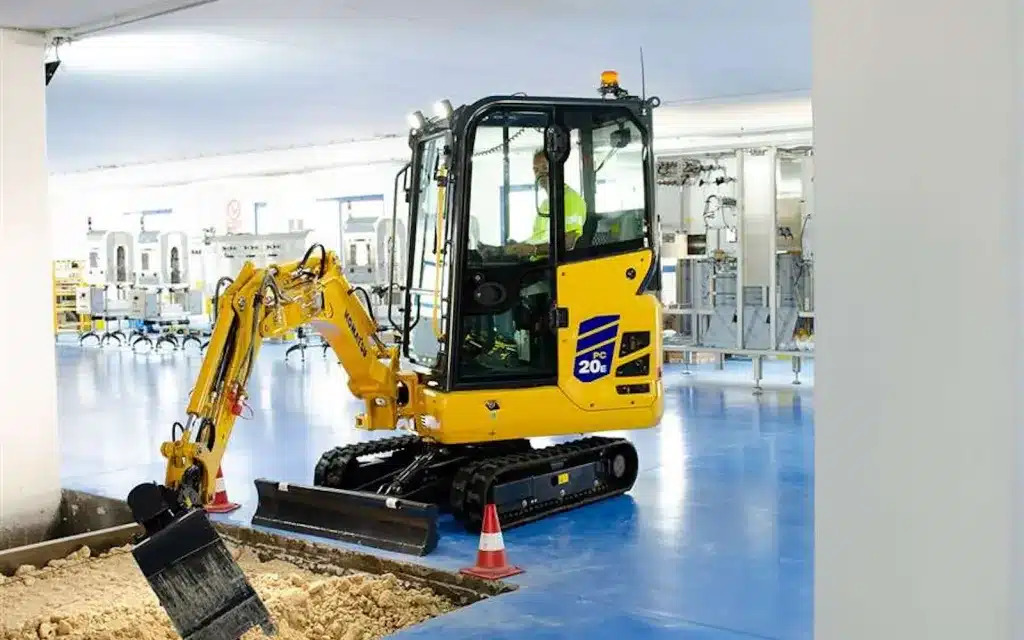
One of the most immediate advantages is clean air. Traditional diesel engines release harmful pollutants like nitrogen oxides (NOx) and particulate matter, which contribute to smog and respiratory illnesses. By contrast, electric equipment produces zero tailpipe emissions, helping improve air quality on and around jobsites. This is especially critical in urban areas, tunnels, or indoor projects where ventilation is limited and worker health is directly affected by air quality. For cities and contractors facing stricter environmental regulations, electric machinery makes compliance simpler while also demonstrating a commitment to sustainability.
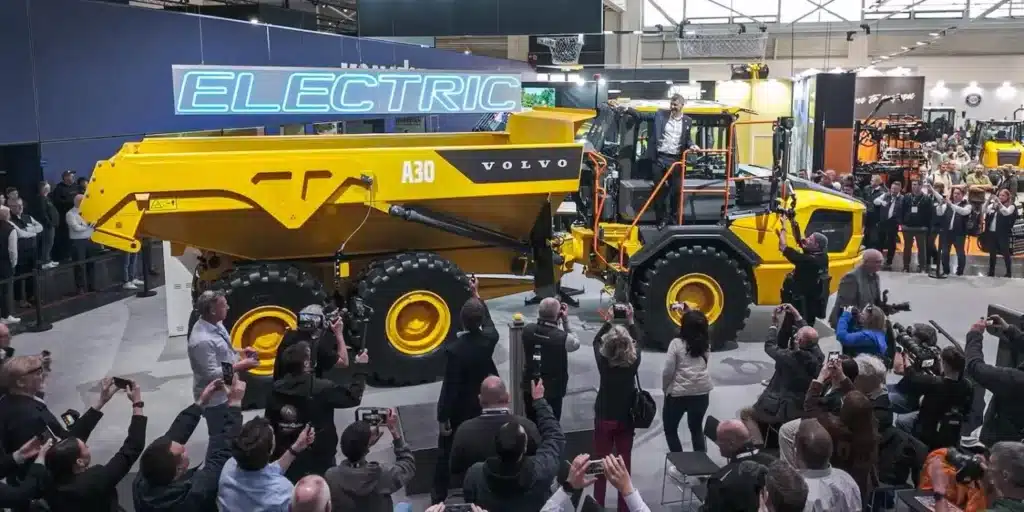
Volvo’s A30 all-electric articulated hauler is one example of many exciting all-electric construction vehicles. Designed to deliver serious performance with a payload capacity of 64,000 lb. (32 tons) and 23.3 cubic yards, the hauler is powered by a 245 kWh lithium-ion battery, capable of delivering a full day’s operation on a single charge.
Lower costs are another powerful driver for electric construction equipment adoption. Electric construction equipment is more energy-efficient than diesel, meaning lower fuel bills over the life of the machine. Maintenance costs also drop significantly because electric drivetrains have fewer moving parts. This means no oil changes, fewer filter replacements, and less wear and tear overall. While the upfront purchase price is often higher, total cost of ownership is lower thanks to reduced operating expenses. Available incentives for zero-emission equipment add to the significant cost savings.
With cleaner air and cost savings aligning, demand for electric construction equipment is accelerating fast. Industry leaders like Volvo, Caterpillar, and Komatsu are expanding their electric lineups, while governments worldwide are investing in green infrastructure and setting ambitious emissions targets. Contractors are also discovering that quiet, low-vibration machines create safer, more comfortable worksites, which can boost productivity and community acceptance. As technology advances and battery performance improves, electric construction equipment is no longer just a promising alternative, it’s fast becoming the standard for the next generation of sustainable building.

Electric Vehicle Marketing Consultant, Writer and Editor. Publisher EVinfo.net.
Services