Sunrun and Ford Piloting Nation’s First V2G Program in Maryland
Sunrun, the nation’s largest residential solar and energy storage installer, has taken a historic step in clean energy innovation by launching the first residential vehicle-to-grid (V2G) program in the U.S. The initiative is being piloted in partnership with Baltimore Gas and Electric Company (BGE), marking a new chapter in how electric vehicles can support the power grid.
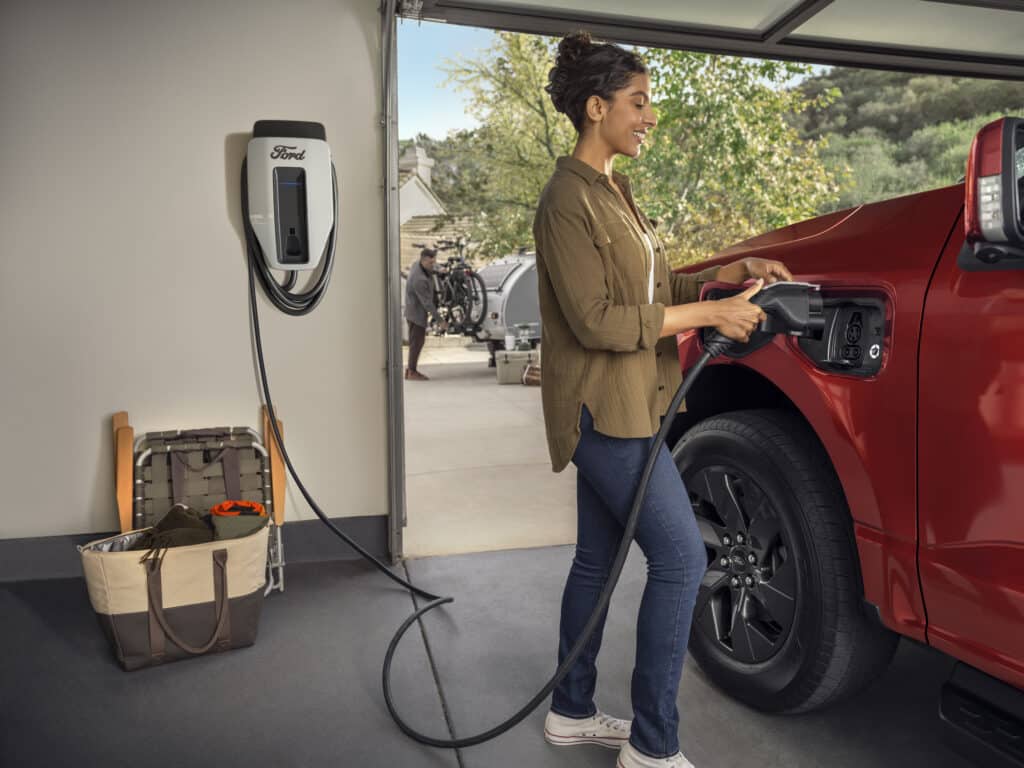
The program enrolls a small network of Ford F-150 Lightning electric trucks, whose batteries can both charge from and discharge electricity back to the grid. During periods of peak demand in the summer and fall, participating owners use bidirectional chargers to send stored energy from their trucks into the local distribution system. While the pilot currently includes only three households, it sets the stage for wider adoption of V2G across the country.
Sunrun is already a leader in distributed energy, managing one of the largest networks of home solar-plus-storage systems in the U.S. The company reports more than 150,000 home batteries installed nationwide, forming a fleet of virtual power plants that help balance the grid in real time. But electric vehicles offer an even bigger leap in capacity. Whereas a typical home battery holds around 10 to 15 kilowatt-hours (kWh), the Ford Lightning carries between 98 and 131 kWh—roughly ten times the storage of a standard residential battery.
“By sharing stored energy with the grid when it is needed most, these vehicles make our energy system more reliable, more efficient, and even help lower electricity costs for customers,” said Divest Gupta, director of clean energy solutions, BGE.
This scale could transform energy flexibility. Research from the National Renewable Energy Laboratory (NREL) shows that even modest participation rates of 12% to 43% could unlock global V2G capacity between 32 terawatt-hours (TWh) and 62 TWh by 2050. For context, the International Renewable Energy Agency (IRENA) projects only 3.4 TWh to 19.2 TWh of storage will be needed by mid-century to enable a net-zero energy system.
“This demonstrates the critical role that vehicle batteries can play in powering the nation’s grid, accelerating American energy independence and dominance,” said Sunrun CEO Mary Powell. “In addition to showing how electric vehicles can power homes, add electrons to the grid, and help utilities meet peak electricity demand, this program also creates extra income opportunities for customers.”
By tapping into the vast, underutilized storage sitting in EV batteries, Sunrun and its partners are showing how clean transportation can double as a backbone for clean electricity. If the BGE pilot proves successful, it could accelerate broader deployment of V2G, turning millions of vehicles into critical assets for a resilient, renewable-powered grid.
“I bought the Ford F-150 Lightning for several reasons, one of them being the ability to power our home during an outage. Now, I can also earn money by sending energy directly to the grid,” said Balitmore resident Morgan Grove.
Ford was one of the first EVs in America to offer bidirectional charging, enabling Vehicle-to-Home (V2H) capability. Ford’s Home Backup Power transforms the F-150 Lightning® into more than just a truck, it becomes a powerful backup generator for your home.
What is Ford Home Backup Power?
Designed to help families prepare for outages, this system can keep your house running during scheduled shutoffs, rolling blackouts, or unexpected disruptions to the grid.
Here’s how it works: if your Lightning is plugged in when an outage occurs, the system can automatically activate, seamlessly powering your home. Once utility power is restored, your truck will switch back to its regular charging schedule without any extra effort from you.
How much power does it provide?
With the ability to deliver up to 9.6 kilowatts of energy, a fully charged Lightning battery can keep an average home powered for up to three days. If you manage your usage carefully, that backup power can stretch to as long as 10 days.
What equipment is required?
To enable Home Backup Power, you’ll need two key components: the Ford Charge Station Pro and the Home Integration System. These systems allow your Lightning to safely and effectively supply energy to your home.
Where can it be installed?
Home Backup Power works wherever the system is professionally installed. Ford recommends working with Sunrun, its preferred installation partner, to handle everything from equipment purchase to setup. Alternatively, you can hire a licensed electrician of your choice.
Who covers installation costs?
Homeowners are responsible for the cost of installation. Whether you go with Sunrun or another qualified installer, Ford strongly recommends using certified professionals to ensure safety and proper system performance.
The Slow but Steady Rise of Vehicle-to-Grid Power
For as long as electric vehicles have been on the road, advocates have imagined a future where cars don’t just pull power from the grid but also give it back. That future may finally be coming into view.
Even as federal support has waned, automakers and utilities are doubling down on the idea that electric vehicles will play a central role in tomorrow’s energy system. Their vision: turning EVs into giant mobile batteries that can power homes, neighborhoods, and even entire sections of the grid.
The latest signal came in September, when Honda announced that its upcoming Acura RSX will feature bidirectional charging. That puts it in the same league as the Ford F-150 Lightning, Nissan Leaf, and several GM models. The 2027 BMW iX3 is prepared for bidirectional charging at home with the “Vehicle-to-Home (V2H)” or “Vehicle-to-Grid (V2G)” functions. In February, Justin Mulfati at dcbel reported on the latest bidirectional EVs, followed by a breakdown of those we’ll likely see on US roads in 2026 and beyond.
Meanwhile, charging companies are finally beginning commercial rollout of the specialized bidirectional equipment that makes this possible.
But urgency has long collided with reality. For more than a decade, vehicle-to-grid technology has lingered in pilot purgatory. Universities and utilities have run projects since the 1990s, yet few have made it past small-scale demonstrations.
Still, momentum is building. With electricity demand rising from home electrification, AI-driven data centers, and climate-fueled stress on the grid, utilities are under pressure to find flexible solutions. EVs, which are parked and unused 95% of the time, offer enormous untapped potential. A single Ford Lightning battery, for example, could keep a typical California home running for nearly six days.
Honda’s new partnership with Southern California Edison illustrates the shift. RSX owners will soon be able to power homes or appliances directly from their car batteries, extending beyond blackout backup into real-time grid management. Similar efforts are sprouting across the country: PG&E is working with GM and Ford.
Challenges remain. Automakers build cars, not power plants. Utilities prefer stationary assets to mobile ones. Regulators in only a handful of states, including California, New York, and Maryland, have created frameworks for vehicle-to-grid services. Maryland was the first state to adopt comprehensive vehicle-to-grid (V2G) interconnection rules, as EVinfo.net reported in June.
Yet automakers are beginning to collaborate. Ford, Honda, BMW, and Nissan have launched a joint venture called ChargeScape to build a common software platform for grid integration. And experts agree that participation doesn’t have to be universal, even a fraction of EV owners could provide significant capacity.
For now, vehicle-to-grid remains more promise than practice. But with EV adoption rising and the grid under strain, the idea of cars as part of the energy ecosystem looks less like science fiction, and more like an inevitability.