Polestar Launches V2H Bi-Directional Charging, Turning EVs Into Powerbanks for Homes
On November 18, 2025, Polestar announced it is taking a major leap toward the future of home energy management and smart charging with its first bi-directional charging offer for customers. In partnership with home energy company dcbel, Polestar is introducing a vehicle-to-home (V2H) solution for Polestar 3 owners in the United States, beginning with California. The package includes V2H capability, blackout protection, and intelligent charging features designed to reduce costs, improve grid resilience, and unlock new value for EV owners.
Polestar CEO Michael Lohscheller said: “Bi-directional charging is a gamechanger, not only for the car industry, but the home energy ecosystem. As it lowers your total cost of ownership and makes your car work for you even when parked, this makes the choice of driving a Polestar even more attractive.”
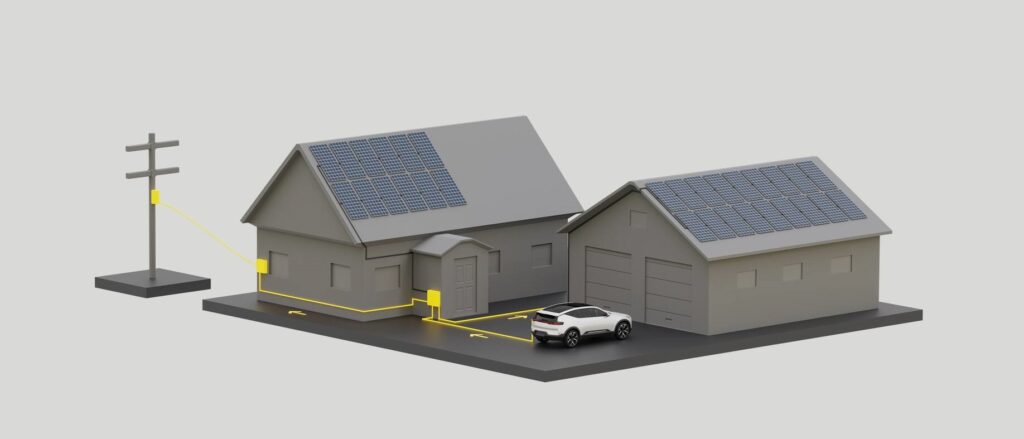
Bi-directional charging allows electric vehicles to both receive and discharge energy, enabling drivers to power their homes or send electricity back into the grid. This creates a range of benefits, including lower home energy costs, backup power during outages, enhanced grid support, and greater use of renewable energy sources.
The new solution uses direct current (DC) technology to enable V2H functionality for Polestar 3 models equipped with a 400-volt electrical architecture. Designed with California residents in mind, the offering includes the dcbel Ara home energy system and gives customers the potential to reduce charging costs by up to $1,300 per year, while also providing backup power for up to 10 days during blackouts.
Qualifying residents can take advantage of California Energy Commission rebates administered by dcbel, significantly reducing the cost of the hardware and installation. Full details on the V2H program for Polestar 3 owners are available at polestar.dcbel.energy.
Olivier Loedel, Head of Software product management at Polestar, says: “We are very excited to deliver this initial bi-directional charging offer together with our North American partner dcbel. It’s a new technology that requires a sophisticated and intelligent ecosystem, and this marks an important first step as we aim to launch bi-directional charging features to more Polestar customers in more markets.”
Polestar is continuing to expand its bi-directional charging roadmap. In Germany and select European markets, the company has introduced the Zaptec Go2, a bi-directional-ready AC home charger developed with partner Zaptec. Compatible with the Polestar 3, it will enable full bi-directional capability once the software feature becomes available.
Why V2G and V2H Are Game Changers for Transportation, the Grid, and Home Power
Electric vehicles are evolving far beyond transportation. With the rise of vehicle-to-grid (V2G) and vehicle-to-home (V2H) technology, EVs are becoming powerful energy assets capable of strengthening the grid, lowering home energy bills, and reshaping how we think about mobility. These bi-directional charging technologies turn parked cars into flexible battery systems, unlocking benefits that extend well beyond the driver.
Transforming Transportation Into an Energy Resource
Traditional vehicles consume energy; EVs equipped with V2G and V2H can store and share it. As bi-directional charging becomes more common, drivers will be able to use their vehicles as mobile powerbanks, cutting electricity costs, reducing total cost of ownership, and increasing the value of EV ownership. Instead of sitting idle 90% of the time, cars become active participants in the energy ecosystem.
Supporting a Cleaner, More Stable Electric Grid
V2G allows EVs to send power back to the grid during peak demand, helping stabilize the system and reducing the need for fossil-fuel peaker plants. With millions of EVs expected on the road in the coming decade, even a fraction participating in V2G could provide enormous distributed storage capacity. This supports renewable energy adoption by storing excess solar or wind energy and feeding it back when needed most.
Powering Homes With Resilience and Savings
V2H brings direct benefits to homeowners. During outages, an EV can keep essential appliances powered for days. In regions with time-of-use rates, homeowners can charge their car when electricity is cheap and power their home when prices rise, reducing bills automatically. The result is lower energy costs, greater independence, and improved emergency preparedness. As extreme weather becomes more common, this resilience is increasingly valuable.
Enhancing National Security
EVs and bi-directional charging also contribute to national security. Distributed energy storage from EVs can reduce dependence on centralized power plants and vulnerable grid infrastructure. In emergencies, natural disasters, or cyberattacks, EVs with V2G and V2H capabilities provide localized backup power, helping maintain critical services and improving overall energy resilience for communities and the nation. EVs reduce dependence on volatile foreign oil, keeping refueling dollars at home.
Accelerating the Clean Energy Transition
Bi-directional charging helps solve one of renewable energy’s biggest challenges: storing power when the sun is not shining or the wind is not blowing. EVs become part of the solution, expanding storage capacity without building new infrastructure. Automakers, utilities, and governments are now investing heavily in V2G and V2H programs, recognizing their potential to make the entire energy system cleaner, more flexible, and more efficient.
A Future Where Cars Do More Than Drive
The shift from unidirectional to bi-directional energy flow marks a turning point. EVs are no longer just vehicles, they are distributed energy resources. As more models support V2G and V2H and utilities adopt programs to incentivize participation, the impact on transportation, the grid, and home energy will be transformative.
Bi-directional charging is not just an upgrade to EV technology. It is a blueprint for a more resilient, sustainable, and economically efficient energy future.