Alaska Study Proves EVs Save Money Even in Frigid, Rural Areas
A research effort reported in March 2025 provided a clearer understanding of how electric vehicles could function in rural Alaska and what benefits they may offer.
Electric vehicles are commonly associated with lower greenhouse gas emissions. However, many rural Alaska communities are not tied into large electrical grids. Instead, they rely heavily on diesel generation for electricity and must operate in extreme winter conditions that are unlike most other regions. These factors raise an important question: can these communities gain meaningful advantages from EVs?
Researchers from the University of Alaska collaborated with residents of Kotzebue, Galena, and Bethel to determine where, how, and for whom electric vehicles may be most useful. The team examined typical vehicle usage patterns and evaluated how switching from internal combustion engines to EVs would affect fuel costs and emissions. The analysis also incorporated off-road vehicles and accounted for the often-overlooked electrical energy required to support conventional vehicles, such as for block heaters.
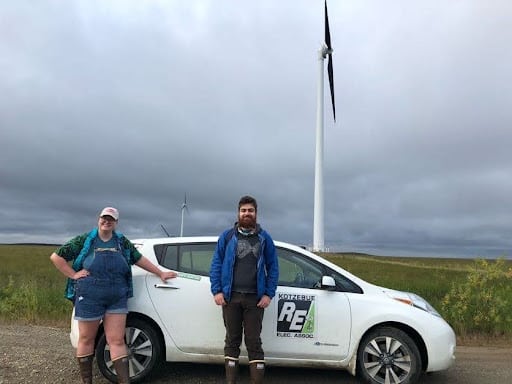
The study found that EV adoption in remote, isolated communities presents a nuanced picture. According to lead author Michelle Wilber of the UAF Alaska Center for Energy and Power, EVs can reduce costs and emissions when certain conditions are met.
Short commutes in these communities mean the energy required to keep EV batteries and cabins warm during cold weather can sometimes increase costs and emissions. Conversely, vehicles such as taxis and delivery fleets that travel longer daily distances showed significant benefits from electrification. In some low-mileage scenarios, EVs were not advantageous.
Despite these exceptions, the research indicates that EVs lowered both operating costs and emissions in most situations, even with limited driving distances. One major reason is that conventional vehicles consume substantial energy in winter through extended idling and block heater use to prevent freezing.
The study also identified strong potential for electric versions of snowmachines and all-terrain vehicles in certain applications, although range constraints remain a factor. Expanding the use of local renewable energy resources could further strengthen both the economic and environmental case for EVs in these communities.
Researchers emphasized the need for continued innovation, targeted public investment, and development of charging infrastructure to enable EV adoption that delivers broad community benefits.
The project team included contributors from multiple University of Alaska campuses and regional organizations. Community partners participated throughout the research process to ensure transparency and trust. The study, titled “Are Electric Vehicles a Solution for Arctic Isolated Microgrid Communities?” was funded by the National Science Foundation and appeared in the World Electric Vehicle Journal.
EVinfo.net’s Take: EVs Save Money Over Gas, Even in Cold Rural Areas Like Alaska
Growing research and real-world experience show that electric vehicles can still save money compared with gasoline vehicles in cold, rural regions, including many parts of Alaska. The economics are not always obvious, but when everyday driving patterns and real operating costs are considered, the advantages become clear.
Many people assume that cold weather makes electric vehicles too expensive to operate. It is true that cold temperatures affect battery performance, reduce range, and increase the energy needed for cabin and battery heating. At first glance, this appears to make EVs a poor match for Arctic conditions. That assumption ignores two important realities. First, rural driving patterns are usually short and predictable. Second, gasoline vehicles also consume significant extra energy in winter through idling and block heater use. When total energy use and total costs are examined instead of focusing only on range, electric vehicles often prove to be the more economical option.
Electric vehicles typically cost less per mile to fuel, even in communities where electricity is generated from diesel. Electric motors convert a much higher share of energy into movement, while internal combustion engines waste a large portion as heat. Maintenance costs are also significantly lower. Electric vehicles do not require oil changes, exhaust system repairs, engine tuneups, or many of the other services associated with gasoline vehicles. Harsh winter driving places heavy stress on mechanical systems, so eliminating many of those systems results in real savings over time.
Winter idling is another major factor. Gas vehicles in cold climates often idle for long periods to stay warm and to prevent engines from freezing. This burns fuel without moving the vehicle at all. Electric vehicles can heat the cabin without idling an engine, and preheating while plugged in shifts much of that energy use off the road and into the charging period. The result is less wasted fuel and lower overall operating cost.
Short daily trips actually align well with EV operation. Many rural Alaska communities involve driving only a few miles to work, school, the store, or nearby facilities. Even when range is reduced by very cold weather, these distances are well within EV capabilities. Gas vehicles, on the other hand, are least efficient on short winter trips because engines take longer to warm up and run richer during cold starts, which causes fuel economy to drop sharply. In practice, EVs often use less total energy to handle the same short-distance driving needs.
High-mileage users such as taxis, delivery vehicles, community service vehicles, and utility fleets tend to see the largest savings. These vehicles accumulate many miles each day, which spreads the purchase cost over more miles and increases the financial benefit of lower fueling and maintenance costs. In these cases, switching from gasoline or diesel to electric power can deliver substantial lifetime cost reductions.
There are some situations where savings may be smaller. For drivers who travel very few miles each year and expend significant energy keeping batteries warm in extremely cold conditions, benefits may narrow. In a few rare cases, costs may even increase. However, when idling, block heater electricity, poor cold-weather fuel economy, and maintenance needs of gasoline vehicles are fully considered, most real-world driving patterns still favor EVs.
Electric versions of snowmachines and all-terrain vehicles are also showing promising potential. They are quieter, they avoid cold-start problems, they eliminate the need to store and transport gasoline in remote areas, and they can draw power from local renewable sources. Although range remains a limitation for some uses, technology is improving rapidly and applications continue to expand.
The economics improve even further when EVs are paired with locally produced renewable energy such as wind or solar. Charging from local renewables can lower fuel cost per mile, reduce emissions, and keep more money circulating within the community instead of being spent on imported fuel. For isolated microgrid communities, this combination is particularly powerful.
The overall conclusion is straightforward. Even in cold and rural areas such as Alaska, electric vehicles can and often do save money compared with gasoline vehicles. Savings tend to be strongest where vehicles operate daily, where idling and winter fuel waste are high, and where renewable power is available or expanding. Electric vehicles are not the perfect choice for every situation, but the belief that they do not work in the cold or cannot be economical in rural regions is increasingly outdated. With appropriate planning and continued infrastructure development, EVs can provide both economic and environmental benefits, even when winter temperatures fall far below zero.
Former Alaska Representative Mary Peltola Announces Senate Race, Supports EVs and Renewable Energy
On January 12, 2026, Former Rep. Mary Peltola (D-Alaska) announced she’s running for Senate in Alaska. Mary Peltola is an American politician from Alaska known for breaking barriers and advocating for her state’s communities and natural resources. A member of the Democratic Party and a Yup’ik Alaska Native, she served ten years in the Alaska House of Representatives before winning a 2022 special election to the U.S. House of Representatives, becoming the first Alaska Native and the first woman born in Alaska to represent the state in Congress. During her time in office, she focused on issues such as protecting salmon fisheries, supporting rural communities, and securing federal investments for infrastructure and energy projects.
In April 2023, Peltola joined Marie Gluesenkamp Perez (WA-03) urging the Biden Administration expressing concerns about the lack of electric vehicle (EV) charging infrastructure in rural communities like Alaska.
Peltola and Gluesenkamp Perez said: “Like you, we believe climate change is a threat to communities across the country, and the federal government plays a critical role in developing a clean energy apparatus and helping our communities improve air quality. However, in making that transition, we cannot leave rural communities or working families behind.”
Peltola and Gluesenkamp Perez continued, saying: “The ability to refuel a gas-powered vehicle quickly is valuable given the daily realities of rural life. That option is available because our country has a robust network of gas stations, and the requisite gas infrastructure, to support communities of all kinds. An equally robust infrastructure for EV charging must exist before this transition takes place to ensure working people and rural communities have consumer choices similar to cities and suburbs. And that infrastructure, especially fast-charging options, is not being built fast enough in many rural areas.”
Support and vote for Mary Peltola for Senate in Alaska, and other forward-thinking leaders who support cost-saving, cleaner renewable energy and electric vehicles.

Electric Vehicle Marketing Consultant, Writer and Editor. Publisher EVinfo.net.
Services