Emerging Markets Are Now Driving the Global EV Boom
Over a quarter of new car sales in 2025 are electric, with adoption now spreading across a broad range of countries. Several emerging economies are taking the lead in transport electrification, surpassing traditional automotive markets. A December 2025 report by Euan Graham, Electricity and Data Analyst (Global) at Ember, titled The EV leapfrog – how emerging markets are driving a global EV boom describes a global shift to emerging markets now leading EV adoption.
Electric vehicle sales have continued their strong year-on-year growth, driven in part by legacy markets rolling back EV incentives. This shift has allowed emerging markets to overtake them, signaling a fundamental change in global EV dynamics. In 2019, only a handful of countries, all in Europe, had surpassed a 10% EV sales share. By 2025, 39 countries have achieved this milestone, including 12 outside Europe. China is poised to exceed a 50% EV sales share for the first time, maintaining its position as the largest global EV market and driving close to two-thirds of worldwide EV sales for the second consecutive year. Many countries are now looking to replicate China’s strategic focus on electrified transport to secure similar benefits.
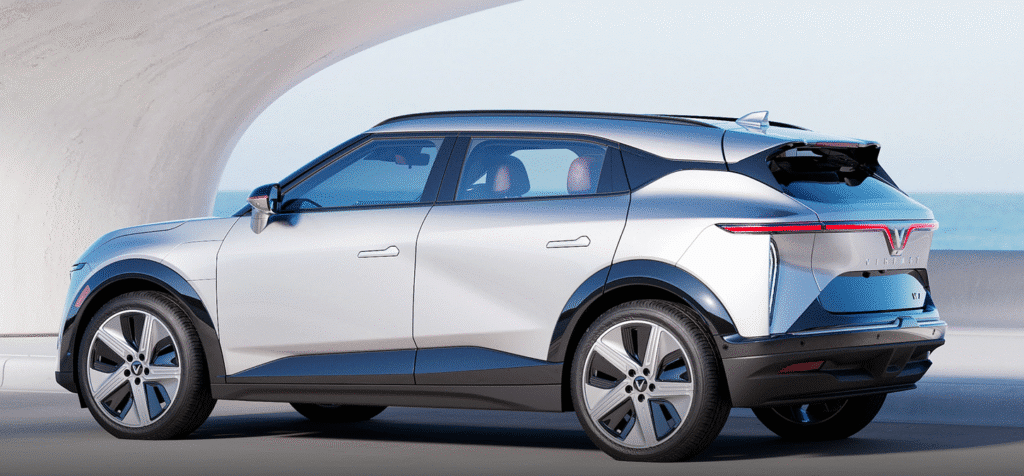
Emerging markets are leapfrogging advanced economies in EV adoption. While countries like Japan and the U.S. have seen relatively stable EV market shares over the past two years, regions from Southeast Asia to Latin America are experiencing rapid transformation. Viet Nam has achieved close to 40% EV penetration, nearly all from domestic manufacturer VinFast, and is catching up to Singapore, where EVs account for more than 40% of new car sales. Both countries now exceed the EV market shares of the UK and EU. Thailand has reached a 20% share, surpassing Denmark in EV sales for the first ten months of the year, while Indonesia’s EV share has climbed to 15%, overtaking the United States.
In Latin America, Uruguay now leads with 27% EV penetration, roughly equal to the EU average, while Costa Rica has reached 17%. Mexico, Colombia, and Brazil continue steady growth and have surpassed Japan, where EV sales remain near 3%. Brazil and Colombia are approaching 10% market share. In Europe, Türkiye has seen rapid adoption, with EVs accounting for 17% of new car sales and overtaking Belgium to become the fourth-largest BEV market on the continent. Meanwhile, countries such as Ethiopia and Nepal, which do not publish regular monthly data, have made dramatic progress, with Ethiopia reaching 60% EV sales share following a ban on ICE imports in 2024 and Nepal achieving 76% EV penetration in 2024.
These gains have been driven by supportive policies that position EVs as a strategic priority. Governments are leveraging electrified transport to reduce fossil fuel imports, improve air quality, attract investment, and create jobs. Türkiye has offered tax incentives and attracted foreign investment, including a BYD manufacturing plant, while Indonesia reduced VAT on EVs meeting local content thresholds and temporarily cut import tariffs to encourage domestic production. Seven manufacturers, along with Chinese battery supplier CATL, have committed to local facilities. VinFast initially grew through ride-hailing partnerships and its own charging network before pivoting to consumer sales, with three-quarters of its 2025 sales direct to consumers and the VF 3 becoming Viet Nam’s top-selling vehicle. The World Bank estimates that the EV industry could generate 6.5 million jobs in Viet Nam by 2050.
In countries with abundant hydropower like Nepal and Ethiopia, EV adoption also reduces reliance on imported fuels and improves air quality. Viet Nam introduced low-emission zones in March 2025 to combat severe urban pollution, ranking it among the most polluted countries in Asia. These policy-driven gains contrast with North America, where federal EV incentives were scaled back in 2025, including the removal of the U.S. federal EV tax credit and the suspension of Canada’s iZEV program due to exhausted funding.
China’s role as a global EV supplier complements these policies, with emerging markets becoming the largest recipients of Chinese exports. Over the past two years, non-OECD countries have accounted for nearly all growth in Chinese EV exports, tripling in value since July 2023, while OECD exports increased by just 5%. Brazil, Mexico, the UAE, and Indonesia are now among the largest markets for Chinese EVs.
EVs’ efficiency also drives significant reductions in fossil fuel dependence. Unlike ICE vehicles, which lose roughly 80% of fuel energy, EVs convert about 80% of electricity into motion, cutting overall fossil fuel consumption even in countries with fossil-heavy grids. In Brazil, the clean electricity mix allows BEVs to reduce fossil fuel demand by 90%, while in Indonesia EVs cut demand by nearly 50% despite reliance on fossil generation.
The rapid adoption of EVs in emerging markets represents a globally significant shift, creating new leaders in transport electrification and reshaping oil demand. Emerging markets are expected to account for the majority of new car sales through 2050, challenging IEA assumptions that EV adoption outside China and Europe would remain at 2024 levels. Investment in charging infrastructure and supportive policies will be critical for sustaining this momentum and enabling more countries to follow the lead of these early adopters.

Electric Vehicle Marketing Consultant, Writer and Editor. Publisher EVinfo.net.
Services