Renault Test EV Went Over 620 Miles on a Single Charge, a New Efficiency Record
There remains significant headroom to improve electric vehicle efficiency. Each new generation of EVs delivers incremental gains in range and energy use, and the latest Gen 3 models clearly demonstrate this progress. To explore the outer limits of what is possible with current technology, Renault developed the Filante as a rolling laboratory, using a battery pack comparable in size to those found in today’s midsize electric vehicles.
The result was the highly streamlined Renault Filante concept, which covered 626 miles (1,008 km) in less than 10 hours at an average speed exceeding 63 mph (102 km/h). At the end of the run, the vehicle still retained 11% battery charge. According to Renault, this means the Filante could have achieved the same distance at a higher cruising speed of around 75 mph (120 km/h), or traveled even farther at the same speed, nearly reaching 680 miles (1,100 km).
Average energy consumption was just 7.8 kWh per 100 km, close to 8 miles per kWh. That level of efficiency surpasses even the most frugal production EVs available today, including the Mercedes-Benz CLA and Lucid Air, which typically top out near 5 miles per kWh despite using advanced 800-volt architectures.
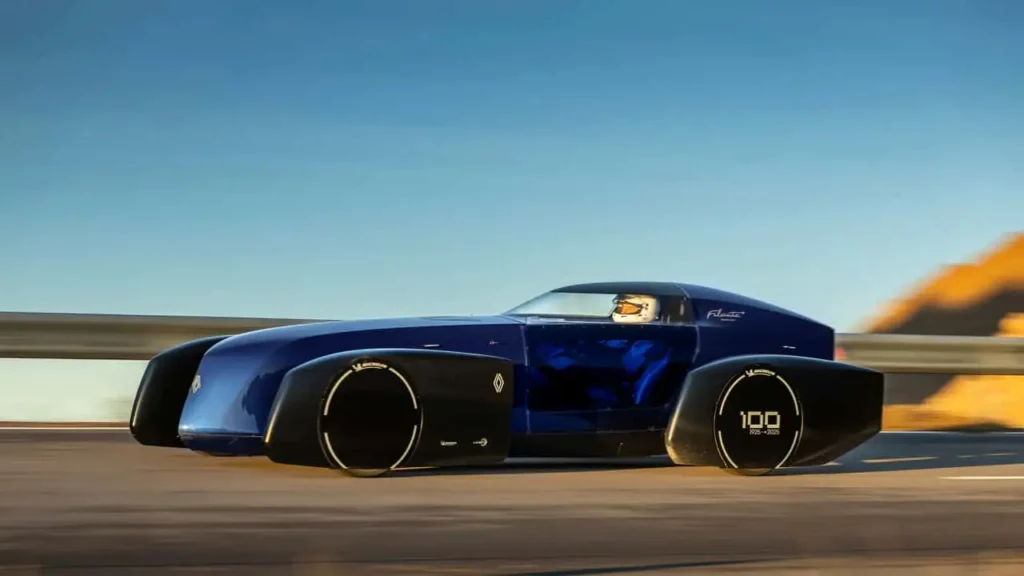
This performance is the product of several factors: an ultra-low-drag body, a curb weight of only 2,200 pounds (1,000 kg), and extremely narrow, low-resistance tires. Together, these elements allow the Filante to extract remarkable range from its 87 kWh battery pack. By comparison, Renault’s production Scenic E-Tech electric crossover, equipped with the same battery, is rated at roughly 380 miles (610 km) on the WLTP cycle, a figure that drops by about 30% during sustained high-speed driving.
The Filante also incorporates steer-by-wire and brake-by-wire systems optimized for efficiency, while Michelin-developed tires further reduce rolling resistance and aerodynamic drag. Renault says the project’s objective was to identify practical ways to extend EV range, with the intention of applying these lessons to future production vehicles.
Even so, current roadgoing models remain far from matching the Filante’s results, achieved under controlled conditions on a closed test loop in sunny Morocco. Renault’s most efficient production EV today, the well-regarded 5 E-Tech, averages about 4.3 miles per kWh in real-world use. The smaller and lighter next-generation Twingo, expected to debut next year, should improve on that figure.
EVinfo.net’s Take: Greater Efficiency, Range and Shorter Charging Times Come with Every New EV Model
Gains in efficiency and other features don’t come only from test EVs, such as the Filante. EVs for everyday drivers, such as the 2027 Chevrolet Bolt and 2026 Nissan Leaf, are improving fast. Each new EV model releasing around the world and in North America improves on previous versions. The new Bolt is reported to charge more than twice as fast as previous Bolts. The new leaf is a game changer also. The 2026 Leaf is a clean-sheet redesign with up to four times the range of the original (up to 303 miles) at roughly the same price point.
Electric vehicles continue to evolve at a rapid pace, and with every new model year the gains are becoming more tangible for everyday drivers. Improvements in battery chemistry, power electronics, aerodynamics, and software are delivering three outcomes that matter most to consumers: greater efficiency, longer driving range, and shorter charging times.
Efficiency remains the foundation of these gains. Automakers are extracting more miles from every kilowatt-hour through better thermal management, more efficient motors, and reduced drivetrain losses. Advances in vehicle design also play a role, with lighter platforms and improved aerodynamics helping new EVs travel farther using the same or even smaller battery packs. This focus on efficiency not only extends range but also lowers operating costs and reduces strain on charging infrastructure. Range improvements naturally follow. Modern EVs are now engineered to comfortably exceed the daily needs of most drivers, while also reducing range anxiety on longer trips.
Charging speed is improving just as quickly. Newer EV architectures support higher charging power, allowing drivers to add substantial range in less time. Even models that remain focused on affordability, like the Bolt and Leaf, benefit from optimized charging curves and improved battery durability, reducing time spent plugged in and making public charging more practical for daily use and road trips alike.
EVs are also beating gas vehicles on the racetrack. In September 2025, the Yangwang U9 Xtreme officially reached a staggering 308.4 miles per hour, making it the fastest production car in the world.
All of this means EVs are here to stay, just getting started, and will dominate the global automotive industry. A new analysis from energy think tank Ember reveals more than a quarter of new cars sold globally in 2025 are electric.

Electric Vehicle Marketing Consultant, Writer and Editor. Publisher EVinfo.net.
Services