Lilac Solutions and Traxys Sign a 10-Year Lithium Deal in Utah, Using DLE Tech to Double US Output
The worldwide transition to electrification is transforming supply chains and shifting manufacturing priorities. For senior leaders in electric vehicle manufacturing and in the mining sector, the evolution of procurement strategies and access to key inputs has become a central strategic issue.
Demand for the minerals required in battery production is intensifying, and companies are moving to secure long-term supplies. A newly announced partnership between Lilac Solutions (Lilac) and Traxys North America exemplifies this shift. The two companies have executed a binding 10-year offtake agreement for lithium carbonate produced at Lilac’s Great Salt Lake project in Utah. Under the agreement, Traxys will purchase 50,000 tonnes of lithium carbonate over the next decade. Lilac announced the news on January 12, 2026.
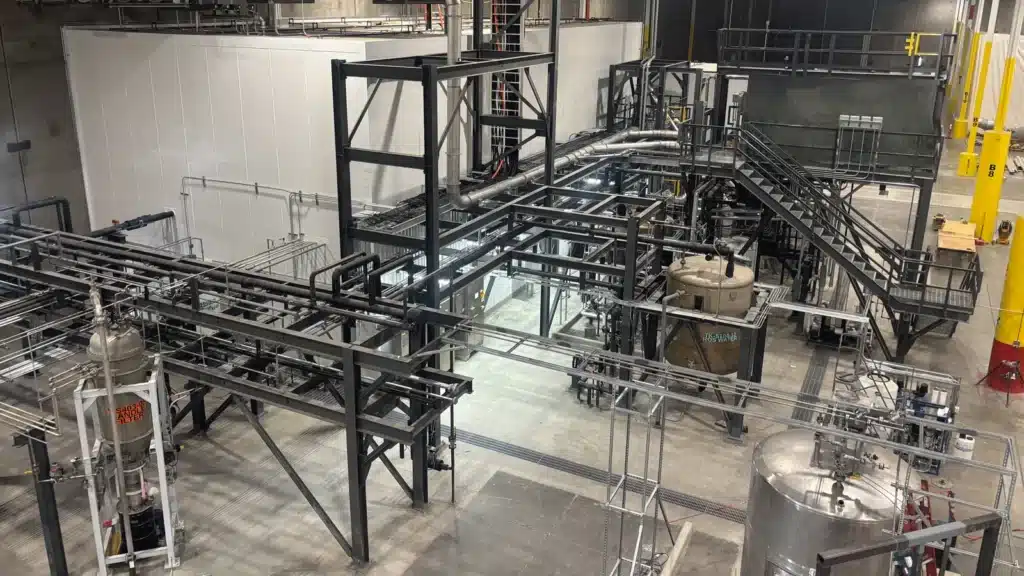
This commitment represents the entire planned output from Phase 1 of the project. The agreement is structured on a take-or-pay basis, providing Lilac with the financial certainty needed to reach a Final Investment Decision, while giving the EV sector greater confidence in a reliable stream of battery-grade material.
The scale of the transaction signals rising confidence in domestic lithium production. By securing all Phase 1 output, Traxys effectively underwrites the project’s commercial foundation and strengthens its position in the competitive lithium market. Stable mineral supply is particularly important for electric vehicle manufacturers, which rely on predictable flows of materials to maintain production schedules.
Lilac Solutions is advancing Direct Lithium Extraction technology (DLE), a more eco-friendly alternative to traditional evaporation-based processes. Its proprietary Gen 5 ion-exchange system demonstrated an 87 percent recovery rate in pilot tests and is designed to produce lithium in hours rather than the months or years associated with evaporation ponds. Faster processing could shorten supply lead times and reduce bottlenecks for downstream manufacturers.
The Great Salt Lake Phase 1 facility is designed to produce 5,000 tonnes per year of battery-grade lithium carbonate and would nearly double current U.S. output. A planned Phase 2 expansion is expected to raise total capacity to 20,000 tonnes of lithium carbonate equivalent, supporting rising demand from the automotive industry as it moves away from internal combustion vehicles. Lilac’s CEO, Raef Sully, noted that securing offtake for all planned production is a major step toward construction and toward establishing a meaningful new domestic source of lithium.
Domestic sourcing also supports eligibility for tax credits in the United States and Europe, where incentives increasingly depend on mineral origin. Long-term offtake arrangements help insulate participants from spot-market volatility while improving planning and cost predictability. Lilac has completed FEL-3 engineering, is working with Utah regulators to finalize permits, and will manufacture ion-exchange media in Nevada, reinforcing a regional supply chain.
If successfully implemented, this project could serve as a model for how the EV sector addresses critical mineral shortages and builds resilient, domestic supply systems to support large-scale electrification.
Understanding the Importance of Sustainable Mining
Sustainable mining practices, especially within the lithium extraction industry, are increasingly recognized as vital to both global environmental stewardship and long-term economic growth. As demand for batteries expands across electric vehicles, energy storage, and consumer electronics, the manner in which lithium is sourced has become a central issue.
The Process of Direct Lithium Extraction (DLE) Explained
Direct lithium extraction (DLE) represents a significant technological advancement in the recovery of lithium from underground saltwater reservoirs. This approach separates lithium from other elements in brine through a sequence of engineered processes designed to maximize recovery while minimizing environmental impact.
In a typical application, mineral-rich brine is pumped to the surface and subjected to multiple stages of filtration and chemical treatment to isolate lithium. The extracted material is then refined into a form suitable for use in battery manufacturing. The economic viability of direct lithium extraction plays an important role in determining the pace and scale of its adoption across the industry.
Unlike traditional evaporation pond methods that depend on large land areas and prolonged water evaporation, often creating environmental and community concerns, direct lithium extraction can recover lithium from brines within a much shorter timeframe. This reduces water usage, enables year-round operation independent of climate conditions, and can deliver higher-purity lithium more efficiently.
As global electrification accelerates, sustainable lithium extraction will remain central to supporting clean energy technologies while minimizing the ecological footprint of critical mineral production.