Canada’s APMA Unveils Two Bold EV Concepts
Canada’s Automotive Parts Manufacturers’ Association (APMA) unveiled two new concept vehicles this week at the Canadian International AutoShow: the Vector and the Borealis. Both are part of Project Arrow, an initiative launched in 2023 to demonstrate that Canada possesses the complete supply chain required to design and build next-generation EVs domestically.
The Vector evolves the original 2023 Project Arrow concept with a more aggressive design and increased performance. Output rises to 650 horsepower, up from 550 hp previously. Its chassis was reportedly AI-optimized and 3D-printed using a polymer-aluminum composite. Estimated range stands at 341 miles (550 km), and the vehicle features Level 3 automated driving capability, enabling hands-off and eyes-off operation under certain conditions. According to the APMA, the Vector serves as a near-term innovation platform aligned with the mobility landscape expected by 2030.
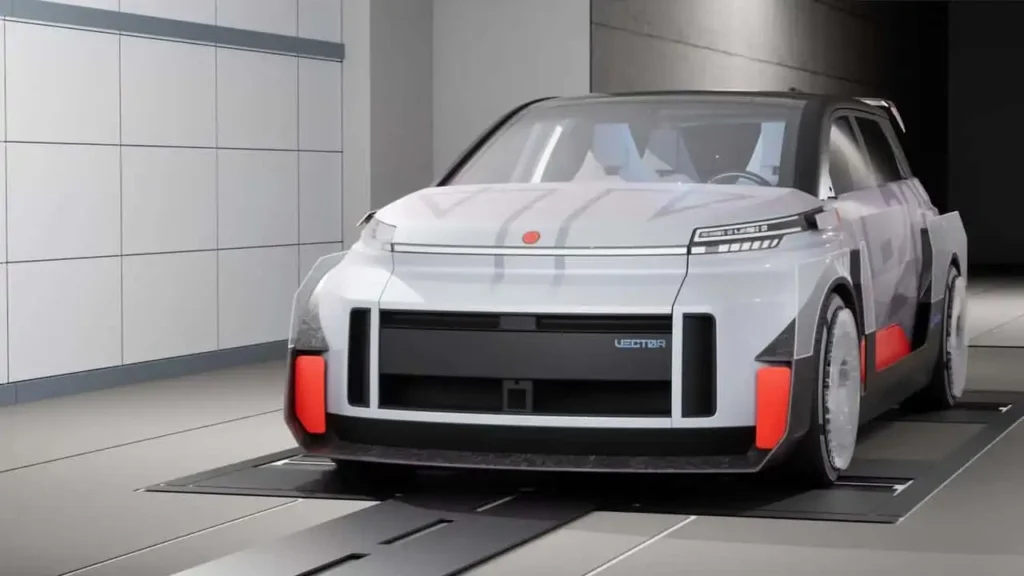
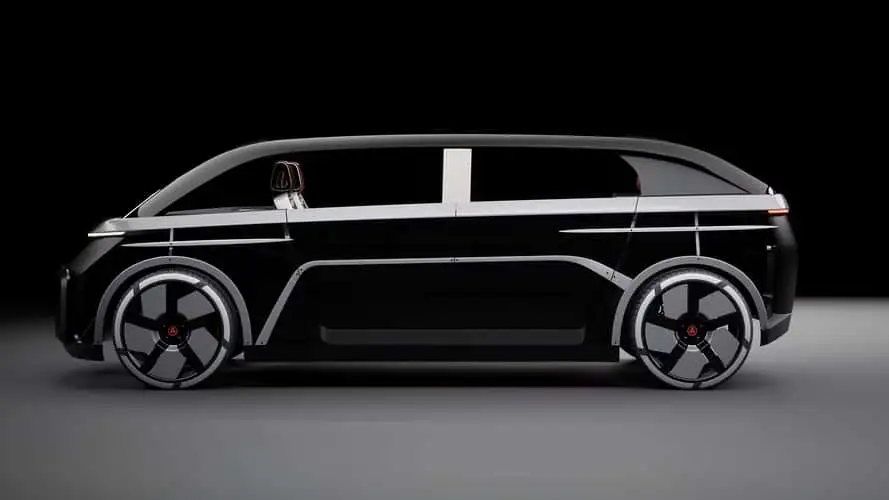
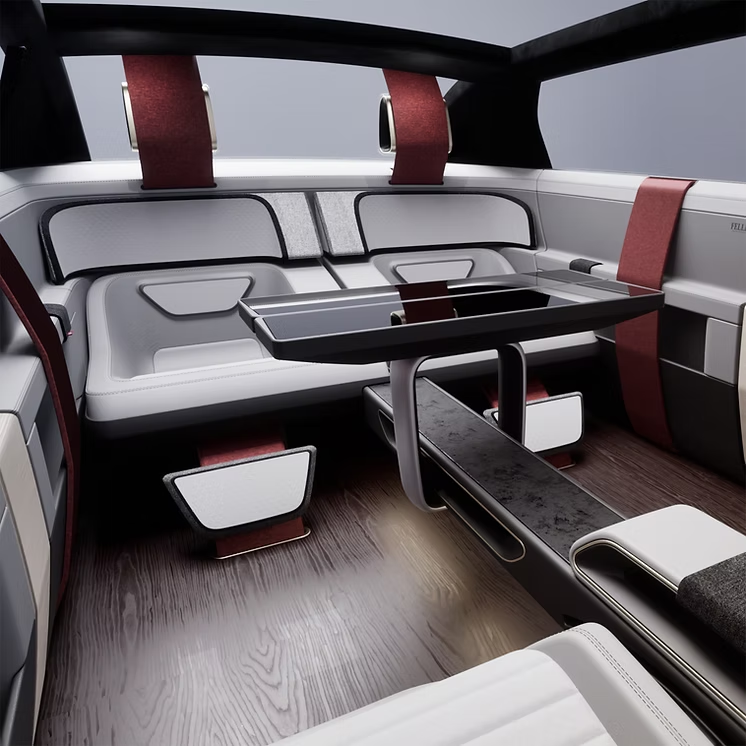
The Borealis takes a more forward-looking approach. With a skeletal design intended to highlight supplier capabilities, it features a 3D-printed metal-alloy chassis and an additively manufactured powertrain. The concept targets Level 5 autonomy and envisions seamless integration with future smart city infrastructure. Projected range is an ambitious 932 miles (1,500 km).
Phase two of Project Arrow is being developed in partnership with Ontario Tech University, alongside more than 80 Canadian automotive suppliers, reinforcing the country’s commitment to building a fully homegrown EV ecosystem.
Project Arrow Phase 2.0 is supported through funding and strategic partnerships with the Federal Economic Development Agency for Southern Ontario (FedDev Ontario) and the Ontario Vehicle Innovation Network (OVIN). These investments are helping accelerate Canada’s leadership in vehicle electrification, advanced manufacturing, and connected and autonomous mobility technologies.
Described by the Globe and Mail as “an audacious play to build an all-Canadian electric car,” Project Arrow was unveiled in 2023 in Las Vegas, generating extensive global attention. The debut was covered by roughly 400 international feature publications across 15 languages, significantly elevating Canada’s profile as a center of automotive and mobility innovation.
Project Arrow 2.0 is designed to confront some of the most pressing challenges facing Canada’s electric vehicle ecosystem, including supply chain resilience, domestic mineral production capacity, and growing cybersecurity risks. This next phase positions the program as a multisector innovation hub, leveraging a fleet of purpose-built vehicles to accelerate both EV technology development and forward-looking policy.
The initiative will integrate new sub-assembly approaches and advanced manufacturing techniques, while the Automotive Parts Manufacturers’ Association collaborates with municipalities and academic institutions to create real-world testbeds for research. Together, these partners aim to establish a cooperative national network capable of addressing systemic challenges and strengthening Canada’s long-term competitiveness in electric and connected vehicle technologies.
EVinfo.net’s Take: Canada’s EV Moment: From Global Assembly Hub to Homegrown Electric Vehicles
Canada recently welcomed limited numbers of Chinese-made electric vehicles, rolling back a 100% tariff, a pragmatic response to increasingly hostile U.S. tariff policies. While the move addressed short-term market pressures, it does not signal a long-term reliance on foreign EV imports. Instead, Canada is positioning itself to define its own electric future. At the center of that ambition is Project Arrow.
Project Arrow’s ambition is grounded in scale. Canada’s automotive manufacturing sector, concentrated largely in Ontario, assembled more than 1.31 million light-duty vehicles in 2024. Global automakers including Ford, General Motors, Honda, Stellantis, and Toyota all operate major assembly plants across the province. Vehicles such as the Honda Civic, Toyota RAV4, Chrysler Pacifica, Chevrolet Silverado, Lexus RX, Ford Edge, and Lincoln Nautilus are built on Canadian soil.
Supporting this output is a dense and highly integrated supply chain of nearly 700 parts suppliers, anchored by global leaders like Magna International. Canada also produces specialty and electric vehicles, from niche manufacturers like Campagna to electric bus makers such as Lion Electric. Following its restructuring after a 2024 bankruptcy, Lion has pivoted to focus exclusively on electric school buses for the Quebec market, having shut down its US manufacturing operations and abandoned its electric truck line.
Despite this industrial strength, Canada has historically lacked an independent, consumer-facing car brand. Project Arrow is designed to change that narrative. Rather than competing directly with global OEMs, the initiative showcases a Canadian-developed EV platform that can anchor domestic innovation, de-risk new technologies, and demonstrate end-to-end capability.
Canada’s Relion: Tailored Solutions for EV Charging Operation and Maintenance
Montreal, Quebec-based Relion was created when Benoit Lacroix partnered with Jesse White to address one of the EV industry’s most persistent challenges: reliable charging infrastructure.
Together, they have assembled a team of driven professionals focused on solving the operational complexity of EV charging through collaboration, accountability, and a strong commitment to customer success. Today, Relion provides operations and maintenance (O&M) solutions that blend advanced technology, strategic partnerships, and deep technical expertise, all guided by a user-centered approach designed to maximize uptime, performance, and long-term value for charging operators.

Electric Vehicle Marketing Consultant, Writer and Editor. Publisher EVinfo.net.
Services