‘Most People Don’t Plug Them In,’ Says GM CEO About PHEVs
On paper, China’s Chevrolet Equinox Plus plug-in hybrid (PHEV) looks tailor-made for the U.S. market: a familiar nameplate, a practical crossover form, and a powertrain that combines a gasoline engine with battery power for more than 600 miles of total range on China’s test cycle.
Yet it will not be sold in America. Instead, U.S. buyers are left with the gas-only Equinox and the fully electric Equinox EV. The reason is strategic. General Motors has largely steered clear of hybrids and plug-in hybrids in the U.S., choosing instead to focus on what CEO Mary Barra has described as the “end game”: a fully electric future.
Speaking in January 2026 at the Automotive Press Association conference in Detroit, Barra addressed an uncomfortable reality about plug-in hybrids.
“What we also know today with plug-in hybrids is that most people don’t plug them in,” she said. “So that’s why we’re trying to be very thoughtful about what we do from a hybrid and a plug-in hybrid perspective.”
See Barra’s remarks about hybrids to Reuters reporter Kalea Hall in the video below.
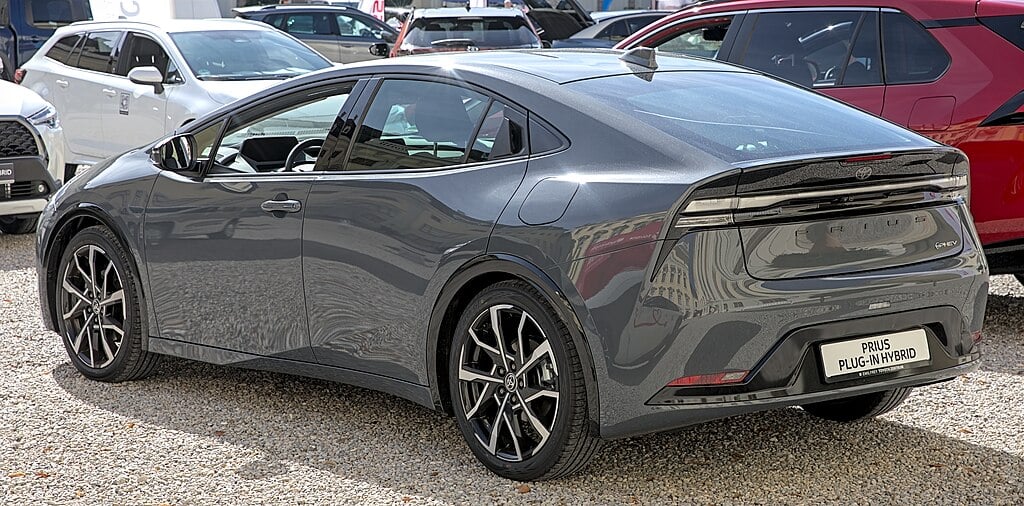
It was one of the most candid acknowledgments yet, and from the industry’s highest levels, of a problem that has long been discussed quietly. Plug-in hybrids pair a gasoline engine with a relatively small battery, larger than those in conventional hybrids, allowing for limited electric-only driving. In theory, they offer a bridge between internal combustion and full electrification, typically delivering 30 to 50 miles of electric range before the engine takes over. In practice, that benefit depends entirely on drivers actually plugging the vehicles in.
Evidence suggests many do not. In 2022, the International Council on Clean Transportation reported that real-world fuel consumption for PHEVs was 42% to 67% higher than EPA label values, largely because electric driving was far lower than assumed. Similar findings have emerged in Europe, where PHEVs are more common and emissions have consistently exceeded expectations. Because the battery is often depleted or unused, drivers end up hauling extra weight while burning more fuel than intended.
Despite this, some automakers have promoted PHEVs as a near-term answer as U.S. EV sales growth slowed, and then picked back up. Hyundai, Toyota, Volvo, and Mazda all offer multiple PHEV models. But the market is showing strain. Stellantis recently dropped its PHEV lineup in the U.S., even after producing the country’s best-selling model, citing weaker regulatory incentives and shifting economics.
The industry’s next bet may be extended-range electric vehicles (EREVs), which flip the PHEV formula by starting with a large EV-style battery and adding a gasoline engine as a generator. Yet they still require drivers to both plug in and refuel, raising the risk of repeating the same behavioral pitfalls.
For now, GM’s only hybrid sold in the U.S. is the Chevrolet Corvette E-Ray, while its PHEVs remain exclusive to China. That marks a sharp contrast with the company’s earlier role in popularizing electrified powertrains through the Chevrolet Volt more than a decade ago. GM has signaled it may reintroduce hybrids and PHEVs to the U.S. market around 2027, though how it will encourage proper use remains an open question.
Even so, Barra says she stands by the company’s earlier decision to bypass hybrids and move directly toward EVs. “With everything we knew at that point in time, we’d make that same decision,” she said. “We have to be very thoughtful with our capital and how we deploy it.”
_Plug-in_Hybrid_Automesse_Ludwigsburg_2023_1X7A0006.jpg)
EVinfo.net’s Take: BEVs are Best, Most Eco Friendly, Most Cost Effective, and Easier to Adopt Than Ever Before
Battery electric vehicles (BEVs) are better than hybrids, plug-in hybrids, and extended-range electric vehicles, and they are becoming easier to adopt every year, often much easier than people expect. As charging infrastructure expands, vehicle range improves, and costs continue to fall, BEVs are moving rapidly from early adoption into the mainstream. Mass BEV adoption is coming to the USA soon.
According to the US EV Fast Charging — Full Year 2025 report from charging-analytics firm Paren, America’s fast-charging network expanded at a record pace last year, with more than 18,000 new DC fast-charging ports installed nationwide. That represents the largest single-year buildout in U.S. history and a 30% increase over 2024.
BEV ranges keep increasing and charging time decreases with each new model released. In December 2025, EV Charging Stations reported that the new, exciting 2027 Chevrolet Bolt will be able to charge more than twice as fast as previous Bolt models, based on their studies. The game-changing 2026 Nissan Leaf is a clean-sheet redesign with up to four times the range of the original (up to 303 miles) at roughly the same price point. Both the Leaf and Bolt are available now in the United States. See the Bolt and Leaf on the company websites for more information.
From an environmental standpoint, BEVs are the clear winner. They produce zero tailpipe emissions and, when paired with renewable energy, dramatically reduce lifecycle greenhouse gas emissions compared with vehicles that rely partly or entirely on gasoline. Unlike HEVs, PHEVs, and EREVs, BEVs do not depend on internal combustion engines at all, eliminating fuel-related emissions, oil consumption, and the inefficiencies that come with carrying both an engine and a battery.
A comprehensive new life-cycle analysis finds that electrifying light-duty vehicles (LDVs) in the United States delivers substantial greenhouse-gas reductions across every vehicle type and powertrain, even under unfavorable conditions, even under the dirtiest, coal-heavy grids. This was proven by a study, titled Electrifying light vehicles in the United States shows emission reduction potential for all vehicle types and powertrains, written by authors Nick Santero, Laurel Nelson, Yunzhu Chen, Marisa Meredith, Pablo Busch and Alissa Kendall, appeared in Communications Sustainability volume 1, Article number: 23 (2026) in Nature journal.
BEVs are best for clean air. Researchers at USC’s Keck School of Medicine have found clear evidence that as zero-emission vehicles (ZEVs) become more common on California roads, nearby air quality improves. A nationwide transition to zero-emission technologies, including electric cars and trucks, would deliver substantial public health benefits by cutting air pollution and reducing climate-warming emissions, says the American Lung Association.
Beyond personal savings, widespread BEV adoption strengthens national security. Reducing reliance on imported oil lowers exposure to global supply disruptions and geopolitical instability. Electrifying transportation shifts energy demand toward domestically produced electricity, which can increasingly come from cheap renewable sources such as wind, solar, and hydro. This makes the transportation system more resilient and less vulnerable to external shocks.
Perhaps most importantly, BEVs are no longer difficult or inconvenient to live with. Modern models offer ample range for daily driving, fast charging continues to improve, and public charging networks are growing steadily. For most drivers, a BEV can already meet their needs with little or no lifestyle change.
In some cases, BEVs are not a wise choice. For example, in a rural area where the driver can’t charge at home and the nearest public charging is many miles away. In cases like these, hybrids can be a good bridge to full BEV. PHEVs and EREVs are better than HEVs. But please be sure to always plug in.
The case for battery electric vehicles is stronger than ever. They save money, reduce emissions, support energy independence, and continue to get easier to use each year. Now is the time to adopt BEVs.

Electric Vehicle Marketing Consultant, Writer and Editor. Publisher EVinfo.net.
Services