Rivian Reveals Manufacturing Strategy Behind Its Upcoming R2 EV SUV
Rivian has outlined the manufacturing strategy behind its upcoming Rivian R2. The automaker says it co developed the vehicle and its production line simultaneously to reduce complexity, improve build quality, and lower costs. Production is scheduled to begin in 2026 at its facility in Normal, Illinois.
AI powered robotics and real time diagnostics support quality control across the line. The plant is engineered for annual output of 155,000 R2 units with an emphasis on long term serviceability.
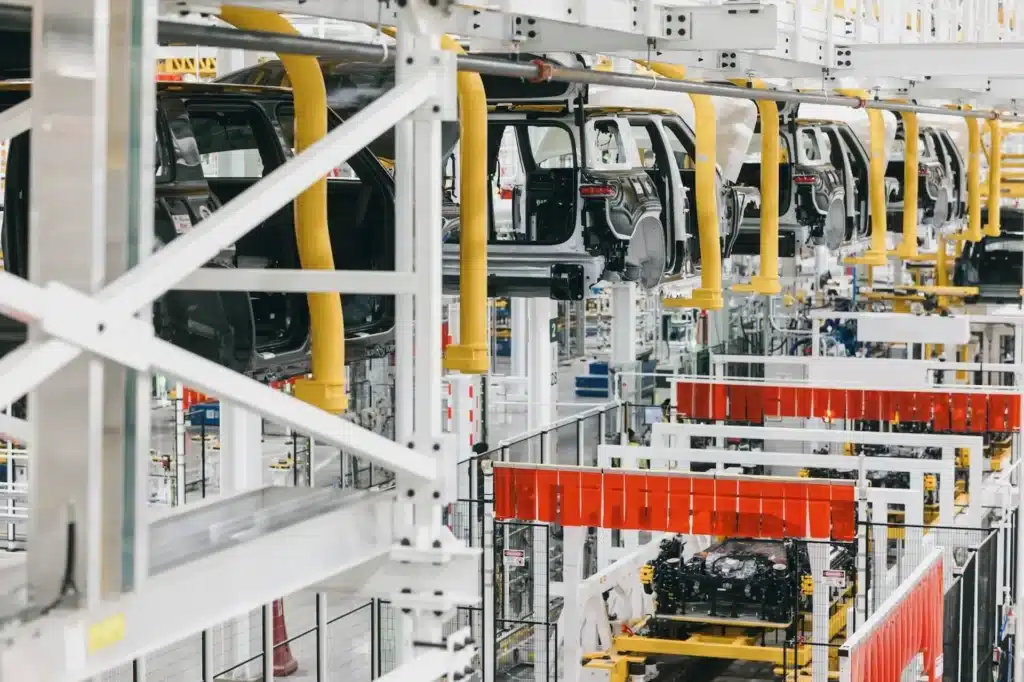
Co Developed Vehicle and Production Line
Rivian adopted an integrated development approach for the R2 program. Engineers designed the vehicle and manufacturing systems in parallel from the earliest stages. As a result, the R2 features fewer components, cleaner surfaces, and simplified assembly processes.
Serviceability was also a priority. Key systems are positioned for easier access during assembly and maintenance, supporting Rivian’s goal of lowering total cost of ownership.
Lighter, Simpler Architecture
The R2 platform departs significantly from the R1 architecture. Consolidated electronics removed 2.3 miles of wiring. Large high pressure die castings reduce part count and eliminate thousands of welds and fasteners. Overall mass is reduced by approximately 2,000 pounds compared to the R1.
These changes enhance manufacturing efficiency while also improving driving dynamics. Lower weight contributes to better agility and improved energy efficiency, both critical factors in this segment.
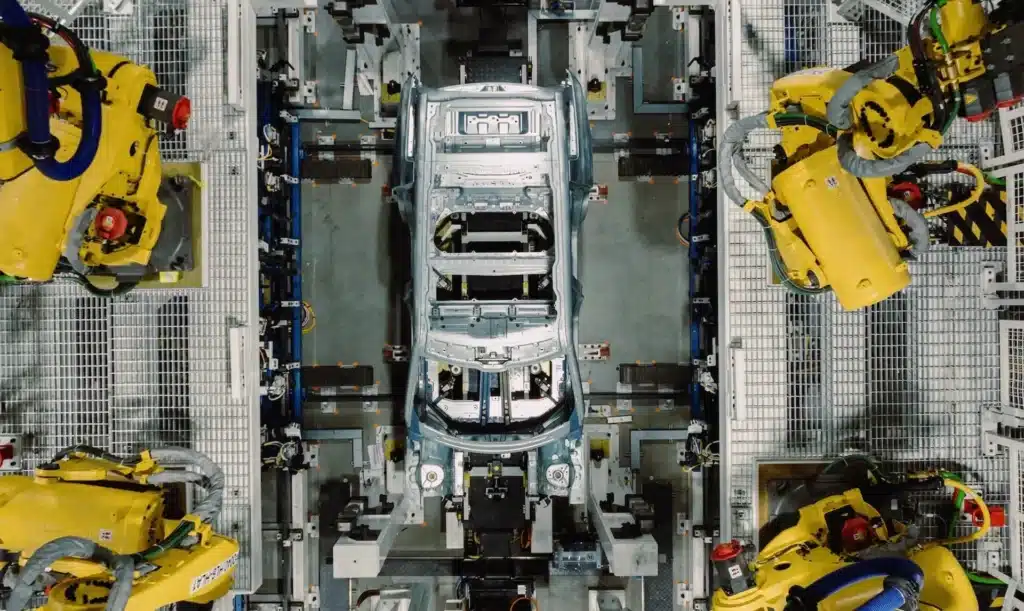
Advanced Manufacturing Technology
Rivian built the R2 production system around digital and AI driven tools. A digital twin of the entire plant allowed engineers to simulate and refine processes before physical construction began.
The body shop incorporates a fully automated hang on line that manages precise gap and flush alignment without manual input. AI powered robots scan and place parts autonomously. Wireless diagnostics identify build issues in real time, preventing defective components from progressing. Vision systems perform precision inspections at multiple stages to maintain consistency as output increases.
AI algorithms are also used to optimize floor space and equipment utilization. The system allocates labor where demand is highest and improves workstation ergonomics to support productivity and safety.
Production Capacity and Outlook
The Normal plant is configured for 155,000 R2 units annually. Rivian states that the R2 is engineered for reliability, affordability, and scalable production. Reservations remain open through the company’s website.
For Rivian, the R2 represents a pivotal step toward profitability. A simplified vehicle architecture combined with a more efficient manufacturing process is expected to reduce financial losses as the company expands into a broader market segment.

Reviewers Gush about R2
Automotive and EV reviewers are calling Rivian’s R2 the sweet spot of the EV market. Here are few of the highlights from February 2026:
Doug DeMuro : “Think of it as the R1 introduced Rivian to the world, and now the R2 vastly expands Rivian availability to many more people.”
MotorTrend Group: “The R2 is the definitive answer to the ‘one-car solution’ question. It handles with a nimbleness the R1S can’t match, while retaining that rugged, go-anywhere soul. The software remains the gold standard in the industry.”
Car and Driver Magazine : “The R2 positively leaps off the line… It’s 90% of the R1 experience for roughly half the price. This isn’t just a win for Rivian; it’s a win for anyone who wants an EV that doesn’t feel like a rolling appliance.”
InsideEVs : “The R2’s size is much more my jam… capable, comfortable, roomy without being too big. It’s 90% of what makes the R1 great at half the cost.”
Top Gear Publishing : “A chunky electric SUV with an unexpectedly strong handling game… useful without being utilitarian.”