Car Shoppers Paying More Attention to EVs as Gas Prices Rise
Escalating geopolitical tensions involving the conflict in Iran are beginning to affect fuel prices across the United States. According to data from AAA (American Automobile Association), the national average price for a gallon of regular gasoline climbed to $3.54 on March 10, up 43 cents from $3.11 one week earlier. In California, prices have increased even more sharply, rising about 62 cents over the past week to $5.29 per gallon.
It remains unclear how long fuel prices will stay elevated, but sharp increases at the pump have historically influenced how drivers think about their next vehicle purchase.
Data from Edmunds provides an early indication of how car shoppers may be responding. Activity on the site shows a slight increase in consumers researching alternatives to traditional gasoline powered vehicles. In the week starting March 2, shopper consideration of electrified vehicles, including hybrids, plug in hybrids, and battery electric vehicles, accounted for 22.4 percent of all vehicle research activity on the platform. That figure was up from 20.7 percent the previous week. Much of the increase was driven by growing interest in battery electric vehicles, which saw the largest gain among electrified powertrains during that period.
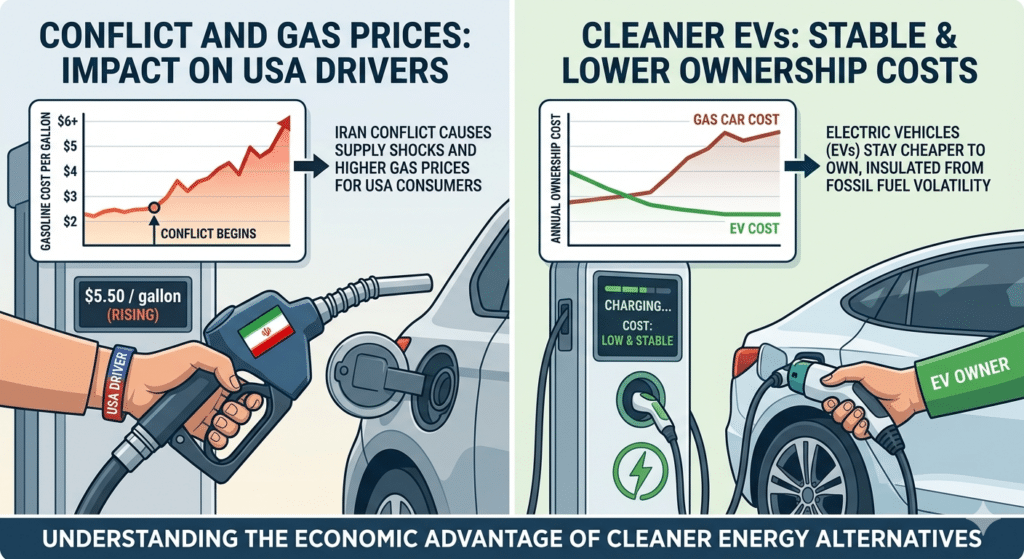
Because gasoline prices only began rising sharply late in the week, the shift in shopper behavior is likely still in the early stages. The data reflects only one week of activity, while previous fuel price spikes have typically influenced shopping behavior over longer periods.
A useful comparison comes from 2022, when fuel prices surged following Russia’s invasion of Ukraine. At that time, electrified vehicle consideration on Edmunds rose significantly. The share increased from 17.5 percent of total vehicle research activity in February to 25.1 percent in March as fuel prices climbed nationwide.
EV market share also grew throughout 2022 as gasoline prices remained high through the third quarter. This trend suggests that prolonged exposure to higher fuel costs can eventually translate into both increased consumer interest and measurable changes in vehicle sales.
However, today’s market conditions differ from those seen during earlier fuel price spikes. While rising fuel costs can encourage consumers to consider more efficient vehicles, the affordability landscape for new cars has become more challenging. Edmunds data shows the average transaction price for a new vehicle reached $48,766 in February 2026, compared with $45,596 in February 2022. Financing costs have also increased significantly. The average annual percentage rate for a new vehicle loan rose from 4.4 percent in February 2022 to 7.0 percent in February 2026. As a result, the average monthly payment increased from $656 to $775 during the same period.
In practical terms, attempting to offset higher fuel costs by purchasing a new vehicle can turn a short term fuel expense into a major financial decision approaching $50,000.
Trade in values may also complicate matters. When gasoline prices spike, demand for less fuel efficient vehicles often declines. That shift can reduce trade in values for larger vehicles or models with lower fuel economy, increasing the cost of switching vehicles at the same time many drivers begin thinking about fuel savings.
For these reasons, many consumers may simply absorb higher fuel prices rather than replace their vehicle in the near term.
One group of shoppers may still respond more quickly to rising fuel prices. Consumers who are already planning to replace their vehicle, such as drivers nearing the end of a lease or preparing to trade in an aging car, may allow fuel costs to influence the type of vehicle they choose next.
There may also be a positive development for shoppers seeking more affordable electrified vehicles. Edmunds data indicates that the mix of vehicles expected to return from leases in 2026 will include a significantly larger share of electrified models than in previous years. Internal combustion vehicles accounted for 93 percent of expected lease returns in 2025, but that share is projected to decline to 82 percent in 2026.
Battery electric vehicles are expected to increase from 2 percent of lease returns in 2025 to 8 percent in 2026. Hybrids and plug in hybrids will also represent a larger portion of vehicles coming off lease.
For some drivers returning an EV this year, buying out the lease may not be the most economical choice. Residual values set when those vehicles were originally leased may now exceed the price of comparable used vehicles on the market. As a result, more lessees may return their vehicles rather than purchase them, which could increase supply in the used EV market.
As more of these vehicles enter the used market, consumers hoping to reduce fuel costs may find more affordable electrified options compared with buying new. Many of these vehicles are only a few years old, which means buyers may benefit from improved range and newer technology compared with earlier EV models.
Fuel prices have long shaped how drivers think about their next vehicle purchase because fuel is one of the most visible costs of ownership. Whether the current price spike leads to a meaningful shift toward electrified vehicles may depend less on the price of gasoline itself and more on how long consumers believe fuel prices will remain elevated. If drivers see higher prices as temporary, many may simply absorb the added expense. If prices remain high for an extended period, more shoppers may begin to prioritize fuel economy and electrification when planning their next vehicle purchase.
Lower Fuel Costs Are Only One Advantage of EVs Over Gas Vehicles
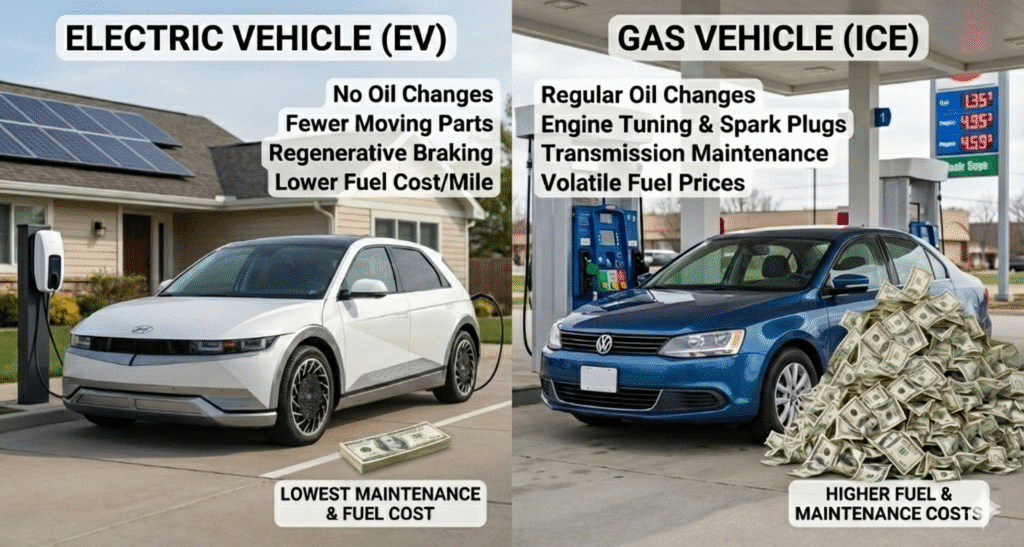
Lower fuel costs are only one reason electric vehicles are widely considered superior to gasoline powered cars. EVs are also significantly more environmentally friendly because they produce no tailpipe emissions, which helps reduce air pollution and greenhouse gas output. In addition, electric vehicles require far less maintenance than traditional internal combustion vehicles. Without components such as oil systems, spark plugs, exhaust systems, or complex multi-speed transmissions, EVs have fewer moving parts that can wear out or fail. This simpler design often translates into lower long term ownership costs and fewer service visits, making EVs an increasingly attractive option for many drivers.

Electric Vehicle Marketing Consultant, Writer and Editor. Publisher EVinfo.net.
Services