Electric Foiling Ferry Innovator Candela Raises €30M for New Production Facility
Candela AB has closed its largest funding round to date, raising €30M (approximately $34.6M) to scale production of its hydrofoiling P-12 electric ferries. The round brings the Swedish company’s total capital raised to €129 million, which it claims makes it the best-funded electric vessel manufacturer in the world, as reported by Marine Log on March 18, 2026.
All existing investors, EQT Ventures, SEB Private Equity, KanDela AB, and Ocean Zero LLC, participated, joined by new backer the International Finance Corporation (IFC), the World Bank Group’s private-sector arm, which contributed €8 million. Proceeds will fund a second manufacturing facility, to be located in Poland, aimed at meeting growing global demand.
The P-12 is billed as the world’s first electric hydrofoil ferry in scheduled commuter service. Its proprietary computer-controlled foil system and C-POD motors lift the hull clear of the water, reducing energy consumption by up to 80% compared to conventional vessels while generating zero wake. The ferry has already demonstrated its value in Stockholm’s public transport network, cutting travel times and operating costs.
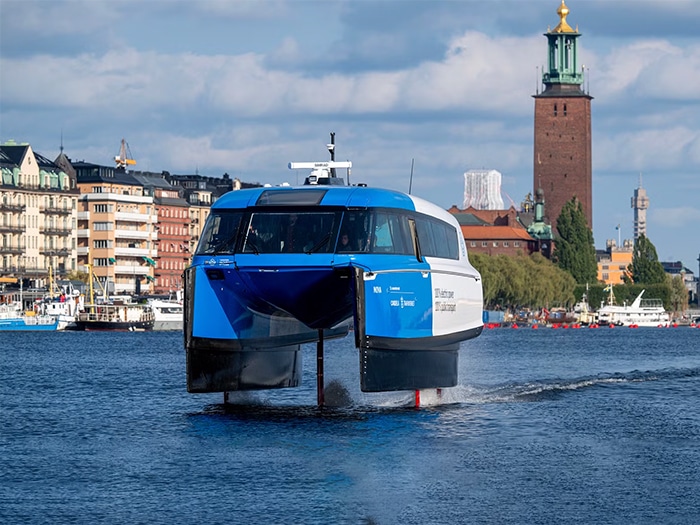
With serial production now underway and first customer deliveries beginning this month, Candela has more than 65 vessels on order. Planned deployments from 2026 include a ten-vessel fleet in Mumbai, projected to slash the journey from Navi Mumbai Airport to the city centre from roughly two hours to 35 minutes, along with projects in the Maldives, Saudi Arabia’s NEOM, and Thailand.
CEO and founder Gustav Hasselskog said the company’s platform-based, serial production model, a deliberate break from the maritime industry’s traditional one-off construction approach, is what makes competitive pricing on advanced carbon-fiber vessels possible. “This allows us to deliver technologically advanced carbon-fiber vessels with industry-leading operating costs at a competitive price point, freeing operators from the cost trap of fossil-fuel ships,” he said.
Hasselskog also noted the broader significance of the raise: in a climate tech funding environment that he said is down around 50% since 2021, closing the company’s biggest round yet signals that the economics of clean maritime transport are becoming self-sustaining. IFC Director for Equity, Funds and Venture Capital Farid Fezoua said the investment is aimed at accelerating breakthrough maritime technology in emerging markets, mobilizing private capital, and enabling more efficient water-based mobility.
Candela’s Connected Vehicle Platform (Cvp) Plays a Crucial Role in the Advancement of Integrated Electric Boating
Electric propulsion alone is not enough; what sets modern vessels apart is the integration of onboard sensors, IoT connectivity, and cloud-based data management into a networked system that continuously monitors and optimizes performance.
Candela’s Connected Vehicle Platform (CVP) sits at the center of this approach, drawing on tools including AWS IoT Core for secure vessel authentication, InfluxDB for time-series data storage, AWS IoT FleetWise for conditional sensor data uploads, and Grafana for fleet-wide performance visualization.
The practical benefits are threefold: safety (real-time alerts and predictive maintenance to head off failures before they happen), energy efficiency (remote propulsion adjustments based on live conditions to extend battery life), and ride quality (quieter, smoother operation compared to combustion-engine vessels).
On the maintenance side, the platform enables over-the-air software updates, where engineers analyze trip data and push optimized updates to improve ride quality and efficiency without requiring vessels to come in for service. Route optimization is also a feature, with historical data used to recommend energy-efficient paths accounting for weather and currents.
The environmental and economic case runs in parallel: zero emissions, reduced noise pollution in marine environments, and lower operating costs from simpler drivetrains and data-driven maintenance scheduling.