New Ford Transit City Van Co-Developed With Chinese Partner
Ford has revealed the Transit City, a new electric van developed for the European market that represents the company’s most modern take yet on its long-running commercial vehicle lineup.
The van was co-developed with Ford’s Chinese joint venture partner, Jiangling Motor Corporation, sharing its dedicated EV platform with the JMC Touring and built at JMC’s plant in Nanchang. Its arrival follows Ford’s decision to cancel the next-generation home-grown E-Transit, citing weak demand in Western markets. Chinese-backed designs will now lead the way in Europe, and Ford has been open about that strategy. CEO Jim Farley has gone as far as exploring the idea of allowing Chinese automakers to build cars in the U.S. through joint ventures, though steep tariffs and bans on Chinese software and hardware have kept that door firmly closed in America for now.
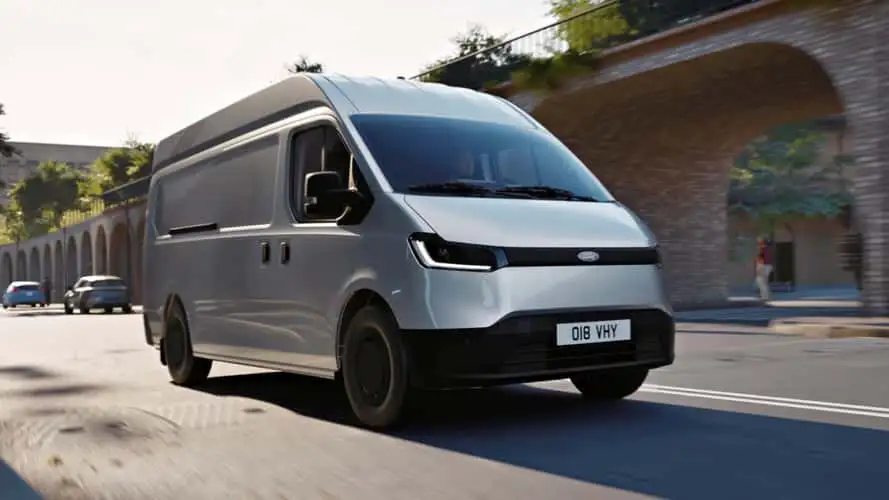
The Transit City comes in three body styles: low-roof and high-roof configurations, and a chassis cab variant for specialized commercial applications. Power comes from a 56 kWh lithium-iron phosphate battery delivering around 160 miles of WLTP range. The larger van variant offers 8.5 cubic meters of cargo space, a payload capacity of 2,810 pounds, and a maximum load length of over three meters. Ford notes that 90 percent of its customers in this segment drive fewer than 68 miles per day, meaning the Transit City’s range comfortably covers the vast majority of real-world use cases.
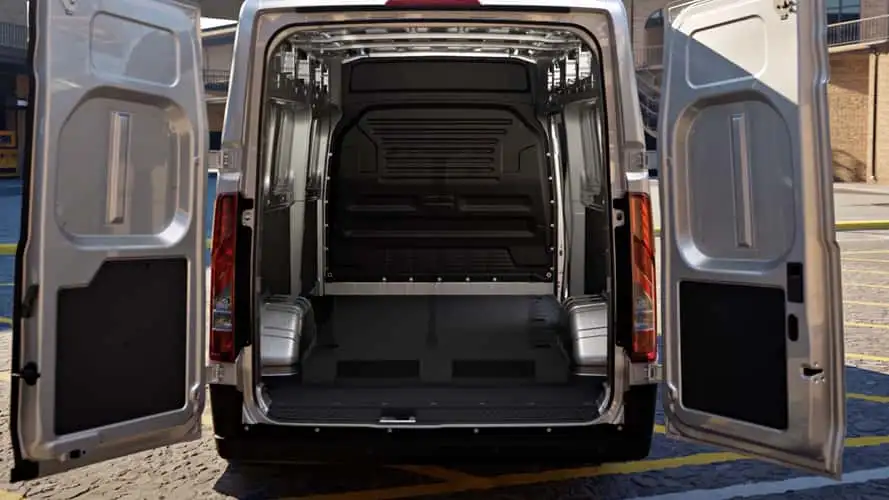
The single electric motor produces 148 horsepower. DC fast charging tops out at 67 kW, enough to go from 10 to 80 percent in around 30 minutes or add 50 kilometers of range in 10 minutes. AC charging is supported at up to 11 kW, with a full charge taking approximately five hours. The numbers are modest but well matched to the predictable, fixed routes commercial vans typically run.
For fleet operators, the financial case is compelling. Ford claims 40 percent lower total cost of ownership compared to a diesel equivalent, backed by a two-year or 25,000-mile service interval and the inherent maintenance advantages of an electric drivetrain. No oil changes, no spark plug replacements, and far less routine upkeep. The battery carries an eight-year or 100,000-mile warranty.
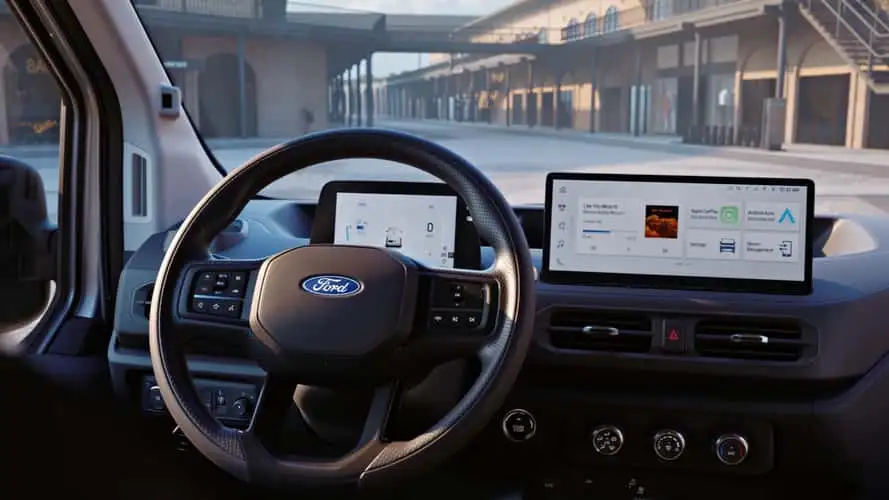
Standard equipment includes a digital gauge cluster, a large infotainment touchscreen with Android Auto and Apple CarPlay, adaptive cruise control, front and rear parking sensors, a rearview camera, and autonomous emergency braking. The Transit City is priced at around 27,000 pounds, approximately $36,000, with deliveries expected later this year.