Commercial Deployment Is Becoming a Meaningful Driver of Electric Boat Adoption
Consumer technology tends to follow a familiar path. Early adopters buy in on enthusiasm and novelty. The mainstream follows once the technology proves itself in demanding, real-world conditions. For electric boats, that proving ground is increasingly the commercial fleet, and the results are making a compelling case for broader adoption. Vision Marine is one company at the forefront of this shift.
Vision Marine Technologies is opening 2026 with its electric boat production calendar already heavily committed, driven by a combination of commercial fleet agreements and retail contracts that together provide the kind of forward visibility that was harder to come by in earlier years. Commercial operators account for a substantial share of that committed output, reflecting a meaningful shift in who is driving demand for electric boats. The company reported the news on March 26, 2026.
The past twelve months brought expanding commercial activity across a wide geographic footprint. Fleet operators in Florida, California’s Ventura and Newport Beach markets, Virginia, and Michigan have all added or extended their involvement with Vision Marine, as has at least one international operator in Melbourne, Australia. Those engagements span first-time integrations into commercial platforms, multi-unit expansions from operators already running electric fleets, and renewal cycles from established customers cycling older boats out and newer ones in. That last category is particularly telling. Repeat procurement from existing operators is a different kind of demand signal than initial adoption, and its growing presence in Vision Marine’s order mix suggests the commercial segment is maturing.
“Commercial deployment is becoming a meaningful driver of adoption,” said Alexandre Mongeon, Chief Executive Officer of Vision Marine. “Operators are integrating electric boats into their fleets, and through that usage, customers are experiencing firsthand the simplicity, reliability, and accessibility that electric boating can offer.”
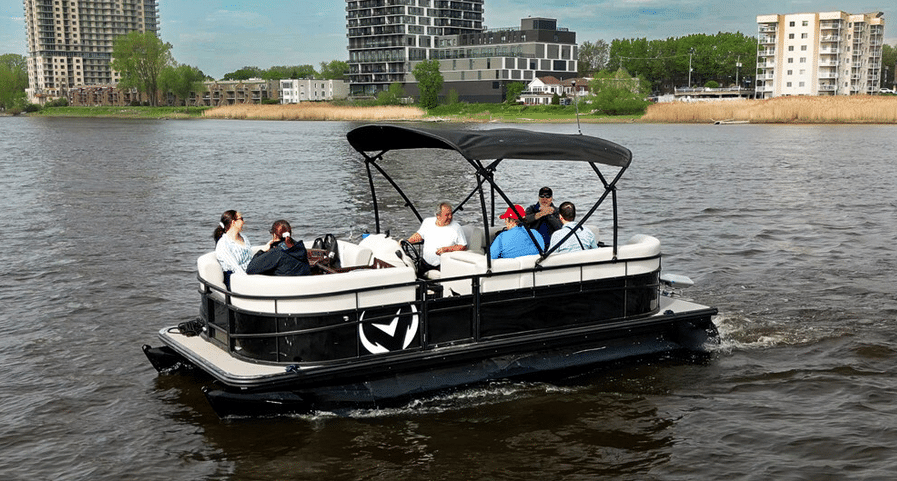
The reasons fleet operators keep coming back are practical rather than ideological. Electric boats ask less of their operators in terms of maintenance, spend more time on the water rather than being serviced, and hold up well in high-utilization commercial environments where conventional powertrains accumulate wear quickly. As those fleets grow and cycle through renewal, they generate a recurring procurement pattern that stabilizes demand and reduces the volatility that can characterize early-market technology adoption.
There is a secondary effect worth noting as well. Every commercial electric boat on the water is a demonstration unit for the broader market. Rental customers, marina visitors, and curious onlookers who encounter electric boats through commercial operators represent a pipeline of future consumer awareness that no marketing budget can fully replicate. Vision Marine has direct experience with this dynamic through its California rental operations, where tens of thousands of completed rentals have provided both operational validation of electric propulsion and a steady stream of first-time riders who leave with a hands-on frame of reference.
On the retail side, Vision Marine’s integration of Nautical Ventures has broadened its physical presence across Florida and extended its distribution reach into both the eastern and western United States. That dealership network serves commercial fleet customers and individual buyers alike, functioning as a platform for market access that complements the direct commercial relationships Vision Marine has built over the past several years.
Underpinning both sides of the business is the E-Motion 180E, Vision Marine’s high-voltage electric propulsion system and the performance foundation for its current boat lineup. Pontoon models and other vessels equipped with the 180E give commercial operators access to higher-output electric boats suited for revenue-generating applications, whether that means passenger capacity, range requirements, or the kind of consistent daily performance that fleet economics demand. The 180E also represents Vision Marine’s accumulated integration expertise across multiple boat platforms, a capability that becomes more valuable as the company scales and takes on increasingly complex fleet deployments.
The picture Vision Marine is describing for 2026 is one where commercial momentum and expanding retail infrastructure are reinforcing each other, building a broader foundation for electric boating adoption rather than depending on any single customer segment to carry the load.
EVinfo.net’s Take: Why Commercial Fleets Are Becoming the Quiet Engine Behind Electric Boat Adoption
Fleet operators are not sentimental about technology choices. They run boats hard, often multiple shifts a day across a full season, and they track every dollar of operating cost. When a commercial operator commits to an electric fleet and then comes back to expand it or renew it, that decision reflects something concrete: the boats are performing, the economics are working, and the case for going back to combustion is getting harder to make.
Gasoline and diesel are expensive, and marine engines burn a lot of both. Electric propulsion draws from a power source that costs a fraction of liquid fuel per mile traveled, and that gap compounds quickly across a fleet running high annual hours. Maintenance adds another layer of savings. Internal combustion marine engines are mechanically complex, require regular servicing, and are exposed to an environment that accelerates wear. Electric drivetrains have far fewer moving parts, demand less routine attention, and hold up better under the kind of continuous use that commercial operators put them through. For a business running boats as a revenue-generating asset, lower operating costs translate directly to better margins.
Anyone who has spent time on the water near a conventional powerboat understands how much of that experience is defined by engine noise. It drowns out conversation, disrupts wildlife, and places a ceiling on what the on-water experience can actually feel like. Electric boats remove that ceiling entirely. Passengers can hear the water. Operators can communicate without raising their voices.
There is something particularly powerful about the way commercial adoption seeds broader awareness. Every rental customer who spends an afternoon on an electric boat leaves with a direct, personal experience of what the technology actually feels like. No advertisement or test drive replicates that.
That feedback loop is already running. Commercial operators are expanding their fleets, renewing aging boats with newer electric models, and opening new locations. This is exactly how durable technology transitions tend to begin.

Electric Vehicle Marketing Consultant, Writer and Editor. Publisher EVinfo.net.
Services