EV Charging Growing Fast at U.S. Medical Facilities
Recently, Jerry Tinianow, Sustainability Mechanic at Western Urban Sustainability Advisors, LLC, reported seeing new Level 2 Liteon electric vehicle (EV) chargers when visiting his local Kaiser Permanente medical facility in Denver, Colorado. The chargers use PowerFlex software.
PowerFlex partnered with Kaiser Permanente to deploy one of the largest workplace EV charging networks in the United States, supporting the organization’s broader sustainability and electrification goals.
Kaiser Permanente, which achieved carbon neutrality in 2020, needed a scalable charging solution to support a growing number of employees and visitors driving electric vehicles. PowerFlex installed more than 1,700 Level 2 chargers and several DC fast chargers across multiple states, while also upgrading hundreds of legacy units.
A key component of the deployment is PowerFlex’s Adaptive Load Management® technology, which intelligently distributes electricity across chargers. This allows more stations to be installed without major electrical upgrades, while also reducing peak demand charges and lowering operating costs.
The system is designed for real workplace conditions. Employees can stay plugged in throughout the day without needing to move their vehicles, improving convenience and efficiency. A centralized software platform provides detailed visibility into energy usage, charging activity, and sustainability performance across the network.
The results are substantial. The charging network is expected to support over 135,000 sessions annually, deliver significant energy for EV driving, and avoid more than one million pounds of greenhouse gas emissions each year. It also creates a revenue stream that helps offset energy expenses.
Overall, the project demonstrates how large scale, intelligently managed EV charging infrastructure can reduce costs, enhance user experience, and accelerate decarbonization for major organizations.
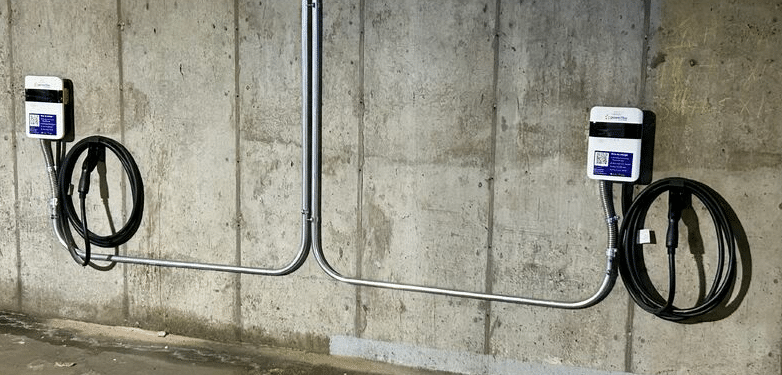
Level 2 EV Charging Offers a Practical and Cost Effective Way to Support Both Employees and Patients
Level 2 EV charging is an ideal fit for medical facilities, offering a practical and cost effective way to support both employees and patients. Unlike fast charging, Level 2 hardware is relatively affordable to install and operate, making it a scalable solution for hospitals, clinics, and healthcare campuses.
Medical facilities naturally align with the charging profile of Level 2. Employees often park for long shifts, while patients and visitors may remain onsite for extended appointments. This dwell time allows vehicles to charge efficiently without the need for expensive high power infrastructure. The result is a reliable, convenient charging experience that fits seamlessly into daily routines.
There is also a clear competitive advantage. Offering EV charging helps attract and retain employees who drive electric vehicles, while also appealing to patients who prioritize sustainability. As EV adoption continues to grow, access to workplace and destination charging is becoming an expected amenity rather than a luxury.
Beyond convenience, installing EV charging reinforces a healthcare provider’s broader mission. Cleaner transportation contributes to improved air quality, which directly impacts public health. By supporting EV adoption, medical facilities are taking a visible step toward reducing emissions and promoting healthier communities.
From an operational standpoint, modern charging systems can be managed intelligently to control energy costs and avoid strain on electrical infrastructure. Load management technology allows facilities to install more chargers without major upgrades, maximizing return on investment.
The takeaway is straightforward. Level 2 charging delivers strong value for medical facilities across cost, usability, and community impact. It supports staff and patients, enhances sustainability goals, and sends a clear signal that the organization is committed to both environmental responsibility and public health.

Electric Vehicle Marketing Consultant, Writer and Editor. Publisher EVinfo.net.
Services