Europe Committed Almost 200 Billion Euros ($235 Billion) to Its EV Ecosystem
On May 11, 2026, Reuters reported that European countries are rapidly scaling investments in electric vehicles and battery manufacturing as the region works to reduce dependence on China’s dominant EV supply chain.
According to research group New Automotive, countries across the European Economic Area and Switzerland have committed nearly €200 billion ($235 billion) to EV-related infrastructure and manufacturing projects.
The investments include roughly €109 billion for battery production and supply chains, €60 billion for EV manufacturing, and between €23 billion and €46 billion for public charging infrastructure. More than one million public charging stations have already been deployed across the region.
The push reflects growing concern about China’s dominance in battery production. Earlier this year, the International Energy Agency estimated China produced more than 80% of the world’s batteries in 2025, including batteries used outside the EV sector.
Europe has made significant progress in building domestic manufacturing capacity. New Automotive said Europe now produces batteries for roughly one-third of the EVs sold within the region, with announced future projects potentially capable of meeting long-term demand if fully developed.
Germany remains the largest investment hub, accounting for nearly a quarter of Europe’s EV-related spending. Researchers said Germany plays a central role in the continent’s automotive transition through both domestic automakers and partnerships with international battery manufacturers.
Industry group E-Mobility Europe estimates the investments already support more than 150,000 jobs, with another 300,000 positions possible if all planned projects move forward.
Despite the momentum, analysts say Europe still faces major challenges competing with Chinese manufacturers, particularly around energy prices, subsidies, and industrial policy. Rico Luman, senior economist at ING Research, noted that Europe’s automotive production has historically been concentrated in a handful of major countries, creating uneven industrial capacity across the region.
Researchers say EV investment has remained resilient despite softer regulations and political pushback against some climate policies. Rising oil prices, expanding EV model availability, and energy security concerns continue driving demand.
The investment surge comes as the European Commission recently proposed easing the European Union’s effective 2035 ban on new combustion-engine vehicle sales following pressure from automakers, marking one of the bloc’s largest recent retreats from aggressive green policy targets.
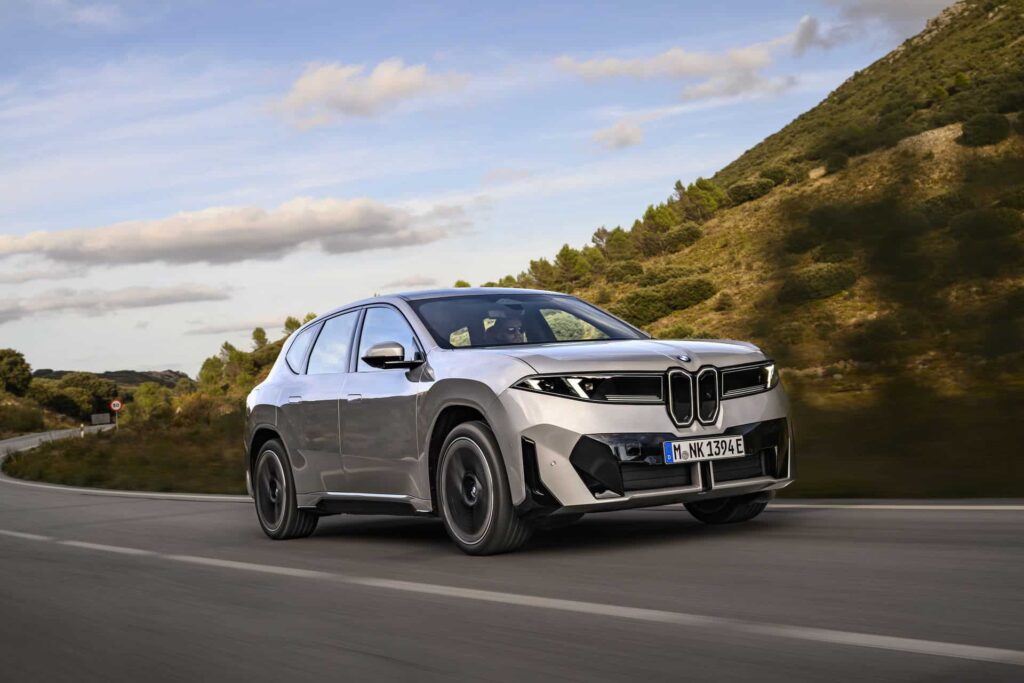
Europe’s $235 Billion Investment in EVs Highlights How Far Behind America is in the EV Race
Europe’s nearly $235 billion commitment to electric vehicles, battery production, and charging infrastructure is highlighting how much further behind the United States risks falling in the global clean transportation race.
The scale of the investment reflects a long-term industrial strategy. Europe is attempting to reduce dependence on China’s battery dominance while simultaneously modernizing its auto sector for the global transition away from internal combustion engines.
Meanwhile, the United States increasingly appears divided and inconsistent on EV policy.
While Europe continues building battery factories, charging corridors, and industrial supply chains, the U.S. has spent much of the past 18 months imposing illegal tariffs, cutting incentives, freezing and un-freezing EV charging funding, weakening emissions rules, and escalating trade conflicts around electric vehicles. Federal policy uncertainty and illegal tariffs have created instability for automakers, suppliers, and infrastructure developers attempting to plan long-term investments.
The Iran war boosted used EV sales in the US to historic highs, but the administration’s mis-handling of the Iran war caused a ripple effect across the economy as energy prices surged. Inflation surged to 3.8% in April, its highest level in nearly three years.
The contrast is becoming more significant as China rapidly expands its dominance in affordable EV manufacturing. The International Energy Agency estimates China now produces more than 80% of the world’s batteries, giving Chinese automakers enormous scale advantages in pricing and supply chains.
Europe’s response has been aggressive investment. America’s response has increasingly focused on tariffs and protectionism.
Chinese EVs remain largely blocked from the U.S. market through steep tariffs, while Europe, despite concerns about Chinese competition, is still investing heavily in domestic manufacturing capacity, workforce development, and charging infrastructure. European leaders appear to recognize that competing in the EV transition requires building stronger industries, not simply restricting imports.
The U.S. auto industry now faces a difficult position. American consumers continue dealing with high vehicle prices, rising fuel costs, and limited affordable EV options. At the same time, global competitors are rapidly improving battery technology, manufacturing efficiency, and charging infrastructure deployment.
Europe’s investments are also tied to energy security. High oil and gas prices following geopolitical instability, including disruptions tied to the Iran conflict, have reinforced the strategic importance of electrification and domestic renewable energy systems. EVs are increasingly viewed not only as climate tools, but as economic and geopolitical assets.
The irony is that the United States helped pioneer much of the modern EV industry. American companies played major roles in battery innovation, software development, and vehicle electrification. Yet inconsistent policy, political polarization, and resistance to long-term industrial planning are now threatening America’s competitive position.
Europe’s $235 billion EV push demonstrates what coordinated industrial strategy looks like in practice. The question is whether the United States intends to compete in the future global auto market, or simply attempt to keep shielding itself from it, which certainly won’t work long-term.

Electric Vehicle Marketing Consultant, Writer and Editor. Publisher EVinfo.net.
Services